
Education officials only see doom in meeting the strict budget cut demands of Gov. Brian Sandoval’s administration is to take drastic measures: Close schools, lay off teachers, and many other “sky is falling” claims. But the Nevada Board of Regents finally said “Let’s calm down and be rational and we’ll work this out.”
Wednesday, March 16, 2011 | 2 a.m.
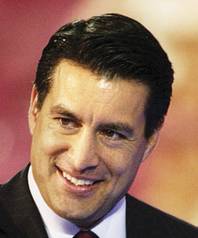
Brian Sandoval
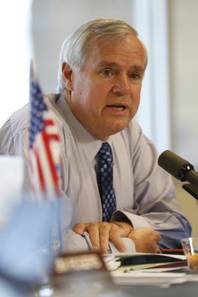
Chancellor Dan Klaich
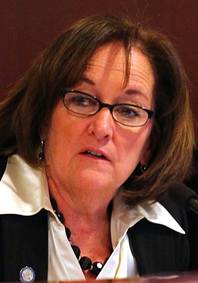
Debbie Smith
Sun archives
- UNLV president presents cuts, says they are “a tragic loss and a giant step backward for Nevada” (3-8-2011)
- UNLV president’s somber warning on budget cuts moves faculty to tears (2-16-2011)
- Regent says it’s time that K-12 shares in budget sacrifice (2-8-2011)
- Higher education officials say Sandoval budget cuts a ‘death sentence’ (2-4-2011)
- Education in forefront of upcoming budget battle (1-30-2011)
- Chancellor: University tuition would have to go up 73 percent to cover Sandoval budget gap (1-27-2011)
- School officials warn of jobs cuts, larger classes under proposed budget (1-26-2011)
- A steep climb for Nevadans (1-26-2011)
- Soft words during State of the State hide Nevada in pain (1-25-2011)
- Teachers not pleased with most of Sandoval’s speech (1-25-2011)
Higher education is trying a new approach to proposed budget cuts: honesty.
After three years of reacting to proposed budget cuts with vague prophecies of doom — thousands of layoffs, eliminating athletic teams and the closure of popular schools — the higher education system is trying to provide detailed and more realistic scenarios for what would happen under Gov. Brian Sandoval’s budget.
But in their effort to be forthright, some higher education officials worry they are hurting themselves politically by making cuts appear less dire.
On Friday, a divided board of regents voted to keep open all eight institutions of higher education, including Nevada State College, Desert Research Institute and the three Northern Nevada community colleges.
Chancellor Dan Klaich had issued a memo last month, asking that the system assess closing some campuses, although he was careful not to endorse the idea. Despite that, students from Desert Research Institute and community colleges filled the regents meeting, fearful of such possibilities.
After the vote, Klaich warned that the budget cuts would still be painful. The institutions’ presidents noted the possibility of layoffs and the elimination of programs.
But the nuance was lost on many in the audience.
“We’re safe, we’re safe,” exclaimed one Western Nevada College student, according to Carson City’s Nevada Appeal.
That’s the downside of taking the most dramatic cuts off the table: The sigh of relief from students meant there was less pressure on legislators and Sandoval to find more money to preserve the system.
“I think it’s very unfortunate the board may have unintentionally sent the message that things are not nearly as dire as they very well could be,” said James Dean Leavitt, chairman of the regents. He and four others voted against the motion.
Whether it’s higher education, Nevada K-12 schools or health and human services, campaigning against budget cuts is an exercise in mobilizing supporters to clamor for services and pressure policymakers.
Conservatives claim that those in favor of tax increases use the most visible cuts as a scare tactic to score political points — dramatic testimony from the person in the wheelchair, closure of the popular park because it’s a favorite of children.
Nevada’s higher education system has been accused of such hyperbole or obfuscation in recent years.
In December 2007, when former Gov. Jim Gibbons asked state agencies to prepare 8 percent cuts, then-Chancellor Jim Rogers warned it would cause “permanent and irreparable damage.” In May 2008, he compared proposed cuts with amputating limbs.
(The same analogies have been used to describe the effect of Sandoval’s cuts.)
In 2009, even the Democratic lawmakers who would eventually support a tax increase became frustrated with higher education.
“I feel like we’re just doing a dance here. We’re talking in general terms,” said Assemblywoman Debbie Smith, D-Sparks, at a March 2009 budget hearing. “We have to figure out what happens in this budget. And I don’t feel like the answers are forthcoming.”
On Tuesday, Smith, chairwoman of Ways and Means, said, “I think we’ve had more openness with the chancellor.”
She said she has been clear with K-12, higher education and other advocates: “The public should know what the possibilities are, but they have to be what’s truly going to happen. I don’t think outrage needs to be manufactured.”
Regent Ron Knecht, a conservative from Carson City who made the motion to take the campus consolidations off the table, said closing institutions was among “the least likely alternatives.”
He said he’s heard concern that his motion would hurt the system’s chances of getting more money.
“If taking the worst contingencies (off the table) eases the pressure on the governor and Legislature to close the budget gap, it’s worth it because of the human cost of the uncertainty,” he said. “We’ve tried to shed the reputation of hyperbole.”
Sandoval’s staff applauded the move, and said the plan was “realistic.”
“None of these decisions are easy, but they’re realistic,” said Dale Erquiaga, Sandoval’s senior adviser.
The cuts proposed by system presidents include:
• At UNLV, ending 33 degree programs and eliminating 315 jobs. This includes closing the philosophy and social work departments.
• At UNR, eliminating degree programs, departments and 215 jobs.
• Truckee Meadows Community College would target high-cost programs such as nursing, radiology, dental hygiene and first responders.
• The College of Southern Nevada plans to cut 28 percent of its class sections, enough to reduce student capacity by 3,800.
Regents said they were looking at raising tuition by 10 to 15 percent.
This session, Erquiaga complained the higher education system was not correcting the often-repeated claim that Sandoval’s budget would mean a 73 percent increase in student tuition. Although technically accurate — that’s the amount of additional tuition needed to cover the $162.4 million cut — it was never a realistic proposal, Erquiaga said in February.
Klaich said he has stressed that these cuts are not exaggerations. “I have absolutely been clear from Day One that I will do everything in my power to give true facts and information.” The effects of the cuts, he said, “are bad for Nevada. They will keep us mired in the recession, retard economic development and recovery this state needs.”
Rogers, owner of television stations (which are news partners with the Las Vegas Sun), denied his past statements were exaggerations. The system has suffered because of the budget cuts.
“The schools are still there, but they’re a shadow of what they could have been if funded properly,” he said. Each cut caused greater and greater harm, he said.
If he has used explosive language it was “to make a point of it,” he said. “Unless you hit them in the head with a brick, people won’t listen.”



I see the proposed cuts from the colleges and universities, but what about the NSHE system administration? Surely all those chancellors, vice chancellors, assistant vice chancellors, deputy vice chancellors, system lawyers and so on can afford to give up some of their perks and six figure salaries. How much money is being taken off the top by the suits before it even gets to the schools? And how many tens of millions of dollars are being funneled into the system computer center hole?
A shame that there's so little discussion here of the impact on students or the community. Its hard to see how there's more "honesty" until we look seriously at the impact on our future, instead of a rather silly concern about how legislators view the rhetoric of the Chancellor? That seems like inside baseball; opportunities for thousands of young people to build a better future is really whats at stake, yet not discussed.
Reducing CSN by 3800 students per year and UNLV by up to 6000 students means what, exactly, for the southern Nevada workforce?
If UNLV cuts 33 degree programs, 12 departments and 120 existing faculty, shouldn't someone discuss whether or not this will have an impact on the ability of people in the region to get advanced degrees and in turn therefore on the ability of the region to develop out of its current economic condition? (These cuts would reduce UNLV to the size it was in 1999, when it had 6000 fewer total students).
What will it mean for Nevada's economy in, say, 10 years if our lowest-in-the-nation rate of college participation (according to 2010 census, Nevada is 51st in % of population with degrees or currently enrolled) if there are at least 100,000 fewer people with degrees of any sort (3800 per year fewer coming out of CSN, 6000 per year fewer at UNLV). What will happen to those 100,000 people in an economy with 20% unemployment?
Or are we simply presuming that there's no structural problem with the regional or state economy and therefore no need to address our lack of competitiveness with other states in educating our citizenry and workforce?
Given that, the Board -- and the Governor -- would be "honest" if it could discuss the actual economic and social impact of the various options in front of it.
Lastly, if none of that matters to anyone, will it be "honest" to discuss whether or not UNLV continues to play division 1 basketball? At this rate of cuts, the Athletics budget will fall below minimum levels for that.
The institutions are being kept open because it costs less to maintain and keep a building occupied then to close the doors and have the windows broken and the building ransacked and pillaged by copper and metal scavengers.
The class sizes will go from 30 to 60, or the maximum size of the room and the auditoriums will be used more to accommodate expanding class sizes.
Goldman Sachs handed out over $16 billion in executive bonuses for 2009 after creating the stock market crash of 2008. Their executives live in splendor.
America is not broke. The money instead is channeled to the thieves, liars and con-artists that usurp the hard work of 100 million wage earners and the dumb Americans continue to let them do this.
I take issue with the entire slant of this article. Jim Rogers said cuts would cause irreperable and permanent damage and would be like amputating limbs. Well, UNLV has already cut programs and is now getting ready to cut 33 more. Northern Nevada will not be able to train murses, first responders, or dental hygenists.
How is this not permanent, irreperable damage? How does what Jim Rogers said hyperbole?
It sounds like some are jumping on the Regents' dumb decision last week to say "it's not that bad." This state should seriously look at how many public colleges it can support. It does no good to have campuses with not much available on them. Distance learning (classes by computer) is more and more feasible. Shouldn't we keep programs at UNLV and UNR instead of bleeding them to mediocrity? What's the point of having many empty shells? This "crisis" is artificial and based on the "no new taxes" mantra.
Comment removed by moderator. Repetitive comment.
Trim the fat. Control the waste. Destroy the parasites. Demand accountability and efficiency. The result will be a healthier organization. (Pick whatever organization you want) These simple procedures will work in Universities as well as private businesses, as well as government agencies.
"But in their effort to be forthright, some higher education officials worry they are hurting themselves politically by making cuts appear less dire."
How exactly this statement is supported in the article is not clear to me. Maybe the writer or another reader can explain this to me.
We need to have the facts and people can make up their own minds about what to do.
another poor article...
what the hell is going on at the sun...
these cuts are serious...
there is no bogey man...
jim rogers gets it...
TIME TO END THE WASTE, FRAUD AND ABUSE OF THE TAX PAYER'S MONEY.
Nevada is sending an unmistakable message to the world: we're not interested in the best and brightest. If you're trying to raise a family, or start a business that requires a skilled workforce, don't bother thinking about Nevada.
How is it "honest" to view the draconian cuts proposed as less dramatic than a system reorganization? The cuts to UNLV are plenty "dramatic" and "woeful" to the thousands of students who will lose access to education and the hundreds of faculty and staff who will be laid off. How can one say that there are no "budget woes" when UNLV is planning to eliminate degrees in both Philosophy and Economics, two of the most fundamental programs of college study.
As JohnF said, the tenor and especially the headline of this article is just irresponsible.
For those repeating talking points about "waste": you should note that the Regents basically ruled out even discussing the one area where significant savings might result from cuts that would not reduce student access, namely institutional mergers.
We are going to work through this. It comes back to figuring out what we want education to do and paying for it.
At this point, it appears that too few resources are spread over too many programs. There is nothing wrong with consolidation if there is no desire among people to pay more through higher taxes. Indeed, consolidation is desirable under these conditions.
About time. WE NEED NEW MANAGEMENT AT NSHE AND UNLV. Now.
Excellent article. the continuous cuts to ESSENTIAL GOVERNMENT SERVICES have cut into the flesh so that we could keep over-funding K-16. IT IS UNCONSCIONABLE that NSHE and company play chicken little while we have NO AUDITORS AT H&HS to ferret out THEFT OF BENEFITS WHICH IS COSTING US MULTI MILLIONS EACH AND EVERY YEAR. And I.D. theft by illegals is bankrupting UMC, all our hospitals, our community services, our non profits are unable to adequately PROVIDE FOR AMERICANS.
The fact that no institutions will be closed down means that the cuts to all institutions will be far worse than if one or two were in fact closed down. However, Nevada is so underserved in terms of higher education that it's hardly imaginable to close down institutions.
This is a good step towards gaining trust. The past statements of woe and doom made me feel like they thought that the public was dumb. I appreciate the new stance of being more responsible.
ACCOUNTABILITY is more than rhetoric. We don't want to START a conversation, we WANT RESULTS. K-12 graduates that can read and write. College students that have a realistic opportunity to graduate and FIND EMPLOYMENT IN THEIR CHOSEN FIELDS. We have enough people who think they are educated and all-knowing. Just read the posts here and elsewhere. We DON'T NEED ANY MORE KNOW-IT-ALLS.
The Board of Regents took a pass on making the toughest decisions. Instead, their vote all but guarantees a quick slide back into mediocrity for every school in the NSHE system. The result will be limited choices and lost opportunities for a whole generation of Nevada students.
The true waste, fraud and abuse in these short-sighted policies is the sacrifice of our state's future. And for what? A buck or two more" in whose pockets? And to what end?
Social Darwinism, here we come: across the board, with education, health and welfare, with desperately needed state services of every kind and shape, Governor Sandoval and his "no new taxes" followers marching in lock-step cut short-term costs at the expense of lasting values.
When all the fat is trimmed and the over-blown salaries are under control, then I will have sympathy for the education system in Nevada.
Chunky says:
"But the Nevada Board of Regents finally said "Let's calm down and be rational and we'll work this out."
Finally! Where was this sentiment weeks / months ago?
Like a child throwing a temper tantrum did they just now realize that no matter how much posturing, protests, politics and predictions of doom and gloom they have to change?
Get over it, get on with it and someday in the future when we have the revenue to support more programs we can review the needs versus wants.
That's what Chunky thinks!
Let's slow down here. First, the legislature will decide on how money is spent and if taxes are raised, not the governor. Let's see what the geniuses in Carson City come up with in the last days of the legislative session. The governor can't spend money only the legislature can.
Second, look at the end product of all the money swallowed up by the education beast. Has it helped? No.
Time for parents who "care" to be parents who "do". Get busy in the schools or get busy being quiet. Until then, no money for you!
Close down 'higher education' and make it all ONLINE ONLY.... these are young ADULTS - not children in K-12.... I don't think the State should fund ANY College - if you want a physical building then buy a College and run it 'for profit'... or better yet - just keep it all online once past grade 12. And pay your own dam college tuition.
azsk8fan: Some classes can't be done online, such as various science classes that require a hands-on lab.
As per Chunky, NEEDS VERSUS WANTS. Pray that in the future we watch UNLV and NSHE MUCH CLOSER TO PRECLUDE FUNDING UNNEEDED AND UNWANTED degree programs. Let's focus on a basic education for AMERICAN students. When we've figured out how to insist that EDUCATORS TEACH OUR CHILDREN TO READ, WRITE, GRADUATE K-12, we can support further education, 13-16, FOR PRACTICAL USEFUL DEGREE PROGRAMS. The dilettantes and others who don't need or want to work to support themselves can pursue "higher ed" elsewhere--Nevadan taxpayers do NOT NEED TO SUPPORT THEM.
manny_k: you're not paying attention. NSHE management now says they didn't mean "draconian."
The class sizes have already gone from 60 to 120-150 for some of the core business classes (301 level) Finance, Management, Marketing, etc. Finance is not a class that should be that large, at 60 it was challenging. What I mean by that is this: when you have 60 students meeting for 75 minutes to cover material and ask questions it is not enough time.
The Business college cut almost all part time professors, of which were some of the best.
What UNLV needs to focus on for additional funding is donations, similar to the "Harrahs school of Hotel Management" "Boyd school of Law" We need the "Wynn college of Business" ($50-100 million donation) and other programs. The problem is that we need business leaders who are willing to jump in to a program that is mediocre and help it improve.
Higher education is like a pecan orchard or an olive grove: 20 years at least after planting trees before they bear fruit, then they keep on producing into the future. These budget cuts are like ripping out 20% of the trees in the orchard.
So: simple-minded platitudes don't address the realities. Chunky is blowing chunks again: when needs are recognized and the economy has recovered (doubtful, the way our state is being managed), it will take another generation after that to plant and nurture and cultivate what is about to be ripped up and burned from our state's higher education system.
Professor Unger:
The trees in your orchard are costly, very costly. $30,000 per year per student, as I recall from our converation the other day. The Academy is not cheap to keep.
When you take the trees out, one uses the land for other purposes, say something that will put food on the table today and not 20 years down the road.
To Turrialba: 61% of NSHE graduates currently remain in Nevada; and the Office of Business and Economic Research uses the figure of 1.5 million dollars in added economic benefit over a lifetime to the state for each higher degree graduate in our community. And this doesn't count the other social and cultural benefits (Please see Baum and Payea, "The Benefits of Higher Education for Individuals and Society"; Educational Testing Service, 2005; www.collegeboard.com; all is graphed out and presented there, based on a thorough analysis of 2000 census figures and 2003 I.R.S. statistics).
In sum: over the long-term, our state can't afford the economic losses of many thousands of students who will no longer be able to earn their degrees here, and so must leave Nevada to better themselves. In these terms, 30K per student, which is about what higher edcuation costs these days almost anywhere in the country, is still a bargain, and one that pays off many times over.
Let's hope that this change of strategy allows higher ed. officials to think more creatively about solutions to this issue. It seemed the strategy for years was simply to scare students into contacting their elected officials and demanding fewer cuts to education. While there is some value to this approach, very few other solutions have been presented.
It's time to think outside of the box. Isn't that what education is for? Or are the leaders of Nevada's higher ed. system actually as clueless as its state legislators?
roseanrose: it is the 8 regents who voted for this who are not paying attention.
Higher education is the engine of growth for one industry--collection agencies going after student loan debt. That industry is booming with $1 trillion of debt to be collected. Mr. Unger, how do you explain the fact that Calif. is on the brink of bankruptcy and yet it has thousands of recent (and indebted) college grads in engineering, computer science, biochemistry, etc. from its universities?
Vegasjon: many business classes are exactly the type of class that you can teach in a large lecture hall. Principles of marketing, Management theory, Ethical concepts in business, business law (which is a useful course for anybody), etc. are the same at any university and you could learn these bland concepts just by buying a used textbook from Amazon for $15 and reading it.
Nevada had 2.7 million people per the 2010 Census. That is enough of a population to maybe support one - uno - eins -- 1 -- good institution of higher education.
If "being honest" is spending money to maintain 8 campuses and 8 administrations while cutting instruction and resources supporting learning by students, then, I, for one would prefer dishonesty that results in improved education for Nevada students.
Philosophy and all those other worthless degrees should have been cut years ago. Marketing/Economics/Management degrees are worthless. I know because I have one! There should be only one degree program offered statewide...reno can have the medical...nursing,radiology,dental hygiene, physical and occupational therapy. Let UNLV have computers, engineering. Stop duplicating services!
They should be offering degrees in fields where someone can actually get a job! C'mon what kind of job can someone get with philosophy? Art majors or history majors aren't that numerous...maybe give them some tuition credit so they can go out of state if they want a degree that doesn't have lots of people enrolled in it. Medical training/engineering is where the schools need to focus and become the best.
Yeah, its not that bad unless you are one of the numbers on the spread sheet...the president at unlv blindly cut programs last year based only on cost with no consideration given to revenue generated or success of graduates in those professions. Neil is 2nd rate and I would bet dollars to donuts that he moves on to another presidency before the aftermath is realized.
Irvingtonguy, IMO, UNR's computer science brings in competitive federal grants and good publications so they shouldn't be cut, Look up the giant salaries for UNLV computer science and their productivity to compare, Aye-yi-yi!
#Irvingtonguy "They should be offering degrees in fields where someone can actually get a job!" So you want UNLV known across the country as nothing more than a Vocational School. Universities have always been meant to be places of higher learning in a variety of disciplines. UNLV should offer the degrees that it's customer base (students) want. They are the customer after all. You brilliant idea would both limit the number of students who would attend UNLV, and it would make UNLV no better than VOTECH. While a college degree is a necessity in getting a job these days, plenty of people attend Universities to broaden their minds, without any desire to get a job. One could say just as easily state that UNLV should only offer degrees in the Arts and Humanities. They would be just as wrong.
However, if you can provide a fiscal model that supports your case, I am all ears.
Nevadaappleslices...I meant that there needs to be no duplication of majors at multiple campuses...UNR can keep computer science and whatever else they do best but cut it from UNLV. UNLV can keep some majors and eliminate them from UNR.
bghs1986...i don't consider a masters degree in speech therapy, physical therapy or occupational therapy "a vocational trade." A pharmacy degree requires a doctorate now. In my book a "vo-tech" is where someone would study auto mechanics, heating/cooling repair installation, electrical/plumbing. And there is nothing wrong with vo-techs...those graduates are more likely to find a job than someone with a philosophy/art history degree. If UNLV were to be known as the place to get a medical degree/computer science/education degree that would be great. While I agree that universities have always been meant to be a place of higher learning it is not cost effective to have 4 or 5 people studying philosophy and maintaining an entire department to support those few students. If it is that important, like I said give them a voucher to attend an out of state school, I guarantee it is much cheaper to do that than maintain a department of philosophy, art history, AA studies, etc.