Monday, May 24, 2010 | 2 a.m.
Reader poll
Related Document (.pdf)
Sun Archives
- Lawmakers push to regulate, tax online gaming (5-19-2010)
- With aggressive push, Internet gambling again in play (2-9-2010)
- Why casinos in Nevada won’t go online (for now) (8-20-2009)
- Will Web poker bust spark fight or flight? (6-15-2009)
- Poker players swarm site seeking input on big issues (5-19-2009)
- Web betting is wedge for Big Gaming (11-25-2008)
- Bush administration moves on Internet gaming band (11-12-2008)
- Gaming’s new frontier (11-23-2007)
- Online gaming in the shadows (7-17-2007)
Sun Coverage
At first glance, the 15-year debate on whether to regulate and tax Internet gambling appears to have evolved little from the initial standoff of morality and social costs on one side and libertarianism and financial need on the other.
And yet, last week’s congressional hearing on the subject is evidence that although some members of Congress are still uncomfortable with Internet gambling, the discussion about government-regulated online casinos has moved from “should we allow it” to “how do we best make this happen.”
It is, after all, a black-market business that has generated more than $100 billion since researchers began tracking it several years ago.
Although Internet gambling advocates cite growing support for regulation, the road ahead looks bumpy — in part because the interests of Nevada’s casino giants are different from those of their virtual counterparts.
During Wednesday’s House Ways and Means Committee hearing to discuss a bill by Washington Democratic Rep. Jim McDermott to tax Internet gambling, squabbles erupted over how to best tax an industry that’s ready, willing and able to pay.
McDermott’s bill is a companion to legislation introduced last year by online gambling champion Rep. Barney Frank, a Massachusetts Democrat, to legalize and regulate Web casinos on a federal level.
McDermott set out to raise up to $72 billion over 10 years by taxing online operators and gambling winnings. It’s an ambitious figure, some lawmakers say, as it assumes that all states will choose to participate, rather than opting out and banning local play. Of the total, the feds estimate raking in $42 billion, while state governments — a majority of them facing budget deficits — could receive up to $30 billion.
McDermott estimates more than half of that money would come from gamblers declaring taxable winnings. The legislation would require online casinos to send 1099 forms to the Internal Revenue Service that list winnings and losses. The IRS allows gamblers in casinos to deduct losses against winnings, although much activity — with the exception of big jackpots that require IRS disclosures — goes unreported.
Under the bill, online casinos would pay corporate income taxes because they would be required to locate computer servers and corporate offices in the United States.
In addition, Web casino operators would pay a quarter-percent tax on wagers and a 6 percent tax on the money gamblers deposit into online accounts before laying bets.
The deposit tax, one of a few sweeteners introduced by McDermott in March to garner support for the bill, would flow to states that agree to let residents gamble online and allow Internet gambling companies to set up shop in their states. Other countries that regulate Internet gambling use deposit taxes, but the idea isn’t going over too well in Nevada.
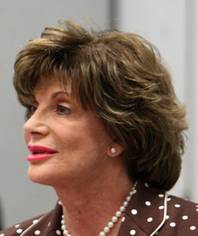
Shelley Berkley

Rep. Dean Heller
When Nevada Reps. Dean Heller, a Republican, and Shelley Berkley, a Democrat, argued against the tax Wednesday, they didn’t come right out and say it, but they were looking out for the interests of the state’s gaming companies.
Taxing deposit money regardless of whether it is being gambled would be like taxing a retailer for money customers bring into the store but don’t spend, Heller said at the hearing.
“What is the logic of that?” he said.
“I can’t understand this tax at all,” added Berkley, calling it a “barrier to entry” for Nevada companies.
Internet gambling operators are open to paying this tax, an effective alternative to the gambling revenue tax paid by most U.S. casinos, because it allows states to collect taxes from companies without having to figure out where gamblers are located when they place online bets, McDermott responded.
Although the tax might seem unfair because there is no purchase transaction involved, it levels the playing field by recognizing that online gambling operations have lower operating costs than brick-and-mortar casinos, which have armies of employees and capital intensive buildings, he added.
Responding to Heller’s objection, McDermott said gamblers wind up spending the money in their accounts anyway. It doesn’t sit there indefinitely.
Heller plugged local interests by questioning whether the creation of U.S.-based online casinos would cannibalize business from brick-and-mortar casinos. Nevada, he said, is reeling from recession and record unemployment.
Legalization is expected to create an estimated 32,000 American jobs that now go to other countries, McDermott countered.
Heller pressed on, questioning the federal regulatory system envisioned by the bill and the kinds of companies that might be allowed a coveted spot on this new playing field.
“The gold standard (for casino regulation) is obviously ... Nevada and the Gaming Control Board,” he said.
Nevada has the most experience licensing gambling operators while the feds lack any such experience, a fact that has been discussed by gaming attorneys who have suggested that the Treasury Department defer the task of investigation and licensing to the Nevada Gaming Control Board, which could benefit the state and create jobs.
Online poker lobbyist John Pappas said the disagreements distracted from the bigger picture, although he expects compromises will move the bill forward.
“We’ve got to first win the war on whether Internet gambling should be regulated before engaging in battle over how it should be taxed,” said Pappas, president of the Poker Players Alliance. “I think this was putting the cart a little before the horse.”
Frank’s legalization bill is still stuck in the House Financial Services Committee. Congress has had its hands full with debates on more pressing matters such as health care and banking reform. But Frank is chairman of the committee and expects to bring the bill to a vote by July.
Although the Ways and Means hearing was ostensibly about taxation, some of discussion rehashed the old polarizing debate.
Gambling opponent Rep. Bob Goodlatte, a Virginia Republican, initiated much of the debate, peppering the committee with arguments for upholding the federal prohibition of Internet betting.
Most state attorneys general oppose Internet gambling, and federal law enforcement agencies and many Americans do, too, in part because it can’t be effectively regulated, Goodlatte said.
Although gambling cheerleaders dismiss Goodlatte as an out-of-touch prohibitionist, some of his concerns were echoed by committee members who worried about whether online casinos would steal business from brick-and-mortar casinos in their states.
“There’s only so much discretionary income people have to spend,” said Rep. Earl Pomeroy, a Democrat from North Dakota, which has remote casinos on impoverished Indian reservations. “To think that we can gamble our way out of a recession (is) about as believable as thinking when you place a bet against the house, it’s an even-steven proposition.”
Most speakers at the hearing supported Internet gambling legalization, saying it makes sense to regulate and tax an activity that is widespread.
“I think we are denying reality” by continuing to ban it, Oregon Democratic Rep. Earl Blumenauer said. After supporting a 2006 bill further criminalizing Internet gambling, Blumenauer recently changed his position, supporting taxation and regulation to raise needed cash.
Supporters say such views have begun to take hold in Congress and that legalization, driven by advancing computer technology and greater acceptance of gambling, is inevitable.
That explains why, in the days before McDermott introduced his bill, the American Gaming Association changed its position from neutral to supportive of legalization under a strict regulatory system.
Even those brick-and-mortar casinos that were once wary of competition from virtual gambling halls want in on the action.
The association’s two biggest members, MGM Mirage and Harrah’s Entertainment, have been among the industry’s most vocal supporters of Internet gambling, as they have much to gain from establishing Web versions of popular casino brands. Some smaller companies needed convincing, however.
After a year of research and study, association members agreed there’s enough evidence that Internet gambling can be properly regulated, like it is in Europe, and it won’t hurt existing business, CEO Frank Fahrenkopf said.
“Six to 10 billion dollars are presently being bet by U.S. residents offshore,” Fahrenkopf said. “If any cannibalization was taking place, it was probably already taking place.”
Gambling is a declining revenue source relative to other casino amenities, he added, so companies are inclined to view online casinos as a new profit center rather than a drain.
“Many (companies) that were opposed to Internet gambling years ago have come to see the light,” Pappas said. “Progress and technology always win out. The bricks-and-mortar casinos don’t want to be left holding the bag.”



Online gaming should be legalized. This is another example of a restriction of liberty based on morality. It should never be the intent of government to get into the business of determining that of morality when it comes to the aspect of interfering with that of freedom and liberty.
Online gaming is going to happen by Americans and therefore the government should legalize this to regulate to prevent abuse on several fronts.
As it is, we can not prevent underage gambling, we cannot prevent illegitimate companies from taking advantage of consumers and we cannot insure the safety of peoples money with foreign and offshore companies. We are far better off for the security and safety of consumers to legalize and regulate, as with marijuana.
My name is Billy Soloe, candidate for Nevada State Senate, District 10 www.soloeforsenate.com
It is always about how to tax. From Internet gambling to marijuana sales. The arguments are never about what is good or bad, just how does government get a piece of the pie.
Think how much easier life would be if those in power were not addicted to spending other peoples money and winning votes by handing out the money. If our country was more about individual responsibility it wouldn't have to find a way into everything we do.
Oh boy can't wait to see how the government and Barney Frank can screw up gaming regulations.
The numbers they come up with on this are insane. To expect multiple billions of dollars in taxes is just crazy. And if they think they're going to knock out the illegal casinos when there will be no law against a bank transferring the cash is very naive. This will be a total mess.
Everyone is thinking[?] about how to make money by taxing online gaming but I haven't heard one person talking about how to avoid the problem of CHEATING in the games!
In this age of lap top computers and cell phones the concept of cheating should be simple....unless your thoughts of more tax money to squander on wish lists is more important than reality.
Unless you're a professional gambler - what is there to tax, really? For every so-called 'win' how many REAL loses are there? So every dollar 'won' (over a certain amt.) that you're supposed to pay taxes on you can also then claim your losses - which, in almost all instances far out-weigh the perceived 'win'. I agree with solo.... this is all about someone's idea of what is/isn't moral... and they shouldn't be using their position in government to shove THEIR morals down everyone elses throats. This pathetic government has no problem hounding the 'little guy' for a few extra dollars they feel are owed to the government - all the while letting big businesses get away with paying LESS and LESS.... This is supposed to be a FREE Nation here but when government starts telling people how they can/can't spend their own money that starts to really cut down on 'freedom' as such. Just as long as all the losers understand that if they gamble and go broke they are on their own - they shouldn't expect a hand-out from the government just because they were dumb enough to gamble.
Online gambling should absolutely be lagalized. Here's an industry that's heavily in demand-that's totally willing to be taxed-and yet having to plead with the U.S government to be legalized. It boggles the mind. I hope the online casinos include sports betting also.
"The one above exists in at least 99% of the cases just in your head and the solution for it is already in the making."
The above statement is proof cheating is a huge problem that isn't going to disappear just because we wish it wasn't happening?
A Government which pimps vise can never be considered a moral one.
: {
Here's an idea for the government.
Ban Online Gambling, make it illegal so that we can force players to venture to actual real casinos to drive up revenue.
At the same time the government is trying to invest in this new idea to bring nationwide Broadband Internet to millions of homes. Let the government subsidize ISP's & State's construction costs, but ONLY if they comply with banning access certain IP ranges of these online casinos. Set it up with the same model currently used for Federal Highway Fund distribution. Don't raise the drinking age to 21, or can't comply with EPA clean air standards? No Federal Highway dollars for you. Same thing, but we can then say, "Don't want to block IPs of online casinos or known SPAMers from China/Russia/Africa, etc? No Federal Broadband dollars for you."
It's not censorship, but it is a Chilling Effect that could accomplish the necessary goals we need to set...
"It is, after all, a black-market business that has generated more than $100 billion since researchers began tracking it several years ago."
This is a lie and slander. It's completely legal in the nations that allow it to exist. To the extent that Americans are not allowed to gamble there, that is the fault of the gamblers, not the businesses.
"Here's an idea for the government.
Ban Online Gambling, make it illegal so that we can force players to venture to actual real casinos to drive up revenue."
It IS illegal in the USA now and it is ENFORCED.
The issue is that not all countries agree and the Internet touches all countries. So it is happening now. Antigua and Barbuda is the global center for online gambling because it is legal (and regulated) there.
nitro:
>"There is only Las Vegas, Atlantic City, online gambling and nothing "in between"."
Indian Casinos are not in the United States. They're on the soil of Sovereign Nations. So unless you start requiring Passports for U.S. Citizens to go there, that ain't gonna happen.
>"You people have such a complete lack of imagination, that it really hurts: online gambling is the perfect complimentary industry for Vegas or AC, due to the synergy effects and because it targets the entire world"
No again. First and foremost you're not going to get City, County, and State governments that are already in financial trouble on your side by trying to convince them that they should give up tax revenue in order to help out corporations. Nor the residents of said state who may face a sudden Income Tax in order to make up the difference of lost revenue.
Second, you DON'T want people to have that easy of access to gambling. All you do is enable people with gambling problems, and that will just turn into ammunition for opponents of not only online gambling, but the gaming industry as a whole. Then most of all it's the factor of over time you're going to see declining revenue as a whole for the same reason that once people turn 21 they drink less, and couples don't have as much sex once they get married: If something is available 24/7 with no restrictions, it looses it's thrill and people don't want to do it any more. Force people to save up a huge amount of cash for a vacation getaway where they can gamble it all away, and you'll get more over time. It may be less of a walk and easier access to plant an apple tree in the kitchen, but it's not going to grown unless you put it outside and a good distance away from you.
Simply throwing buzzwords into your argument doesn't validate it, nor make it any more successful. And that's something that they don't teach you in marketing.
Online gaming in the U.S. should be legalized by all local, state, regional, national and international governments. When "reality vs morality" the odds favor that reality will be the ultimate winner.
Technology is currently available to insure the protection of all parties that will ultimately be impacted by the legalization of online gaming in the U.S, including the remote players, online casino operators, and local, state, regional,national and international gaming regulators.
Online casino players, wagering online, can be protected from unscrupulous online casino operators; and online casino operators can be protected from remote players who, by physical or electronic means, attempt to cheat online casino games; and safe and secure electronic means are available to see that all fees,and/or taxes, due local, state, regional, and national gaming regulators and/or relevant government agencies are paid.
Technology is avaliable to monitor and verify the age of remote gamblers, that the remote player is located in a jurisdiction where online gaming is legal, that the online casino site a remote player has logged into is licensed to operate in a jurisdiction regulated by one or more government authorized gaming regulators who have determined the integrity of all online casino games offered by a licensed online gaming casino.
All online casino sites, not licensed by authorized gaming regulators, can also be identified for the benefit of the remote players and government regulators.
Online gaming sites are particulary suited to identify and restrict the play of "Problem Gamblers"
The benefits of "online casino gambling sites" to land-based casinos will more than offset any losses perceived by land-based casino operators.
ODH
every poker player I know plays online
The US cannot tax offshore gambling.
It would be impossible and cost alot to track the money.
Its like a Swiss or off shore bank account you cannot track the money.
Here's an idea for Government - STAY OUT of how people want to spend their money. As long as people understand that government will NOT give them a hand-out when/if they go broke wasting their money on gambling.... It's still up to the people who earn the money how they choose to spend it. If they don't care about the possibilities of on-line cheating (and I'm sure there are PLENTY of ways to cheat) then so be it - it's STILL up to the individual to choose how they want to spend their money. And for some, who perhaps CAN'T get out to go to a casino - well it just might be the only form of enjoyment they have.... It's still all about letting people choose for themselves in spite of the obvious downfalls.
I havent seen so many mindless control freaks in one place in a long time...everyone wants to get their morality in on something and have government make everything illegal.
Online gambling will continue no matter what the Federal Government does..and so yet we continue to find ways to create criminals.
So what if we tax it...as long as it is a fair tax to the casino's who operate it. And to the gentlemen who talks about professionals writing off their taxes...we are not talking about that kind of tax..we are talking about taxing the casinos for their profits. Oh boy..some people sometimes miss the whole ship...but that's ok..we all miss the ship from time to time.
No one is talking about raising taxes on anyone...and if you are suggesting that we eliminate all taxes, well, I can appreciate the libertarian party, but you have to know that it isnt ever going to happen in this lifetime.
Those who oppose online gaming for some kind of morality reason..you need to get real...you live in a state that has casino gambling, 24/7 alcohol and legal prostitution and someone needs to tell you ..this isnt Mayberry!
Now, if you want to eliminate taxes...Im with you..but lets start with eliminating property taxes for those where the house they own is the one they reside in. People should NOT have to pay taxes on their home in order to have a place to live. We should pay taxes on profits we make or if you like the fair tax, pay taxes on what we spend, but not on homes we live in. Simple enough.
Also to the guy who says something about cheating online...dont think about it too much..there is software out that catches collusion and bans you effectively.
Freedom should be paramount and I trust Las Vegas land casino's a whole hell of a lot more than I would some offshore casino or poker room that I really know nothing about.
We already have legal online horse race betting..so why do we allow one and not the other?
Another thing..Nevada should allow lotteries. If people want to bet on a lottery ticket..or buy scratch offs..its their money...whats it to you?
If you dont want to gamble online..dont! Very simple. People want to forget that we live in a capitalistic country and that the market place should dictate what is a good idea and what is not.
Billy Soloe
Republican Candidate Nevada State Senate
District 10 Las Vegas
www.soloeforsenate.com