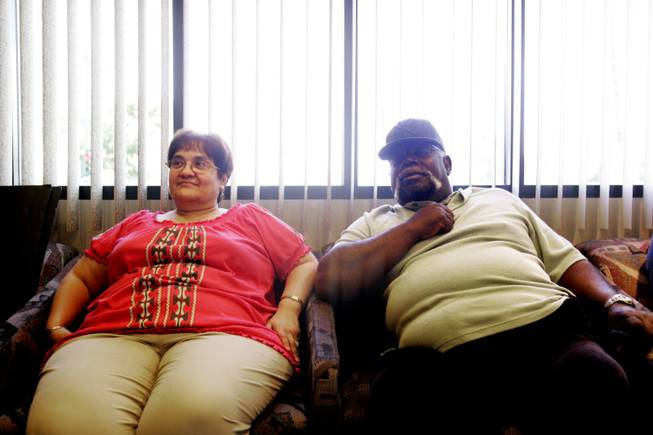
Martha and Tyrone Bush are suing Desert Springs Hospital, which they claim did not provide Tyrone with adequate care. He developed severe bedsores that are still painful.
Sunday, June 27, 2010 | 2 a.m.
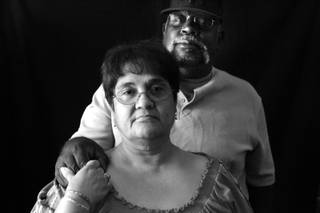
Do No Harm: Hospital Care in Las Vegas
- Prologue: A breakthrough in transparency
- Reporting is the first of its kind in Nevada
- Health care can hurt you
- Accident took her life, his heart
- Fall proves fatal for elderly patient
- Inadequate care, unspeakable pain
- Scarred for life by mistake in surgery
- Where I Stand: Fascination and frustration in reporting on Las Vegas hospital care
- Editorial: Preventing harm
- Health care leaders discuss Sun report’s findings
- St. Rose Dominican Hospitals to post data on quality
- State presses hospitals for full accounting of preventable injuries
Share your stories
Tyrone Bush winces as he walks into his lawyer’s office, like he’s stepping barefoot on shards of glass.
He sets a thick foam pad on a chair before gingerly lowering himself to the seat. Beside him is Martha Bush, his wife of 26 years.
In September 2008, Bush underwent quadruple heart bypass surgery at Desert Springs Hospital, but the wounds have not yet healed.
The problem is not his chest. The operation was successful.
It’s the bedsores.
Words can’t capture the horror of severe bedsores, or “decubitus ulcers.”
One of Bush’s bedsores was the size of a salad plate, covering his buttocks and sinking deep to the tailbone, the lawsuit alleges. The bedsores on his heels were bigger than golf balls and to the bone. Almost two years later the sores are healing, but are still craters of exposed flesh surrounded by necrotic skin.
Bush, 60, was working full time as a maintenance man before entering Desert Springs. Now he’s lost his job and is struggling to heal.
For almost two years, his life has been measured by changing dressings and weekly doctor appointments. Often that means debridement — an excruciating process of scraping the dead flesh from the wounds without anesthetic so they can heal from the inside out. With his buttocks exposed, the appointments are as humiliating as they are painful.
Bedsores occur when patients are not turned or moved in bed. The pressure of body weight can cut off the blood flow to the fleshy pressure points on the underside of the body, often the buttocks and heels. Hospital employees are supposed to assist and encourage patients to reposition themselves to prevent bedsores. Hospitals also have special air beds that help shift the patient so no one body part bears the brunt of body weight.
Bush, who is overweight, said he was in a regular hospital bed until the sores were severe. He said nurses did not help shift his weight, and because he suffers from gout, he struggled to move himself.
Even after the bedsores were identified, hospital staff did not address them for about five days, according to the lawsuit the Bushes have filed against Desert Springs.
The legal response by the hospital blames the Bushes for Tyrone’s bedsores, although it includes no detailed explanation of how the sores were caused. Bush consented to care and the hospital did nothing wrong, the defense alleges in its response to the lawsuit. Hospital officials declined to comment further.
Desert Springs is part of Valley Health System locally and owned by Universal Health Services, a for-profit chain based in Pennsylvania.



They will get some kind of 'settlement' out of this.
Hi Journey, you make a valid point: it can be difficult for nurses and staff to turn patients who are overweight.
However, Nevada law is clear that hospitals must provide every patient the individual attention that he or she needs. This is what they get paid for. Also, there are various methods to help prevent bedsores, including special beds that vary the pressure on different parts of the body. Mr. Bush says he did not have such a bed. Pillows can also be used to vary the pressure points.
This can also come down to staffing: a hospital may need to have additional nurses or aides on duty to help provide patients the care they need.
So, the size of a patient is really no excuse.
While I agree that people need to take personal responsibility for their health and weight, Mr. Marshall Allen makes a valid point: There are different measures to prevent this, even for the overweight. Take into consideration all the patients this happens to that are not overweight and all the overweight patients that this does not happen to. I really feel like this probably was preventable.
Look at the story of Mr. Morry Janovitz - he was not overweight and he developed a bed sore to his buttocks as well. Although his neck was broken, I believe nurses (and staff) would know how to move (or pillow placement, etc) a patient in his condition to prevent this, but I could be wrong.
At least 6 states have passed laws to mandate that hospital provide modern lifting equipment to assist in moving patients. The maximum safe lifting limit for nurses is 35 lb., according to the National Institute for Occupational Safety and Health. Above that amount, mechanical equipment is needed. Most hospitals in the valley do not provide this equipment. When the Nevada Nurses Association attempted two legislative sessions in a row to get a safe patient handling law passed here, the Nevada Hospital Association fought it tooth and nail. So every day, nurses are exposed to needless back injuries, all in the name of increased profits.
Might there be a complication of diabetes here?
Is that not an important question?
I feel for the guy - but like many have said - You let yourself go for 30 years there are consequences to your health.
This is one of those 70/30 cases - with the 70% blame falling on Mr. Bush.
I see these beds in hospitals with hydraulic booms and nylon slings to move some of the obese Americans around - Wheelchairs that are 5 feet wide. There is only so much they can do.
Some of the other stories made me mad. This one, not so much.
It's not the nurses' fault that Mr. Bush has put himself into obesity. The bedsores come from not moving. If Mr. Bush would either move around or allow others to assist him in moving around, then these bed sores would heal. The problem is with Mr Bush's refusal to cooperate in actions to combat the bed sores, namely moving. Either Mr. Bush actually does the moving around or he enables others to assist him. Merely gather the 16 nurses needed to move Mr. Bush (16 X 35), move him, and then come back every twenty minutes or so. What's the problem?
airweare: To lift more than 35 lb., mechanical assitance is required, not more nurses to do manual lifting. Many manufacturers, such as Arjo, make ceiling and floor lifts that use slings to hoist patients or position them on their sides. The fault lies not with the patient (after all, at least a quarter of Americans are overweight or obese) nor with the nurses, but with the hospitals that deprive nurses of needed equipment. You don't see UPS requiring its workers to manually handle 100 lb packages, do you? The health care industry is in the dark ages when it comes to occupational health. Please stop blaming the victim. I don't know your weight, but if it's even 120 lb., your body weight poses a risk of back injury to a nurse.
You're right on as usual, digger.
Since losing my legs, my body weight has been a major concern, especially at my age. My strength is still pretty good, but with the disadvantage of increased stress on arms, shoulders and twisting of the back, the weight does absolutely impact longevity and life-style, not to mention comfort and quality of my fading swan song.
The utter disregard by our medical and health care industries is to be expected in this capitalist/corporate atmosphere.
The rampant obesity and numbers of war casualties climb as our drive to satisfy a growing, senseless greed slams into the immovable object of a harsher reality, consequence.
Cruises?
I'm blamin those darn buffets with the low serving tables, loaded with yum. LOL
< The bedsores come from not moving. If Mr. Bush would either move around or allow others to assist him in moving around, then these bed sores would heal. The problem is with Mr Bush's refusal to cooperate in actions to combat the bed sores, namely moving.>
Precisely. I have a feeling Mr. Bush did not WANT to move. As anyone who has had major surgery knows - you may get away with two "No, I don't want to" when it is suggested it is time for you to haul your ass out of that hospital bed regardless of any pain (that's why the pain meds are given). Very rarely do you get a third chance to tell them no. NOt to mention, only a lazy ass will not realize that moving is the first step in healing regardless of the medical problem; in this case - the heart needed to work to pump the blood. Even with quadruple bypass - the patient is out of bed by the 4th day at the latest, sometimes they want you out of bed earlier even if it is for 2 minutes at a time.
Also, he had this surgery in Sept of 2008. Those sores should have been cleared up by now. And the only reason they are NOT is because he is a diabetic and he just doesn't take care of himself; a cut on your hand will take a long time to heal if your diabetes is not under control. I think this man is milking this for all he can. And maybe he should change doctors.
Marshall Allen, I appreciate your generous "no excuses" comment, but there does have to be some sort of stop on lack of personal responsibility.
Where is that point?
"Excuses" is a pejorative term for "reasons." It seems obvious that there is more than hospital liability here. Mr. Bush must take some of the blame.
Since I do not know the details, I cannot determine whether the hospital is simply cheap and maximizing profit by giving poor care. I do suspect that this is at least partially the case. However, as a teacher, I do know the feeling of being blamed for things that are beyond my control.
You must be considerably younger than I. One of the most massive changes in American life I have seen in my lifetime is the abdication of personal responsibility in exchange for embracing blame, blame, blame.
It happens in schools, and it's apparently also happening in hospitals. Remember the woman who went into the emergency room with abdominal pain this past year year not knowing she was pregnant? How irresponsible can you get? And then you have the audacity to blame the overworked hospital workers for a poor outcome?
Perhaps the hospital has some liability for Mr. Bush's sores, but the patient clearly does, as well.
Since the medical fields have so much more money than schools, maybe they can lead the way in protesting this type of blame that refuses to allow any room for personal responsibility.
Mr. Allen there is a reasonable amount of research information available regarding the effects of obesity on certain surgical patients. Obese patients undergoing surgery requiring vasopressor support (blood pressure support medications) often have complicating factors of bedsores. If a patient such as Mr. Bush presents with a host of co-morbidities such as uncontrolled blood pressure, diabetes and obesity no amount of precautions may protect him from skin breakdown if he has a rocky course during surgical recovery. Even a brief period of low blood pressure (hypotension) can cause tissue underperfusion that amplifies the effects of friction and shear on the patient's skin. While pressure relieving mattresses and frequent turning can reduce the occurrence of bedsores significantly there is no substitute for maintaining a healthy weight. So yes, the size of the patient and the complexity of the surgical procedure are significant factors in the development of bedsores.
I would encourage you to research journal articles authored by surgeons from the Department of Trauma and Critical Care from the USC Keck School of Medicine. Below is paragraph from an article whic appeared in the September 2006 World Journal of Emergency Medicine in June 2006:
"Obesity influences a variety of organ systems altering the expected physiologic response to injury and illness. Obese patients may have diagnosed (or undiagnosed) physiologic abnormalities leading to compromise in cardiovascular, pulmonary, or metabolic physiology. Obesity leads to both structural and functional abnormalities of the cardiovascular system. In general, obese individuals will have an increased circulating blood volume as well as in increase in cardiac output [2,3], thought to be the result of increased oxygen demand from extra body tissue [4]. The prolonged increase in circulating blood volume can lead to myocardial hypertrophy and decreased compliance, in addition to the common comorbidity of systemic arterial hypertension. The combination of these cardiovascular alterations will eventually lead to an increase in left ventricular stroke work with a higher risk of arrhythmias, cardiac failure, or even sudden cardiac death."
I'm surprised that in all your investigation on this issue you didn't seem to speak to a single physician who specializes in wound care and wound prevention. It would seem that if you were presenting a balanced journalistic approach actually speaking to someone who is in the trenches doing the work is a prerequisite for a credible article.
Medicare no longer pays hospitals to treat bedsores that develop after a patient is admitted. It considers them "never events" that are preventable.
While it is easy to say that the hospital is to blame for the cause of the bedsores there are several factors to consider; for example, lets start at the begining; when a patient is admitted to a hospital they are evaulated on what they can do for themselves, and how much care do they require at home to complete the activities of daily living. In this case it seems as if the patient could do everything for his self and did not require extensive care on admission. After a surgery is completed the patient is assessed to determine the level of care that is needed. The patient is encouraged to do all that they can do for themself. If a patient CAN NOT do for themself assistance is given to them. For example a patient can use the bed rails to turn and reposition them self. Also an over the bed device is often incorperated to promote self independence. How ever in this instace it seems as if the patient was not cooperating with the medical staff towards his own recovery. This obvious by the fact that the patient still has bedsores some TWO
Years later. ( By the way the average time for bedsores to heal is 3-6 months) And the fact that he is still extremley over weight. A patient who is following medical advice would have lost a large amount of weight by now. Actually they would have lost the weight before the surgery every took place.
the valley health system is obviously on the run
people around the world just glancing at the photo of the Bushes would say" looks like USA"
unacceptable. I am engaged at this very moment.