Las Vegas Sun

November 28, 2009

Currently: 60° | Complete forecast | Log in

Beyond Victorville: Coloradans covet high-speed rail, too

But there’s reason to see them as allies as well as rivals

Image

associated press file

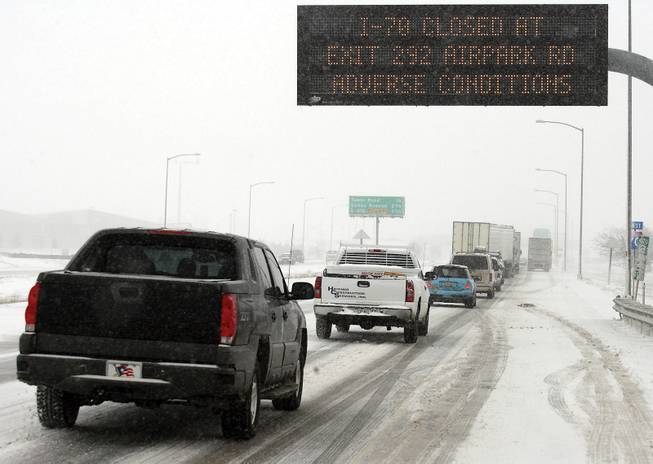
A sign directs drivers in March 2006 to exit Interstate 70 about 20 miles outside of Denver in the suburb of Aurora, Colo., because of treacherous driving conditions.

Monday, Sept. 14, 2009 | 2 a.m.

Reader poll

Should a high-speed rail system be constructed between major Western U.S. cities?

View results

It’s Monday afternoon of a three-day weekend spent at a terrific resort, and the going-home traffic is brutal.

It’s going to take hours longer to get home than it usually takes on this trip.

In some places, traffic grinds to a stop on the four-lane interstate highway.

Motorists are wondering what could possibly be delaying the flow of vehicles.

Oh well, at least the scenery’s not too bad.

No, this isn’t Interstate 15 heading for Southern California from Las Vegas. It’s Interstate 70 between the Colorado ski resorts and the Denver metropolitan area.

People who ski in Colorado face the same traffic woes as tourists who visit Las Vegas from Los Angeles. And just like the transportation experts who are seeking solutions to relieving traffic on I-15, their Colorado counterparts are looking for ways to end jams on I-70.

In most respects, the Las Vegas-to-Southern California jams are worse because there is more distance to cover. Weekend travelers tell horror stories of how a normal four-hour trip between Las Vegas and Southern California can take 10 hours or longer.

In the summertime — think Memorial Day, Fourth of July and Labor Day — it can get unbearably hot and the potential for breaking down soars with the temperature.

Different challenges confront motorists on Colorado’s Interstate 70: steep grades. The incline to Eisenhower Tunnel, which burrows through the Continental Divide and separates Denver from ski resorts in Aspen, Vail, Breckenridge and several locations in Summit County, is so steep that vehicles often bog down when making the climb.

In the winter, falling snow can turn highways into skating rinks; blizzards make them treacherous.

When it comes to transporting tourists between resorts and population centers, Colorado and Nevada have a lot in common — and are grappling with some of the same issues.

One proposal in Colorado is a high-speed train connecting Denver with the high country.
Click to enlarge photo

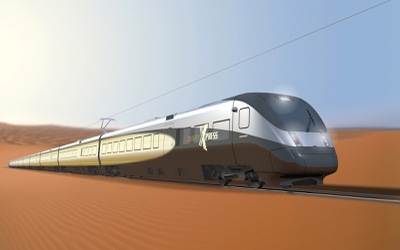
A rendering shows a DesertXpress train, which is expected to reach a top speed of about 150 miles per hour and travel between Victorville, Calif., and Las Vegas.

An organization called the I-70 Coalition is exploring how best to move skiers to and from the mountains. Cognizant of the challenges that steep grades and inclement weather present to traditional steel-wheel-on-rail trains, the coalition is leaning toward supporting maglev — the electromagnet-propelled trains that have been under consideration for the trip between California and Nevada for years. But in the past year maglev has been overtaken by the more traditional technology that the DesertXpress proposal offers between Las Vegas and Victorville, Calif.

Dr. Florine Raitano, executive director of the I-70 Coalition, and board member Harry Dale, a Clear Creek County commissioner, are convinced that maglev is best, in part because of its ability to negotiate the steep grades.

The main reason the DesertXpress is being built only to Victorville is that the steep Cajon Pass lies between Victorville and the Los Angeles Basin. Although the DesertXpress would be able to travel over the desert at 150 mph, it wouldn’t be able to climb Cajon Pass at that speed.

The Colorado contingent is convinced that a maglev system would be less affected by weather because the guideways could have heating elements to prevent snow and ice from accumulating on them.

Maintenance costs for maglev trains are less than for conventional rail. In fact, the next version of the fabled Shinkansen “bullet train” in Japan is going to be a maglev because Japanese rail authorities recognize the lower maintenance cost as an operational advantage.

Colorado’s transportation planners also are looking at how they can incorporate green power into the development of maglev, exploring solar and wind power generation.

Like Nevada, Colorado has its share of political obstacles to overcome to make a rail line a reality.

Part of the debate in Colorado is to determine whether it makes more sense to push for a system along I-70 to serve the resort community or to start along the front range of the Rockies to connect Denver with Colorado Springs and Pueblo to the south and the college towns of Boulder, Greeley and Fort Collins to the north.

The cost issue — the initial expense of maglev versus the less costly traditional rail — is part of the debate. But the newest designs for maglev would be considerably less expensive than their critics have been quoting.

Dale and Raitano are encouraged by a proposal unveiled last week to use high-speed trains to connect the major cities in four of the fastest-growing states in the nation, all in the Southwest.

The plan is being promoted by the nascent Western High-Speed Rail Alliance, a coalition that includes Colorado, Nevada, Arizona and Utah. New Mexico is contemplating signing on as well.

The cities are Phoenix, Denver, Salt Lake City, Las Vegas, Reno and, if New Mexico climbs aboard, Albuquerque and Santa Fe.

The coalition isn’t far enough along to think about what technology would be used, but consider the possibilities.

If maglev connected those cities along interstate highway rights-of-way, Utah and Colorado ski resorts would be easily accessible to Las Vegans. And Las Vegas would be easily accessible to Denver, Phoenix, Salt Lake City and Reno.

With maglev’s 300 mph speed, some of Colorado’s ski resorts would be two to three hours away from Las Vegas. You could zip to Reno in a little over an hour. The Strip would be less than two hours away from Phoenix and Salt Lake City.

Maglev guideways can be built to transport electricity as well as people. If Nevada’s alternative energy future is pursued as the visionaries suggest, the Southwest would be connected on a grid. Our solar, wind and geothermal power could be exported on the new grid.

The biggest obstacle is probably the cost, which can be cast as an investment in the nation’s infrastructure, similar to the expensive public works projects of the Work Projects Administration during the Great Depression or the development of the Interstate Highway System.

President Barack Obama has said that he wants to ride the world’s fastest train and he wants to do it in the United States, not in China — a clear reference to the lead the Chinese have built in high-speed transportation technology.

Political considerations are another obstacle. Most of the people are on the East Coast, where train travel is far more common than it is in the West. Most of the political clout is in the East.

A strong high-speed train proposal from the Southwest would no doubt be a long shot for federal money when the largest cities hold most of the political cards. Not only do the odds favor any rail stimulus occurring east of the Mississippi, but many government decision-makers are bogged down in 19th-century rail technology and don’t understand the principles and superiority of the new transport means.

A high-speed network of trains — perhaps maglevs — linking the fast-growing cities separated by great distances would be a dramatic economic stimulus for the Southwest — and all the more so if the system is manufactured domestically.

At the hub of such a regional network stands Las Vegas, which needs more visitors and is willing to serve as the high-speed gateway to the West Coast — even if, for now, that means only as far as Victorville.

A version of this story appears in this week’s In Business Las Vegas, a sister publication of the Sun.

Discussion: 36 comments so far…

  1. Bring on the maglev system. Who needs wheels?

  2. Would be nice to head to Disneyland with my family and come back home before dinnertime. They been wanted to push this thing since the 70's, good luck on ever seeing it on American Soil. It's enough Amtrack uses Buses to have people coming to Vegas from California. (Amtrack California). While there is perfectly good railway track at what use to be the Union Train Station (now the Plaza Hotel). But if they made it cheap enough for people to get out of their cars and not having to spend 3 hours in lines for a hour long trip (like going on airlines from Vegas to LA) then I'm all for it.

  3. I am OK with Maglev.

    Let private companies build it.

    Let them charge the riders the price to fund the capital cost, operational cost and profit (if the private company wants a profit).

    The government can use it power to take land from private people and "give" to the train company.

    All other major forms of interstate travel are self-funded. Gas taxes pay for roads. Airports and the FAA is funded by airline fees that the passenges pay.

    It does seem silly to spend billions on trains when we are generating $2 trillion deficit this year with annual $1 trillion deficits as far as the eye can see.

    We are paying over $800 a billion in interest and in six years that number will be $1.5 trillion a year in interest.

    Let's get our house in order before adding more debt onto the backs of our children.

    Here is the Sun's and Democrats game plan for our country:

    Spend, spend, spend...deficits, deficits, deficits...tax, tax, tax....Spend, spend, spend...deficits, deficits, deficits...tax, tax, tax....Spend, spend, spend...deficits, deficits, deficits...tax, tax, tax....Spend, spend, spend...deficits, deficits, deficits...tax, tax, tax....Spend, spend, spend...deficits, deficits, deficits...tax, tax, tax....

    And then one day investors will stop buying our bonds and dump our dollars and that will be end.

  4. Southern Pacific owns most of the trackage.

    They have stiffled High Speed Rail for almost a century.

    Never gonna happen in the next 20 years.

  5. Gas taxes only pay for some of the cost of roads: city drivers subsidize highways, and city streets are paid for out of local sales and income taxes. Most parking is provided by simply taking private property in the form of parking requirements in zoning. A substantial amount of every police budget is policing automobile use and ownership. In fact, since gas taxes do not even cover capital and maintenance costs, ALL other operating support is a subsidy.

    In fact, HSR services all over the world generate an operating surplus, so the public cost up front of building the thing IS the cost. Much of the public cost for roads and flying are hidden subsidies.

    Note that the article is misleading on one point - with the California HSR system already tunneling out of the LA Basin, a junction with the California system north of Palmdale would allow electric trains on the Victorville line direct access to both the LA Basin and the SF Bay.

    However, while the Front Range line would be better as a 220mp Express HSR corridor, for similar considerations as Las Vegas of being able to hook up with normal HSR rail corridors in the Southwest, there is a substantial case to consider for Maglev on the I-70 alignment.

  6. as nice as it would be, I'll never see it in my life time!

  7. There might be an interest in links to Tucson and Phoenix Arizona. Possiblly building it over the top of the Interstates and other highways in the Canamex Corridor. Thus less environmental damage and protests.

    There's dozens of possibilities for this to expand throughout the Southwestern Region; Yuma, El Paso, Flagstaff, Albuquerque etc.

    The biggest protests would probably be tour bus companies that run a fleet of them from these cities.

  8. High speed rail is NOT the way to go. http://www.cato-at-liberty.org/2009/08/2...

    It is far too expensive and the benefits do not outway the costs. We would be far better off building more highways

  9. Barry wants the USA to build his ride instead of China?

    Better idea ... Let China develop the Maglev system and we will be able to get it on sale at Wally World for always the lowest prices .... always!

  10. all you have to do is go to europe and see how stupid we are in america we let the companies block progress so they can milk old outdated form to death progress be dammed those train should be all over this country by now....Ive taken them in europe and its so much better that driving....fools we are

  11. SgtRock, you are a dumb, redneck repube.

  12. I ride trains all the time in Japan and in fact rode the original version shinkansen my last visit with my boys.This version was designed and built for the Tokyo Olympics in the 1960s.It was still was a very nice ride very comfortable, smooth,fast and convenient.
    The newer versions are sleek and hella fast.You can rocket from southern Japan to Tokyo in a matter of hours.In Europe the trains are quite good as well.
    America is falling behind the rest of the world infrastructure wise and it is time to crank up the R&D. Due to cost, partnerships between companies and government should be established.The government should foster projects and then spin them off or privatise them.

  13. @pmmart: Maglev doesn't need to be developed, it's a mature technology perfected in Germany. It has been approved for passenger transport for decades.

    In general: one should take secondary benefits into account when assessing a proposed high-speed rail (or maglev) line. In fact, these secondary benefits far surpass any income from ticket prices. The only system in the world that can fund its operating costs from ticket prices is the Shinkansen network in Japan. All over the world, the benefits that result from the rail line connecting regions and making people and places accessible, thus boosting economic growth, vastly overweigh any construction or operating costs. In a sane case, a rail connection is highly profitable.
    Anyone claiming that the operator should finance the line from the ticket prices doesn't know anything about building and operating transport systems.

  14. Vegas as "the" hub....LOL

    Vegas can not even get the monorail to the airport; let alone a better, reliable, fast and a cost efficient mass transit system for tourists to get from the airport to the strip!

  15. 2zero, you can blame the cab/limo companies for that one.

    Plus as I understand it, the Las Vegas monorail company is a private company. Mass transit isn't directly profitable, only government can profit from it by getting extra tax dollars from the businesses that (ideally) would be thriving near the monorail.

  16. Sgt Rock, You are oh so right....Let the private sector fund it and the public buy the tickets to ride. Keep the Gov't OUT. If it is a viable means of transportation, then the public option will make it go, not the Gov't. Amtrak...Amtrak...Amtrak...

  17. Is Barry's ride going to have high speed spinners on it?

  18. "Is Barry's ride going to have high speed spinners on it?"

    More evidence of the racism of the republican right.

  19. Why did Obama drop his nickname, Barry?

    Any idea?

    I hope it had nothing to do with race.

    I think it was around the time he was embracing black racism.

    Obama the racist.....AGAIN!

  20. Rocco
    take into account all of Europe would only take up half the United States. Easy for them to build these trains since one line would have to go for over 2000 miles. So we're not fools after all since parts of the U.S. does have train service between cities.

  21. Meant to say "one line here would have to go over 2000 miles".

    Come to think of it.......we do have rail service that covers that 2000 miles.

  22. Sgt Rock...like your comments man! It's so true isn't it. Only a dumb Liberal would disagree with us. We're sick of looking to the government as the solution to all our woes. Private industry is the answer. Liberals, who needs them!

  23. Yeah...It is called Amtrack.

    Nearly 40% of Amtrack operation cost is funded by tax payer money.

    To move a passenger from the east coast to the west cost, it cost the taxpayes over $1,200.

    Yep....that is what we need.

    More of that efficient train service.

  24. Lots of good comments here. Its funny how in the upper Midwest, they think they are not worthy of anything except slightly souped up diesel trains sharing the rail with freight trains.

    In Las Vegas---Its Maglev baby!

    What the heck. Someone has to go first.

  25. SgtRock, nearly a 100% of the interstate highway system is government run.

    A system that promotes car usage, which promotes gasoline consumption...which puts money into middle eastern countries that often don't like us very much.

    How did you get this $1,200 dollar figure anyway? Driving a car from LA to New York would cost a average person $285 in fuel costs (At 26 mpg). It would take around 3 days to (safely) make that journey by car. This isn't even considering things like food and supplies needed.

    High speed rail would make it a lot shorter, cost the person riding the rail line a lot less and would be far more environmentally friendly even if your beloved coal was used to power it.

    One thing you can't measure though is additional tax revenue from businesses that thrive along the new form of mass transit. Plus unlike the interstate, people are putting money directly into the system with ticket sales as opposed to the interstate system which is completely dependent on government cash.

  26. The resident philistines still cling to the crashed and burned theory that the private markets are efficient and work well. That's why the world's economic system had to be saved by public funds, why the (privately funded) dopey Las Vegas Monorail is such a paragon of success, and why the same clowns now want to run a train from here to Victorville. Yea! philistines and your make-believe view of the world.

    Meanwhile, the Chinese and Japanese are further leaving us behind as they publicly fund their own high-speed trains. What will probably happen is, because we have dragged our feet for so long, even if we ever do get high-speed trains, the Japanese or Chinese (or a consortium of both) will get the contract to build it, instead of an American company.

    Thank you, philistines.

  27. I say just build the ordinary rail lines first. Let all these companies that way to build these maglevs pay for the updated rail. Privatize Amtrack and have Amtrack partner with all thses companies. Then when they make a profit, build the maglevs.

  28. krases...thanks for confirming my points.

    It cost taxpayers $1,200 to subidize an Amtrack train trip from the east cost to the west cost.

    Yes, the interstate highway progam is paid for by the users via the gas tax.

    I am OK with building high speed rail as long as it paid for by the users and not the taxpayers.

    The government can help with getting right-of-ways or providing bond (not quaranteed by Uncle Sam) financing.

    The current interstate transportation systems are funded by the users, except for Amtrack. Roads are paid by the users via gas taxes. Airports and FAA are paid for with fees charged to the airlines.

    Let these trains be paid by the users.

    This year we have a $2 trillion deficit. The US is paying $800 a year in interest. Some estimates that it will go up to $1.5 billion in about 6 years from now.

    We need to stop burying our future generations, our children and grand children, with a mountain of debt.

    Having toy trains is not worth that price.

  29. Thanks to Sig Rogich, the same bum that brought Nevada Jim Gibbons, for talking Harry Reid into switching his support from the Anaheim to LV Maglev Train to the slower Victorville to LV DesertXpress.
    Gee, Sig, you just seem so hell bent on destroying Nevada. Must pay well. Because with you we all know it is never about ethics and all about the money.

  30. I do not see the benefit of a high speed train from Victorville, Calif. ? to Las Vegas if you do not extend it in other directions.Why Vitorville, why not LA or another major city?The object is to "attract" riders. I wouldn't be interested in a "park n ride" situation. I'd rather put myself in a terminal for the ride to Vegas.

  31. SgtRock, So what of the businesses that that thrive from a new railroad connection? I guess you chose to ignore that tax income completely.

    The gas tax doesn't pay for the highway system. It did in 1993, but now anymore. Part of this is because the per-lane cost of a highway increases as you add more lanes over time. There comes a point were you need another method of transit instead of just expanding the existing system. Its a lot cheaper.

    The same thing goes for medium range aircraft. There comes a point were expanding airports becomes more expensive than just building a alternate form of transit.

  32. It wasn't the Railways that made any money. It was all those Station in those Podunk towns. All those McDonald's, Subways, and others pay for the space that make rail travel possible.

  33. There in only one application of the Maglev train technology in the world. It is a short 19-mile demonstration segment at Shanghai's Pudong Airport in China. Rather than extend this demonstration project, China chose to terminate utilization of Maglev and implement its own state of the art high speed rail network similar to what is being used in Europe and other parts of Asia. Maglev is built on an elevated structure even when running "at-grade". No matter the height of the structure, it requires extraordinarily tight tolerances and structural stiffness, which translate into very short structural spans, very stiff structural decking and columns, and therefore, incredibly high costs. The world's only Maglev technology supplier (based in Germany) has disbanded its development program completely. Germany has dropped all Maglev projects due to uncompetitive high costs in favor of more efficient high speed rail. Operations and maintenance costs of Maglev are virtually unknown due to lack of manufacturing, servicing, etc. There are no existing US safety standards for Maglev technology. Therefore, the certification process for use in the US would take many years. Recent independent cost estimates for Maglev construction in this country, referenced in the Government Accountability Office (GAO) study, were performed by the Southern California Association of Governments, Maryland MTA (for the proposed Baltimore to Washington DC maglev), and the designated public transportation planning agency for the San Diego Association of Governments, found that the cost of maglev construction would likely range of $99 million to $199 million per mile. Given the above information, the cost for the proposed 260 mile line from Las Vegas to Anaheim would be between $26 billion and $52 billion. Such a cost would make the CA/NV Maglev project the most expensive transportation infrastructure project in the nation's history -- more than twice the size of Boston's "Big Dig".

Post a comment

Commenting requires registration.

Comments are moderated by Las Vegas Sun editors. Our goal is not to limit the discussion, but rather to elevate it. Comments should be relevant and contain no abusive language. Full comments policy.

Username:
Password: (Forgotten your password?)

OR Create an account (It's free)

  • Most Read
  • Discussed
  • Most E-mailed

Calendar »

  • 28 Sat
  • 29 Sun
  • 30 Mon
  • 1 Tue
  • 2 Wed