Thursday, May 31, 2012 | 10:44 a.m.
Sun archives
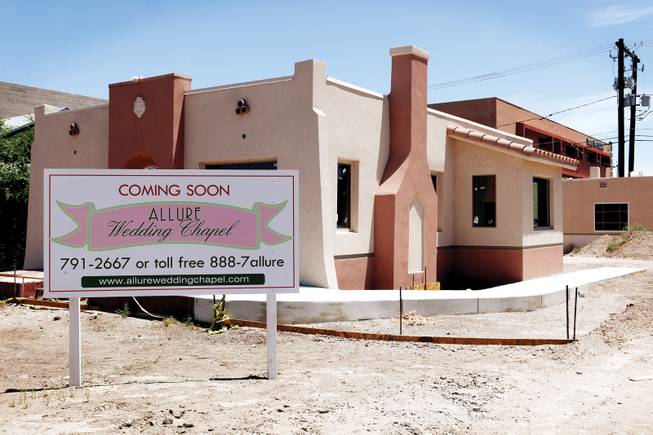
My colleague recently moved into a cool place in Soho Lofts in the Arts District—would someone please change the name of this otherwise worthy building?—and is mostly happy with downtown living. But he’s also discovering its frustrations. Walking his dog, he noticed two new developments, one on the ground floor of Newport Lofts and one at Third and Gass. A restaurant? A market? No, sorry. The former will be a law office, and the latter will be a wedding chapel. Arrghh.
Sometimes it seems like the “invisible hand”—Adam Smith’s image for the magic of the free market—is drunkenly swinging a mallet into some rusty nails to build things we don’t want.
So what’s the deal? We have some idea of what we need more of downtown (a grocery store, storefronts that aren’t boarded up, more housing) and what we don’t need (law offices and wedding chapels, and let’s throw in bail bondsmen and payday lenders).
So why can’t we get more of what we need and less of what we don’t? I talked to Flinn Fagg, the city’s director of planning, about this.
First, the good news. Fagg, who has been here nine years, comes from a planning philosophy called “new urbanism.”
At the risk of oversimplifying: The idea is that the way cities developed for centuries made sense. They were walkable and built to human scale, and they mixed commerce, living and cultural pursuits, all in close proximity. Then for a few decades, we built superhighways and suburbs and big box stores, because cities were perceived to be grimy and cramped and dangerous.
All that was fine, but it didn’t work for everybody, so the new urbanists began designing new urban spaces that were a throwback to those old principles. The fact that Fagg comes from this school of thinking is good news, because we’re trying to build an urban downtown, so we need someone versed in the tenets of urbanism to help us plan it.
I asked him why on Earth a new urbanist would come to Las Vegas, which is known for its Sunbelt sprawl. Fagg said he was inspired by former Mayor Oscar Goodman’s vision of a revitalized downtown.
Now the bad news: Fagg’s hands are tied, at least for the moment.
The city approved plans for 40 condo towers by 2007, but the recession killed most of those projects. Until developers see higher demand and higher rents, we should not expect any new building. (Hopefully the arrival of Zappos employees in 2013 will catalyze the rental market.) Residential development downtown will be hampered by all the excellent, spacious and cheap rental houses in the suburbs.
And without more residents, there won’t be demand for new shops or a much-needed grocery store. Fagg said despite the city’s valiant efforts, he didn’t anticipate a grocery store downtown for “several years.” It’s worse than that, however, because the lack of a grocery store will dissuade people from moving downtown, and you see how this is a vicious circle that leads back to wedding chapels and bail bonds.
Other cities are a decade or two ahead of us in this process, so we’d be wise to see what they’ve done. They often use their development rules for leverage. So, for instance, Fagg said a city will adopt incentives, perhaps waiving the height limit on a residential tower if the builder will put a grocery store on the ground floor. Everybody wins.
Unfortunately, we don’t have those tools at our disposal, because in 2000, in a bid to encourage development, we created the downtown Centennial Plan Overlay District, which minimized development restrictions in much of downtown. And without restrictions, we can’t offer incentives.
Our hands aren’t completely tied, however. In other cities and sometimes here, community activists have often had success—with the help of their elected representatives—persuading a developer that their neighborhoods really didn’t need another 7-Eleven or liquor store.
That’s cause for hope, but it also means people downtown need to get political if they want to see more fresh produce and fewer drive-thru wedding chapels.



Id say we are about 30 years behind other cities with flourishing dowtowns. If you take Portland for example, they have super markets, banks, shops, restaurants, a mall, and parks. Yes they have their homeless and drifters but the more people who think that downtown is alive and a place to be, the less homeless seem to bother.
It's Vegas..it draws the degenerates more so than probably any other city. It's going to be very difficult if not impossible to turn downtown into a Portland type setting. I walked thru Fremont Street yesterday. 2 beggers accosted me in about 200 yards. Lovely.
@LV-24,
Downtown Portland isn't really a great example or match for Vegas. Portland is about neighborhoods, like Hawthorne. Each neighborhood has its own identity.
Las Vegas shouldn't attempt to model itself on Portland. Also, it is way easier to have fresh food markets in Portland where most of the produce is locally sourced. That can't happen in Las Vegas.
Downtown Portland is the location of the PSU campus, so many of the amenities are sustained by college students constantly using Downtown.
A better match for Las Vegas to aim for is Phoenix or Austin. The climate of Portland is conducive to that outdoor living and community.
@TomD1228
I have lived in Portland, LA and NY and those places had the same bums that stop you. Hell, I have even lived in cities Germany and England and they have the same bums that stop you.
Every major city has them. If it bothers you move to Pahrump or Mount Charleston.
Why not a Albertsons or Smiths. If I was thinking to get something down there that would be great.
"In other cities and sometimes here, community activists have often had success--with the help of their elected representatives--persuading a developer that their neighborhoods really didn't need another 7-Eleven or liquor store".
In this city, and downtown, within the past year, with the help of our elected officials, and amongst plenty of neighborhood opposition, we now have 2 retailers that have been approved for full on liquor sales near the corner of Las Vegas Blvd and Oakey...now THAT is vision for the future.
Hey, Coolican, here's a chance to take some of those big bucks the LV Sun pays you and invest them in opening the much needed grocery store. You'd not only be doing your fellow Downtowners a favor but you'd get rich doing it, wouldn't you? If you had a little imagination you'd understand that's how capitalism works: "Find a need and fill it" and you become successful. Hop to it, Coolican.
"Downtown Portland isn't really a great example or match for Vegas. Portland is about neighborhoods, like Hawthorne..."
tigermike -- amen to that! Of course Hawthorne wasn't the same after the yuppies moved in. Cool became corporate faux-cool -- kind of like hearing Nirvana Muzaked
"Why not a Albertsons or Smiths."
WilliamC -- Trader Joes would be a much better fit for the neighborhood. Or Sunflower -- just not another Yuppie Heaven like Whole Foods.
I'd go for a decent local coffee shop. The Beat is usually too crowded since Hseih & his bunch discovered it.
"Nothing exists except atoms and empty space; everything else is opinion." -- Democritus (460-370 B.C.E.)
Being close to this issue--my dad lives in Soho and my husband is a store director for a big grocery chain--I feel very qualified to answer. There isn't an Albertson's or Smith's because it won't make money! The closest Albertson's is on Charleston/Bruce and, with NO RENT, didn't make money in the last quarter. There aren't enough people or traffic. I would recommend the Albertson's on Maryland Pkwy/Sahara, personally. They have a great liquor and craft beer selection, a nice array of deli and meats/cheese and an awesome butcher. (They also have a new store director who I hope will keep up the place.) That store has a lot of traffic from LVCC so I think it meshes well with the Downtown crowd.
Councilman Coffin has mentioned Trader Joe's before, though, so maybe there's something I don't know.
BTW, there IS a market on the ground floor of the Soho building but I've never been inside.
There are not enough residential units in the core of downtown of a high enough economic demographic. Grocery store site selectors and their developers look at demographics within a one mile, two mile, three mile and five mile circle around a potential site. They want to know number of "rooftops" (residential units) and median income per unit, plus other breakdowns. They look at traffic patterns, how the store would lay out (front door, loading dock, size for the area). Then they analyze the potential for a store to succeed 20 years at that site (financing period for the store). Then they take it back to their boss, get it ready for the real estate board on a quarterly basis approve or not approve the site. Independent grocers will take greater risk, especially if they are offered redevelopment incentives to take risk. This is the case, for example, in getting the old Von's open again in West Las Vegas, but that took $900,000 over several years to pay for building repairs and new grocery equipment like coolers and air conditioning. There is news that an independent is looking at opening White Cross Drugs into a market.
I thought someone opened a small market downtown? Fresh and Easy opened some store in low income areas and they closed, people line up for ribs, catfish at Jerry's at MLK and Cheyenne however.
People don't go out for healthy stuff normally.
@killerB - Trader Joe's is what I've been thinking would fit in.
Actually - a Fresh & Easy would be a better fit and suit a broader constituency since TJ's is rather limited and so private label focused. But - really - a local market/grocer/bodega with staples and cool foods (sourced locally - as possible) would be the ideal first choice. Think Trader Joe's meets 7-11 with baked goods from German Bread Bakery and Patisserie Manon...
I am sure that as long as it carries a large supply of Natural Ice beer and MD40-40 a new shopping mart will be a money maker downtown.