Associated Press
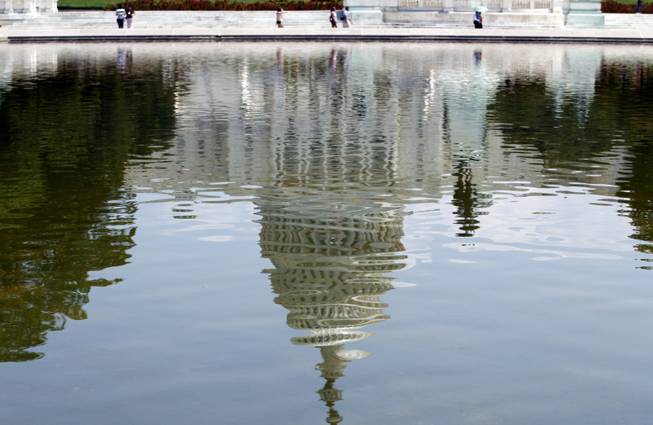
The U.S. Capitol is reflected in Washington Sunday, July 31, 2011.
Sunday, June 3, 2012 | 2 a.m.
Sun Archives
Senator Harry Reid, D-Nev., speaks during the Memorial Day Ceremony at the Southern Nevada Veterans Memorial Cemetery in Boulder City on Monday, May 28, 2012.
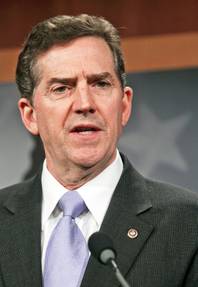
Sen. Jim DeMint, R-S.C., has morphed into a national champion of Tea Party-backed conservatives.
What do specially designed vehicles, formaldehyde polymers, volleyballs and cheap drinking glasses have in common?
They’re all Sen. Harry Reid’s picks for items that ought to have their usual import tariffs waived in what is normally a straightforward bill.
But this year lawmakers are apt to make anything controversial.
Every two years, Congress passes the Miscellaneous Tariff Bill — or the MTB. The bill is a big catch-all item designed to give manufacturers a route to avoid tariffs — sometimes seemingly nonsensical ones — on items vital to U.S. manufacturing that are difficult to procure in the states. Lawmakers on both sides call the legislation a job-creator and a job-saver.
This year, there’s a standout from that usual comity.
Sen. Jim DeMint, an unofficial leader of the Tea Party in Congress, is taking a stand against the MTB, calling the bill a thinly disguised earmark — a provision that singles out funding or tax breaks for individual projects.
DeMint argues the MTB violates President Barack Obama’s ban on earmarks because the duty suspensions each benefit 10 or fewer companies.
“Reductions in tariffs are themselves not the problem,” DeMint said. “However, a process whereby a few companies, oftentimes only one, have to hire a lobbyist and ask a favor of their congressman to introduce a bill before it gets sent to the International Trade Commission for review unnecessarily creates a situation ripe for abuse.”
Earmarks are a no-no in Congress ever since Obama promised to veto any bill that contained one.
Reid is the only member of the Nevada delegation to have submitted items to include in the MTB — and he’s only listed as requesting five. Others, like Sen. Bob Casey of Pennsylvania, have requested well over 100.
Reid’s office didn’t return several calls asking to explain on whose behalf they were seeking the waivers. But even if it’s difficult to pin down which companies the tariff waivers are supposed to benefit, it’s not too hard to determine what they’re supposed to do.
Most of the chemical compounds for which Reid is requesting a tariff waiver have to do with the production of plastics, coatings and adhesives. Nevada has a few factories that specialize in such production.
Drinking glasses seem destined for Nevada’s casino and hospitality industry, but there’s a quirk in the tariff system.
If a drinking glass costs more than $5, it carries an import tariff of 3 percent. But if the glasses cost less than 30 cents, they’re taxed upon import at a rate of 28.5 percent. Reid’s provision attempts to waive the tariff on those cheapies.
But specially designed vehicles could be any number of things: custom cars and motorcycles, monorail or high-speed rail cars, even specially designed wheelchairs. Without a more specific definition, it’s hard to tell.
For the most part, Al DiStefano of the Nevada Commission on Economic Development said, the import categories Reid’s trying to waive tariffs on “don’t seem to be big-dollar products” for Nevada. That would suggest, he said, that some of the waivers might be aimed at helping “an individual company or two.”
Reid’s items are only a taste, however, of the hundreds of items for which lawmakers have requested tariff waivers.
The full list is available for download at the websites of the Senate Finance Committee and the House Committee on Ways and Means.
Congress doesn’t usually reach out to the public to weigh in on bills, but with this measure, the public is being invited to participate in the legislative process through an official comment period. It’s open through June 22.

Join the Discussion:
Check this out for a full explanation of our conversion to the LiveFyre commenting system and instructions on how to sign up for an account.
Full comments policy