Friday, Dec. 21, 2012 | 3:57 p.m.
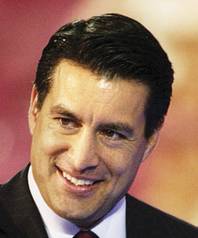
Brian Sandoval
CARSON CITY — A state advisory committee wants the governor to restore funding to help problem gamblers that was cut in half in 2011.
A letter sent to Gov. Brian Sandoval today by the Advisory Committee on Problem Gambling says it “strongly urges you to recommend restoring this funding to the level intended by the Legislature when the revolving fund was established in 2005.”
The program was originally financed from a quarterly $2-per-slot-machine tax but was lowered to $1 per machine during the budget crunch in 2011.
Carol O’Hare, chairwoman of the committee, said it is particularly important to increase funding to help Internet gamblers. Nevada is moving toward allowing intrastate online poker.
“If we are to play a leadership role in the Internet gambling era, as the state hopes, it is vital that we play a leadership role in every aspect,” the commission’s letter stated.
Restoring full funding “would not only allow expansion of treatment to cover internet clients, but also the restoration of prevention activities that would keep them from developing problems in the first place,” the committee’s letter to the governor said.
The committee estimates there are 68,000 Nevadans with pathological gambling problems.
Figures from the state Department of Health and Human Services shows $708,617 was spent in fiscal 2012 treating 455 problem gamblers, and there was no money for prevention programs.
The advisory committee said research by UNLV shows 92 percent of those treated show positive results. Fifty-two percent stopped gambling and 40 percent reduced their gambling.
More than 3,000 Nevadans have received state-funded treatment since 2006, according to a fact sheet from the advisory committee.
Sandoval has declined to reveal details of his proposed budget, which will be released Jan. 16 in his State of the State message to the Legislature.



Gambling Addiction Therapy
In 1998, Nevada Gaming Control Board members were going to take a hard look at compulsive gambling and the way the industry deals with it. The goal of the board was to evaluate testimony before the committee and recommend policy changes to better address the problem. The study disappeared as quickly as it was established.
In 2001 and 2002, there was talk by legislatures in Carson City to allocate $250,000 a year for problem gambling treatment. Nothing came of it. Then again in 2003 legislatures talked about funding a gambling addiction program. A spokes person for the governor said the state should not be involved in funding gambling addiction treatment. He said it was the responsibility of the gambling industry. Fast forward to 2012 -- law makers in Carson City still do not have the funds to support gambling addiction programs.
Is the state responsible for adult behavior? No.
Casino operators offer adults a product -- gambling -- adults can take it or leave it.
It's time for 'down and out gamblers' to accept responsibility for their poor behavior.
Theresa A. Mataga
Las Vegas, Nevada
AMEN!
Who accepts responsibility for the poor leadership in Carson City and Washington DC, or should I say, who pays the price? I think we all know the answer to that one.
I am not at all sure that the state can buy its way out of this problem, even if money could solve the problem of gambling addiction, but $250,000 to address the problem, in a state where the gambling industry is major contributor to the economy, sounds ludicrous. The gambling industry perhaps does not want to contribute because that would seem to acknowledge that there is a serious addiction problem. Twelve step programs in general, which are self funded, seem to have a wide following of mostly voluntary participants who recognize they have a problem and try to do something about it. Aside from a little education into the nature of the problem, including pointing affected individuals toward sources of help, there may be little that could be done cost effectively. If a person over indulges in a bar, they may be shown the exit. Perhaps casinos should be encouraged to identify problem gamblers and stop serving them. It would not solve the problem entirely, but if they don't want to be part of the solution, then at least they can avoid being a contributor to the problem.
OldPSUguy. it's called the Alcohol Awareness Policy, whereas those that are involved in the serving of alcoholic beverages are required to go thru training and obtain a license to work in such fields. However, no one in government seems to care about enforcing the policy. Why have the policy and require a license (that costs $15.00) if no one cares to enforce the law?