Las Vegas Sun

May 20, 2013

Currently: 70° | Complete forecast | Log in

Education:

School District sees big drop in test scores

Officials attribute decline to tougher test, higher passing standards

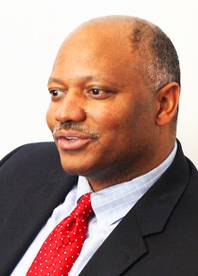
Dwight Jones

Dwight Jones

Pedro Martinez

Pedro Martinez

Carolyn Edwards

Carolyn Edwards

Clark County School District officials attributed a significant drop in test scores this year to a more rigorous test and higher proficiency standards.

The School District on Thursday announced results of the 2011 Criterion Reference Test and the Nevada High School Proficiency Exam that showed a drop in reading test scores for all grades except fifth grade.

The CRT is a benchmark test given to students in third to eighth grades. The NHSPE is a standardized test given to all Nevada students starting in grade 10; students must pass the exam to graduate high school.

Reading proficiency at the middle and high school levels showed the most significant drops, from about 20 percentage points in seventh and eighth grades to 30 percentage points in 10th grade.

There was an average drop of 20 points on the eighth grade reading test, Superintendent Dwight Jones said. Only 48 percent of 10th grade students taking the NHSPE passed the reading section on their first try.

Sue Daellenbach, the assistant superintendent of assessment, accountability, research and school improvement, attributed the drop in reading scores to a more difficult test and more stringent passing standard.

Between 2007 and 2009, the Nevada English Language Arts standards were revised, and those changes were implemented for the first time this past school year, Daellenbach said.

Students read longer passages on this year’s test and answered questions that tested their analysis of the passage.

For example, a question on this year’s reading test might have asked, “What is the most important turning point in the passage?”

In previous years, students were assessed on reading comprehension. A question on a previous year’s tests might have asked, “What is the main idea of paragraph two?”

“That’s an entirely different type of question, where students have to make their own evaluation about what they read,” Daellenbach said. “That’s a big step, from finding a concrete answer in a couple of paragraphs...The rigor is much higher than in previous years.”

Because the test standards changed, the Nevada State Board of Education raised the “cut scores” — the passing score — on the NHSPE in May. The cut score went up to 300 points, from 251. The higher passing grade might explain the 30 percentage point drop in the 10th grade reading passage rate, Daellenbach said.

The School District would have experienced a similar drop in math scores two years ago if it weren’t for “transitional cut scores.”

The state lowered the passing grade on the math section for three years to help the district transition to the higher math standard, Daellenbach said. This year’s test scores would be 20 points lower if it weren’t for the “transitional cut scores.”

“Somebody described it as a wound and a Band-Aid,” she said. “In reading, we just pulled it off. With math, we’re kind of easing it off.”

Next year, Nevada will move to an even higher testing standard adopted voluntarily by 43 states called the Common Core Standards.

Reading and math standards will again rise, from analysis of reading passages and solving math equations to synthesizing short essays and solving math word problems.

The Nevada State Board of Education is participating in a regional National State Board of Education conference in early August to determine how to implement the new Common Core Standards in state curricula and assessments.

Daellenbach said the School District is working to ready teachers and students for the higher standards, holding summer workshops.

“It’s a big difference from bubbling (in an answer) to writing an essay,” Daellenbach said. “I imagine it’ll have some impact, but I don’t know how much.”

Jones reiterated his support for the new Common Core Standards, which he said would make students “ready by exit.” He warned, however, that “it’s going to be a tremendous challenge for teachers” who may have to change their syllabi to teach to the new standard.

He also pledged more help for teachers and a renewed focus on literacy in the early grades. Under his reform plan, Jones proposed implementing a benchmark test in reading at the first grade.

“Youngsters who are showing early signs of struggle, if we intervened right then, it’ll be cheaper and their chance for success will be greater,” Jones said. “Those students will be stronger readers, which will make a tremendous difference when kids get to middle school.”

School District officials said they were disappointed by this year’s test scores, but maintained they cannot be compared to scores from previous years because of the new standards.

Officials also said the drop in test scores is not limited to the Clark County School District.

“This is not a Clark County issue,” said Deputy Superintendent of Instruction Pedro Martinez. “This is a statewide issue, because the entire state dropped. It’s not just us.”

There was also some good news, officials said. Elementary school reading test scores remained steady despite the higher standards.

“Let’s celebrate the fact that our fifth-graders went up an average of 10 points across the district with a new exam that’s much more rigorous,” Martinez said, adding that he is still concerned about eighth-grade literacy. “I think that’s something to be optimistic about.”

School Board President Carolyn Edwards was more somber in her assessment of the test scores.

“We need to not lose sight of the fact that although there are reasons why the scores are lower, they are lower, and we have a greater distance to go than we had before,” she said. “It is imperative at this point that we move forward, that we reach achievement for every single student in our district.

“No excuses,” she said. “Let’s just get the job done.”

Discussion: 33 comments so far…

Comments are moderated by Las Vegas Sun editors. Our goal is not to limit the discussion, but rather to elevate it. Comments should be relevant and contain no abusive language. Comments that are off-topic, vulgar, profane or include personal attacks will be removed. Full comments policy. Additionally, we now display comments from trusted commenters by default. Those wishing to become a trusted commenter need to verify their identity or sign in with Facebook Connect to tie their Facebook account to their Las Vegas Sun account. For more on this change, read our story about how it works and why we did it.

Only trusted comments are displayed on this page. Untrusted comments have expired from this story.

  1. Maybe, just maybe, the scores are lower because they are the true scores now?

  2. That was a ridiculous post, Bob Realist.

    ...Meanwhile, we were told this was a'coming. And I see here that testing standards will be stiffer yet, from next year. So be it. Honest assessments of how much we have to do is required. So far, so good with the new Super in this brutal new world of education. And teachers, I've your back, both on these forums and in my local elementary school where I volunteer. Let's "get 'r done."

  3. If parents were informed of some of the things they could do to provide back-up on the home front to support the progress of their kids, then the transition between school work and homework would become seamless.

    For example the Common Core Standards in English Language Arts call for a variety of specific skills to be developed in understanding how effective writing is achieved. Parents need to know this stuff in order to help the kiddos.

    Most actually DO know the stuff, but what they lack is the terminology or how to phrase their understanding so that it would easily correlate to what Johnny is getting in school.

    Point of view is a good example. Helping the kid see that there are many ways of viewing a story is a great way to introduce the concept; it enables kids to see things from the perspective that other people have and to understand that strong feelings come from personal association.

    If the district's efforts in 'Teaching Parents' were to include simple lessons for them to incorporate 'home work' into their lives, then the net result could become a cohesive and constructive base for the progress we need to make. If, on the other hand, the parental units are left to avoid supervision or integration of responsible role modeling or assisting with concept development, then the kids will continue to struggle and find their efforts less than satisfactory. The outcomes will reflect the input.

    We could achieve these necessary goals many ways: teacher lessons for parents sent home with kids, evening sessions for parents or parents and kids with teachers, emailed examples of parental inputs, videos of conversations (lessons performed) or even Saturday school for parents.

    The Common Core Standards are actually quite a bit better than what we had before. The evolution has brought us well-functioning plans. It would be a shame to let this generation of children suffer from what many of their parents did not get - a basic set of workable skills to empower them to achieve their potentials.

    Together, the district employees and the primary teachers (i.e. parental units) could have a remarkable impact on the dropping scores that reflect both our background and our combined input. Success will require that we find cohesiveness and a unified approach with all sides contributing. It takes a village now more than ever.

    Check out those Common Core Standards. Google it and see for yourself how well they delineate and describe precisely how to know and what to know. I would think parents would want to do this.

  4. Sandoval's cuts are having there effect.

  5. We have hired a new Super and now we are cutting his arms off. (Thanks again.) This man has a record that we hired him for, take the chains off him and let him go to work.
    We really need to simplify, go back to the basics and build from there. That is Reading, there should be no child that can't read by the third grade. NONE. Writing is important and when you learn to read, writing is secondary. Learn words. Math, my god, the most basic thing required to survive.
    Here is the deal: I spent 3 weeks at the legislature, I listened to the complaining about the schools and I saw the TV ads. DID ANYONE SEE THEM SAYING "THEY ARE CUTTING MY READING TEACHER, OR MY WRITING TEACHER OR MY MATH TEACHER"? No, why? cause they were not, and the media and students would rather focus on "they are cutting theater", or some other extra class. We need to get our house in order and we know what works, so does this new Super.
    Parents need to demand better. Teachers need to stand up a say what teacher in the next room is not doing a good job, administrators need to be held accountable as well. Nobody has ever said school is supposed to be fun, it is education.

    You know, you can go to the State of Nevada School Districts, find the rating of all the districts in this State and see that we have a district within 200 miles that receives a 9 out of 10 rating. We get a 5. Is there no desire to improve?

    Name me a time when our legislature has indeed cut the spending, and I mean cut it where it can't function. NEVER, and we have funded this district for many years and we continue to get bad results. I think it is high time we look inside those doors.

    I would love to see this district cut into smaller districts, at least to zip code size. Then we can go directly to the problem, fix it and move on. Why are the kids of today dumb? They aren't, we have changed, made grades non existent, made competition a non factor, removed parents from the scholastic lives of their own kids. We need to return to reality, we should not wait till a child is ready for the 5th grade or High School and then discover that he/she can't read. Please.

  6. Thank you airweare - as an involved parent I think what the school district seems to fail to understand is that parents need help to understand how to help their children.

    If you give us the tools, we can help our kids, if you don't we struggle right along with them.

  7. geezelouise,

    you have the hardest job of all - figuring out how to help them and then getting to some comfort level in helping the little ones you love.

    Schools should make it more of a partnership and they need to prepare you one way or the other. Personally I think the districts generally blow parents off and this is a huge mistake.

    If they just approached the family differently, things could improve. Just googling the Common Core Standards and seeing what is laid out helps parents do their job. Hooking up with each teacher's syllabus and seeing what you are comfortable working with and what stumps you enables folks to get the goods before the child asks something like "What's an asymptote, mama?" or "What do they mean when say 'factor 24 three ways'?"

    Parents have the experiences and kids have the curiosity; the schools need to make a gate so nobody feels a fence between. There is no need to struggle; there is every reason to share the load.

    The internet has the capability of providing the links and the hook-ups and we could do more to simplify the connections. Lesson plans or detailed syllabi from each teacher could enable families to prepare for the week and offer the kind of home-schooling in addition to school-schooling that would benefit the tykes. Why don't they do this? I dunno. I'm not even a parent anymore.

  8. Nothing to do with the kids. Its the parents who are FAILING.

    Take away the video games and TV during school week stupid parents. Your kids should be doing nothing but SCHOOL and HOMEWORK. I have 10 and 8 year old, they are both straight A's, always have been. They are not smarter then anyone else, its we don't let them play video games and watch TV during the week, so the school and homework. That's it.

    So STOP failing parents. Its 100% YOUR FAULT your kids are stupid.

  9. Teach to educate, not to pass the test. Focus on the former and the latter will follow.

  10. Just my POV but...for the last 10 years we were adding teachers faster than we could count. These teachers were from all over the US with varying degrees of expertise. To bring everyone to a common ground, we had reading, writing, and mathematics curriculum that was the same for every teacher and every student, that we had to follow with fidelity, so that we were all teaching the same thing...now that the pace is slowed, we are heading back in the direction from whence we came. The Common Core State Standards have been adopted by over 30 states ensuring that each state has the same rigorous standards. It gives teachers the freedom to teach to the needs of the students placed in front of them...not to the text, not to the test, but to the kids!!! I've been waiting for this pendulum to swing back and Thank Heaven it has!!!!!

  11. First, those test scores are how a student performs on a single test on a single day, the 120th day of school to be exact. It is not an accurate picture of student learning. They never have been, and never will be.

    Second, retention doesn't improve learning. It's proven. Every study out there shows that of students retained, roughly 80% will be back where they were in 2 years. (ex. fail the 3rd grade test, retained, pass... by 5th grade they fail again.) Drop out rates increase the more students are retained. Who wants to be 18 and in 9th grade?

    Third, thank you airweave. Yes, the Common Cores State Standards are wonderful! However, it's going to take a lot of content knowledge and pedagogical changes with both teachers and parents to make the change effective. Both teachers and parents need to stop with the "this is how I learned it in school". I have seen it year after year, after year. The way we assess students is different than "when I was in school" (and will be much different under Common Core Assessments), so the way students have to learn the material has to be different. Teaching students "the way I learned it" does them no good, and is more times than not, a hindrance to their learning.

    So, while it's one thing to say teachers need to work with parents, parents also need to work with teachers. Everyone (teachers and parents alike) needs to understand that learning today really is not what it used to be; and what was good enough for us, really isn't good enough for our children.

    I will gladly provide examples of the difference between expectations of "then and now" in both math and language arts if anyone needs.

  12. Thanks to the FEDERAL USA government mandated No Child Left Behind, the bar is RAISED yearly, and presumeably, by 2014, every child (no matter if they have a challenge or disability or are physically incapable) in the USA must reach 100% mastery/competence!

    That is the real gun that is pointed at educator's heads. It is the history behind the test obsession we see today.

    Now, couple that, with recent uncontrolled IMMIGRATION (Non-English speaking students/families), unsustainable growth (children come home to an empty house-parents are working several jobs to survive), and then, my all time favorite, text messaging (which destroys good spelling and English grammar habits), and we have had a disaster in the works and manifesting.

    Many teachers work hard, reach out to parents of students in attempt to fill the gaps (volunteering on their own time), but efforts get thwarted.

    The public needs to understand that the bar continues to be raised until 100% mastery. Schools will get turned around, more and more, due to the deadline. Contact your FEDERAL government representative, and express your concerns about No Child Left Behind, please and thank you.

  13. The school board has it's hands tied by the state. The legislature sets the final standards, the legislature determines the accountability measures, the legislature sets the date of the test...

    I'm also not sure how you can say the school board doesn't want change when they have been lobbying to change our assessment to a Growth Model (which will start in August) and they've been lobbying for new standards (which will change in August). Two of the largest changes a district could go for.

    Also, parents do have choice of school. They always have. You can send your child to any school in the District. All you have to do is walk in the door and fill out a form, then drive your kid there.

    School is what you make it. If you are an involved parent, your child will succeed in school- public or private. If you are not involved and offer no help to your child, your child will not succeed in school- public or private. The only difference being, private can kick you out so you don't mess up their statistics.

  14. Joe (airweare), I like the idea of lesson plans for parents. Does anyone know if that's been discussed in the district? The issue of parental accountability might be the toughest nut to crack. This doesn't address the entire issue, but it would at least attempt to get them involved.

    Seems like something that should be done by existing administrators, since teachers have their hands full.

    Drop in test scores isn't surprising, but I don't know enough to accept, or be disappointed by, the amount by which they dropped. I like the move to the common standards adopted by most other states. It's going to be tough for a while, but at least we're being honest with ourselves. It's much worse to push these kids through, give them diplomas, only so that a huge % of them can either go to college and take remedial classes, or not go at all.

  15. As much as I hate to, I agree with Airweare's point as well. Teach parents how to create an environment for learning at home and how to reinforce what is being taught in school.
    Joe- Consider this a one time, blue moon-type of occurrence. LOL :)

  16. Relax everybody. Nevada is not well known for any academic achievements outside of increasing the casino's odds on the blackjack table. Anyone with talent is going to go to a private school or leave the state. We have a race to the bottom going on in this country and our state is a strong contender although I'm betting on Mississippi.

  17. Poor parenting, no discipline to get the work done, kids who don't care. Everything went down hill when the single parent household became the norm. It's the breakdown plus a city where education has always been viewed as unneccessary. Do I need a high school diploma to park cars and make 40K/year?

    Now they are finding out those jobs are gone and those same high school dropouts are asking "fries with that burger" for 7/hr.

    No one wants to say what needs to be said. It's not money, It's not the teaching credentials...it's a population of parents in this city who don't give a sh*t whether their kid does well in school or not. They have their own problems making ends meet. If I missed a school day it was because I was genuinely sick. Not because my mom gave me a day off, or I wanted to go meet friends, or I didn't feel like going, or I didn't get my work done. I never cut because I feared my parents reaction...not the truant officer. There was no such thing as a truant officer in my day. We went to school and did the work because we were instilled with the idea that to get ahead in life an education was the first step. Hell, not even to get ahead but be able to support yourself in a decent manner.

  18. I floated this balloon several times and nobody ever burped.

    Why not get little Spanish speaking kids to teach Espanol to little white and black kiddos, and the get little black and white people to share their understanding of how English works?

    Who would benefit from this experience and how??

    1) Little Hispanic kids would gain social skills, language skills, self-esteem.

    2) Little black and white kids would gain language skill in a second language which makes the third language waaay easier, and which helps them understand English better by the similarities and differences.
    3) Kids would learn to see the others as pretty much like themselves, a lesson that we all could benefit from.

    4) teachers could observe this interactive lesson in peer-sharing/ education and learn how their kids have inquiry skills, social strengths and weaknesses, cognitive triggers and vocabulary growth instincts.

    5) Fun for even the shy, even the illiterate in both languages (there are MANY in this group! sad to say.

    6) Think of the money we'd save and the impact we'd have on the world by trying something nobody had ever done well before, precisely letting language intertwine and connect elements in society that have heretofore pulled apart from each other. Who knows? It might even help the teachers learn respect for some of those little non-English speaking illegals who now dominate the classroom?!

  19. To Airweare:
    "Why not get little Spanish speaking kids to teach Espanol to little white and black kiddos, and the get little black and white people to share their understanding of how English works?"

    Talk about a crackpot idea. No WONDER everybody ignored you the other times you brought this up. For starters, the "little Spanish-speaking kids" ARE in class all day long, speaking conversationally, side-by-side, with "Little black and white kids." The operative word, however, is "conversationally." The issue is: how to get ALL kids (but particularly Hispanics) to comprehend and express far more complex concepts in English. Taking precious time away from day's curriculum for this inmates-take-over-the-asylum, monumental waste of time you propose would be disastrous.

    I thought you were a teacher. If this condescending, completely out-of-touch, hairbrained idea is your notion of how to fix education in Las Vegas, you do NOT belong in the classroom anymore.

  20. Sounds like a set up. Get all the rating factors close to zero so it will LOOK LIKE AN IMPROVEMENT next year and the yar after.

  21. Okay DTJ, maybe it's a hairbrained scheme, but

    right now what we have is single languages isolated by nationality. We have tension between groups because of language isolationism. As they are both Latinate tongues, the similarities and difference provide excellent language development opportunities.

    PHLOTE kids (Primary Language Other Than English) often require numerous experiences in English, and the input from peers is often quite successful. In many schools where PHLOTErs become successful, the frequent remedy is peer-tutoring at school by little black or white kids who share and also benefit through explanation.

    It really does not do much good for you to attack me so emotionally about my suggestion that we might consider integrating language study with social interfacing. This seems like an emotionally charged issue with you.

    Is it so uncommon in your experience to consider new and different ways of approaching complex issues that you feel the need to attack those who present hybrid concoctions based on hypotheticals?

    You seem rather defensive about the time spent in classroom activities that do not conform to your sense of propriety. Are you a teacher or trainer or administrator by trade? I really doubt it because of the intensity of emotional antagonism you aim at me for the mere suggestion that we consider cross-linking language study.

    What experiences have you had dealing with multi-cultured language transfer? Any?

    Doesn't the inclusiveness of sharing our culture with others ameliorate what you're calling condescension. I see absolutely zero condescension in including all learners in the sharing of language skill.

    I would appreciate an explanation of the ways you feel this is in any way a put-down of anyone to develop a peer-sharing period when kids can explain and take pride in their culture and language with an eye towards helping another little person see things from a different perspective. Would you care to share your understanding and try to avoid the spleen?

  22. On the bright side, there is no place else to go but up.

    I expect a serious turn around in Nevada schools in a decade, however if you have a kid in school now, you are sol. Home-school them.

  23. Take your kids to Joplin, Missouri. Take food and water and some respect for life. A hammer and screwgun, boots and a couple of pounds of respect for life will help too.

    Come to see what fury is all about. And devastation.

    Right up old Route 66 a ways. Step back in time.

    Take some time to value human kindness. Find it inside. Your kids will never be the same little selfish brats. They'll see your heart and they'll find their soul. Just another hair-brained idea about crossing cultural fences to develop appreciation of what we have, how close we are to utter annihilation and how there but for fortune go you and I.

  24. Of course you're right about the hairbrained notion of treating foreigners as subject matter specialists in their native language. What do they know?

    It's the sense of inclusion I was aiming at. Acceptance on a personal level raises confidence and improves enthusiasm and trust. These changes in attitude engender affinity for acculturation. It's a 'melting pot' idea that recognizes strengths and assigns value to strangers for being who they are and knowing what they know, and as such can and do often contribute to the overall success of culture. Back a few years native Americans would use their language to discuss war plans and the crouts (listening in) had no idea what they were saying because no crout knew what Tonto was saying. We won the war.

    I have nothing against 3Rs; I was merely suggesting a hairbrained way of dropping some of the formalities to access the reservoir of good intentions and open up a new world of acceptance socially, culturally and intellectually for the kids who could share their expertise far better than many so-called Spanish teachers with degrees.

    One more hairbrained idea retired! I defer to your superior understanding of the challenges of language and cross-cultural infiltration. All I was saying is that we might consider the positive outcomes of NOT having the teacher regain so much control, but rather, tapping the strengths that we have denied. You're probably righter, but my suggestion is not totally wrong. We could all benefit from the inclusion and diversity of other languages and other cultures, kimo sabi.

  25. joe has an excellent idea. I grew up from age three to age sixteen in a number of European, Middle Eastern and Asian [subcontinent] countries. Dad had a thing about sending me only to local schools [possibly he was cheap]. Kids learn to communicate quickly when thrown into those situations although no one should argue that it's the proper form of language. Nonetheless, they can communicate and, better yet, they get a sense of the rhythm and "sound" of the spoken language.

  26. DTJ,

    Now that you have completely lost all credibility with your demonstration of inability to handle the language you claim, laughably, to have taught for twenty years, to wit ..."blah blah is the root cause racism and all it's (sic) ills. I frankly could care less that your (sic) a Jew.", the fact that you refer to self-esteem as a "touchy, feely" experience is even more telling evidence of the lack of appreciation of what teachers actually do for children.

    There is no way to sugarcoat this one, DTJ. You lie like a rug, make things up to suit your unstable mind and support your opinions with falsehoods. Fifth graders would recognize your ignorance in your written word. I won't waste my time. You revealed your true self with your floppy language and sloppy denigration. You're a bumpkin steeped in crap. Your words tell the truth that you lie. Any idiot can plainly see through your garbage. Good night.

  27. No teacher of English would ever write that kind of gibberish. ("it's" as a possessive pronoun, rather than the correct form of the expression "its"; "your" as the contraction for "you are" - are the kinds of common errors English teachers teach!)

    Face the facts: liar, liar, pants on fire or the only other obvious truth - blatant illiteracy in the language you claim to have taught!! LMAO

    The adjective is "egregious" not the other thing you concocted. The "perjorative" - not "pejorative" as you put it. The term for Germans was something you apparently knew WELL!

    Your despicable and self-righteous attitude shows a complete lack of the qualities that teachers develop through the exercise of inculcating language expertise, acculturation and self-esteem. Denigrating them as you do shows even more clearly your weaknesses inside. And then you deny it...you refer to respect as "touch (sic) and feely"

    PS... according to the Urban Dictionary, my use of "crout" is an acceptable spelling.

    Have a nice day, full of fluffy fake life and propped up ego-enhancing revisions. I find it a sad commentary on a miserable life that one feels she must invent stuff in order to take a stand on an issue.

    Oh, and be sure to remain anonymous with your DTJ, rather than coming clean and verifiable...TeeHee

  28. Mackerel snappers, an endearing term for Catholics - diet related

    White bread, a non-pejorative word for Caucasian types, again, diet related

    Taco, another name for people of Hispanic descent, diet related

    Beaner, Hispanic, non-pejorative term, diet-related

    Kraut, or crout...German, diet-related

    "Don't you know that what you eat you are" .. the Beatles

    airweare, poet, windsurfer, pilot, songwriter, columnist, novelist, etc...

  29. Airweare- Your losing it. I've seen you disqualify so many people as humans who post comments because of the "your" "you're" "it's" "its" grammar mistake bs. We know you're light on supportive facts and when someone points this out your argument is weakened which leads you to point out "grammar mistakes" to change the subject. The link below shows someone else who has mentioned that you're loose with your facts.

    http://www.lasvegassun.com/news/2011/may...

  30. One of the main points I made is that when families are integrated into the kiddos' learning environment, then the integration can become fuller. I suggested perhaps posting the lesson plans and emailing parents so the 'load' is carried with many hands. Thjis practice would be particularly effective in the homes of the PHLOTERs.

    Another suggestion I made is that the standard role of teacher as disseminater and primary source of learning is improved when kids take an active role. Pushing a bit further than the standard practice by good teachers of involving students in discussions so their peers sense a camaraderie in the classroom, I pointed out that the Hispanic kids and American US) kids would benefit from the recognition as 'subject matter experts' in language and the conversations could take on the flavor of kids teaching kids in a more formalized and repeated format.

    This drew a regrettable response from DTJ, who apparently prefers that the teacher do all the talking and stresses the 3Rs. Dr Agustin's 3R are Resourcefulness, Respect and Resilience. I like all 6.

    I suggested the obvious benefits of the likely rise in student assimilation and self-esteem, the recognition of similarities and differences in languages, and the big one - the integration of kids into the mainstream by their own recognition of the commonalities among them.

    It seems that I struck a nerve with poor DTJ when I mentioned the obvious flagging language from a person who claims to be a teacher of that very language. If you're so sensitive about your posts, then perhaps, not posting until you can control emotions better may be a way out of the stress-related antagonism displayed repeatedly. The name-calling seems rather juvenile when we are discussing how to improve lives by raising the level of student progress, no?

  31. As effective managers of instruction, the best teachers I have known are those who regularly involve learners in lessons that play to their individual strengths while emphasizing weaknesses in ways the learners can address. Some good teachers design differentiated instructional packages for a few weeks at a time and then backwards plan to integrate individualized lessons to incorporate daily assignments that develop the interests and achievements of many through games, simulations, review strategies, projects, group efforts, etc.

    One of the best examples was when I trained teachers of writing to find in student journals the kernels that needed expansion. This was a new concept to many teachers of writing, that an idea was raised but not quite developed enough to maximize the satisfaction level of the reader or the writer. It made a whole new set of lessons derive from one simple notion.

    Another was in training Chinese farmers to utilize methane digesters to capture the useful energy form from manure that they could use to heat water, provide electricity for their farms and homes, and develop cleaner cooking techniques that reduced reliance on firewood. I set up a series of trainings -- some train the trainer, some train the farmer -- so that the word would spread throughout the communities as the technology became commonplace. The best lesson I ever did with farmers in India, China and Indonesia was the Stations Game.

    Station 1) farmers and trainers auger manure from a feedlot or barn to the methane digester.
    2) Digester gets solar-eated water to create the growing environment for the 4 bacteria that end up making methane which bubbles up in the slurry and raises the top tank.
    3) The gas is then burned in a custom-ported V8 to turn a huge generator and crank out some electricity to power milkers, fridges, lights, TVs and electric guitars.
    4) Waste heat from V8 heats shower water, wash water.
    5) Methane cooks dinner and we chow big time.

    In a walk around a circle of stations, farmers saw, questioned, connected and realized how simple the process was to jump from manure to convenience by the path of biology and physics that took two hours and ended with hot showers, dinner and music along with all the understanding they needed to ask more questions and then pass on the simple technology to neighbors, family and friends.

    There are currently ~ 50 to 60 million farms world-wide with this simple technology producing methane from manure. When I first presented it to Mizzou and Iowa State in the early 70s, nobody thought it worthwhile. Landslides, erosion, water contamination, early death from lung disease, etc are disappearing as a result of one well-planned lesson.

    The idea that teacher talk is the best lesson-plan is arcane; hands-on techniques and application of existing understanding yield high-energy results. Mike Schmoker brought this out in his book, Results Now.

  32. DTJ,

    Below is another link of a back and forth with Airweare. On May 26th of this year, he stated that he "made about 3 times a teacher salary" however on June 29th he stated "I do 6 days/week of 2 or 3 a day making a teacher salary in a few weeks of having way more fun than a teacher has all year".

    I asked him, which is it? Does he make about 3 times a teacher salary or does he make a teacher's salary in a few weeks?

    He just can't seem to keep his stories straight.

    He's passionate about teachers and education however, his claims are sometimes exaggerated which are easily challenged by available statistics. He can't seem to win an argument with facts so he resorts to ad hominem(personal attacks) arguments.

    http://www.lasvegassun.com/news/2011/jul...

  33. With the significant drops in Reading Proficiency finally hitting the radar screen, it's time to emphasize this incredibly critical skill across the board every way possible. Homework could involve reading with someone and having that someone interrupt with checks for understanding regularly. One effective plan would be to send home the questions and mark the places for the questions so parents or siblings would carry out the lesson with the child to assist in the comprehension. Too often the young readers glide through fantastic literature completely oblivious to the art or content.

    Writing and reading develop symbiotically. Teaching learners to copy style or technique enables them to do what educational researcher Marzano describes as 'looking back and looking forward' - and recognizes as a key to educational development, actually one of his top 9 ways to improve.

    In developing reading proficiency, the ability to anticipate future events requires some person like a parent or teacher or sibling to stop the reader and inquire""So what's gonna happen, and how do you know?"

    But as usual in Nevada schools, the problem is having the interested parent involved in the process. When so few have the time or background, the chances of improving this hinge of a skill are not very good.

    With faltering reading skills, the chances of success for most of our children in many of life's simple ventures will fade. Though the cause is partly the TV, the computer and the culture or lack of it, it seems the best way out of the dilemma is the old-fashioned love and attention that parents and family could have offered. But it seems that these have been relegated to back-burner status.

    Social studies and Sciences are often fairly intensive reading opportunities for students. Incorporating reading skills in these as well as English Language Arts/ Reading would be one way to fortify the instruction in this critical skill. All teachers are Reading teachers because this skill opens doors in every field every day.

    Establishing a Summer Reading and Year round reading program could also impact the deficit in skill. But the strongest ally in this field is the good book, the one that's in the field of interest, in the Goldilocks range of difficulty (not too hard, but not too easy) and one that the child can enjoy reading. Librarians could interact on a broader plain to arrange readings, student readings, book clubs and study groups to emphasize the joy and opportunity available. Book Blogs would cross the curricular boundaries and enable many to share their experiences. Some have suggested sister schools from far-away places discussing books and authors from various regions to bring a new flavor to the discussions.

    But the problem appears systemic. Nothing but a sea change will turn it around. Critical reading requires thought and attention to detail on a sustained basis.

Post a comment

Commenting requires registration.

Comments are moderated by Las Vegas Sun editors. Our goal is not to limit the discussion, but rather to elevate it. Comments should be relevant and contain no abusive language. Comments that are off-topic, vulgar, profane or include personal attacks will be removed. Full comments policy.

If you would like to submit your comment as a letter to the editor, you may submit it here.

Most Popular