Thursday, Jan. 7, 2010 | 2 a.m.
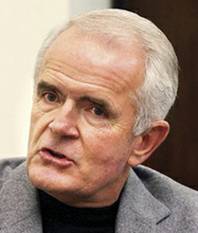
Gov. Jim Gibbons
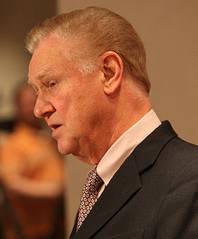
Walt Rulffes
Reader poll
In today's Sun
Sun archives
Sun coverage
Gov. Jim Gibbons proposed Wednesday a massive overhaul of public education in Nevada, including eliminating funding for full-day kindergarten and class-size reduction.
Gibbons said that more control over spending should rest with individual schools and that costly collective bargaining agreements with teachers unions should be scrapped.
“This is about choice and efficiency,” Gibbons said. “We must start asking the question, ‘If this dollar is not spent helping a child learn, then why is it being spent?’ ”
It was unclear how much money districts stand to lose, as Gibbons hasn’t specified what portion of the eliminated state dollars would be returned to schools. But the proposed cuts would almost certainly require massive layoffs, district officials say.
“Is this going to result in a net decrease in funding for education?” Clark County Schools Superintendent Walt Rulffes said. “Are they just putting all of the money in one bucket? Or are they also making the bucket smaller?”
Although some important details are fuzzy, here’s how some of Gibbons’ proposals could play out in Clark County School District classrooms:
Full-day kindergarten
The School District receives $19 million from the state for full-day kindergarten, which pays for classes at 74 campuses. Dozens of schools also offer tuition-based full-day kindergarten classes, charging parents $300 per month to enroll their children.
Full-day programs give teachers more time for small-group instruction and one-on-one time with students who are behind.
If the district were unable to provide full-day kindergarten free of charge, some officials say that could mean tens of thousands of students would arrive unprepared in first grade. That would, in turn, lead to teachers spending valuable instructional time helping those students acquire basic skills they would ideally have already mastered.
In one national study, researchers found learning gains by students in full-day programs equated to an extra month of school. Some studies also found that full-day kindergarten students were better at math and reading at year’s end than peers in half-day programs.
However, the benefits of full-day kindergarten are less well-documented beyond third grade.
Funding for class-size reduction
Although Nevada has had class-size reduction laws on the books for about 20 years, the Legislature has never funded schools to levels necessary to meet the requirements, district officials say.
The law requires a 16-to-1 students-to-teacher ratio in first and second grades and 19-to-1 in third grade. The district is budgeted to receive $109 million for class-size reduction. But the state money wasn’t enough to cover all teachers needed to meet the mandated ratios. The district is spending $15.5 million out of its general fund to pay for an additional 223 teachers.
The law does not address grades beyond third. Last year the ratio was an average 27-to-1 in grades four through middle school, and classes with 35 students are common.
It’s not a coincidence that some of the district’s highest test scores are in grades with the smallest class sizes, Rulffes said.
Mary Frances Ringstad, who teaches first grade at Martinez Elementary, has 18 students in her room this year. She does her best to provide help to those who struggle to catch up, but she knows there are gaps. There also isn’t enough space in the room to set up the kind of hands-on activities and work stations that stimulate learning, she said.
“I would be very worried to see class-size reduction go away,” Ringstad said.
‘Hold harmless’ provision
Gibbons proposes eliminating the “hold harmless” provision in state statute.
Although districts are funded based on enrollment, district officials don’t know how many students they have until the official “count day” at the end of September — months after employee contracts have been finalized.
The “hold harmless” provision gives districts a “soft landing” by paying for higher enrollment even if the head count has dropped. The aim is to give more time to prepare for loss of state money and possible layoffs.
This year, the soft landings are costing the state $22.3 million in per-pupil funding for students who are no longer here. Clark County is receiving about $8 million.
The district saw its official enrollment drop by a half-percent this fall, and expects to lose more students as the year progresses. With local enrollment declining, the district could see its state funding fall more quickly.
School vouchers
Gibbons has proposed establishing a statewide program that would allow parents and students to have school choice, and allow districts to set enrollment caps to prevent crowding.
School choice can spur competition among campuses for students — and the state money they bring with them. It can also serve as an incentive for schools to distinguish themselves by creating unique programs and can encourage parents to become more involved in their children’s academic lives.
But, to be fair, school-choice programs must include transportation services, otherwise only affluent students stand to benefit, education advocates say.
Clark County School District officials say they haven’t seen enough of the fine print in the governor’s proposal to comment. However, Rulffes previously said he wants to experiment with an open enrollment policy for all grades beginning with the 2010-11 academic year, which would allow students to transfer from their assigned campuses to other schools, provided there were open seats.

Join the Discussion:
Check this out for a full explanation of our conversion to the LiveFyre commenting system and instructions on how to sign up for an account.
Full comments policy