Tuesday, March 31, 2009 | 2 a.m.
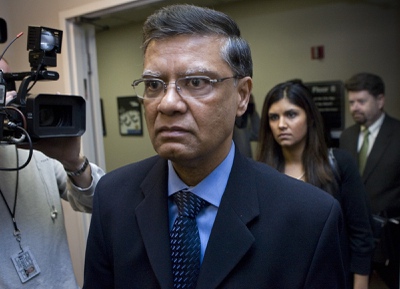
Dr. Dipak Desai, the majority owner of the Endoscopy Center of Southern Nevada, leaves a hearing at Las Vegas City Hall on March 3, 2008.
Sun Topics
Sun Archives
- Citing dangerous care, state board mulls suspension of Vegas surgeon (3-10-2009)
- Hepatitis outbreak spurs moves to toughen regulation (3-1-2009)
- Deadline spurs endoscopy lawsuits (2-28-2009)
- For malpractice info, you'll have to phone (3-9-2008)
- Officials: Hepatitis outbreak highlighted need for changes (2-4-2009)
- Doctor faces charges in usage of drugs (12-15-2004)
- Boards' failure to discipline could cost Nevadans (10-16-2003)
Sun Coverage
Ad aired to fight caps on medical malpractice
Personal injury lawyers still cringe when they recall 2004’s eye-catching television ads of doctors walking out of town along the highway, fleeing from high malpractice insurance costs.
A congressional study and a national consumer advocacy group found at the time that the health care industry had spent millions of dollars exaggerating the malpractice crisis in Nevada and elsewhere in the country. Doctors overall weren’t actually leaving Nevada at a high rate.
But the hard-hitting television campaign of five years ago, produced by influential Republican strategist Sig Rogich, helped persuade voters to overwhelmingly approve an industry-backed ballot initiative imposing a $350,000 cap on malpractice damages for pain and suffering. Advocates said the intent of the measure, patterned after 1975 tort law changes enacted in California that imposed a $250,000 cap, was to reduce multimillion-dollar verdicts against doctors, which would lower their insurance premiums and reduce health care costs for the public.
Health care leaders say the initiative has done that and more in Nevada. They commissioned a study that concluded the cap on noneconomic damages is saving roughly $381 million a year in medical costs. The study showed the cap also has stabilized the medical profession and improved access to health care here.
A new health care crisis surfaced in the wake of the ballot initiative, however — the life-threatening hepatitis C outbreak, which the lawyers blame on a drop in accountability of the medical profession created by the cap.
With no incentive to settle cases, “the doctors have a license to kill and maim now,” personal injury lawyer Robert Eglet said.
Today, Clark County’s court system is struggling to deal with massive malpractice litigation over the hepatitis scare, which occurred at endoscopy clinics run by Dipak Desai, a doctor who at one time was politically connected. Thousands of former patients of Desai’s clinics, telling horror story after horror story, are suing him over cost-cutting measures they allege endangered their lives.
The litigation has added to a lingering backlog of medical malpractice cases that this week prompted the Nevada Supreme Court to step in and try to resolve through a special “settlement marathon.”
Trial lawyers blame the backlog on the cap, which has allowed doctors and their insurance companies to avoid settlements and drag out the malpractice suits as long as possible.
But the hepatitis crisis has put the lawyers in a mood to fight and attracted the interest of the Nevada Legislature, which is considering a bill this session to eliminate the $350,000 cap. The measure also would increase the time limit for bringing a malpractice case to trial after it is filed. Instead of having two years, plaintiffs would have up to five years to get to trial.
AB495 was introduced only last week by the Assembly Judiciary Committee, but doctors have been hard at work lobbying lawmakers. And so have the trial lawyers, who were outmanned and outspent five years ago.
“It’s going to be a battle royal,” said Judiciary Chairman Bernie Anderson, D-Reno, who will hold a hearing on the bill Monday. The measure has to be voted out of the committee by April 10 if it’s to have any further legislative life, and Anderson wouldn’t rule out the possibility that the bill could end up including a retroactive provision allowing the endoscopy plaintiffs to pursue malpractice claims without the cap.
Passions are high on both sides, but this time the trial lawyers believe the political climate favors removing the cap.
“In light of the endoscopy scandal, the eyes of the voters have been opened,” said Reno attorney Bill Bradley, who lobbies for the Nevada Justice Association, the group formerly known as the Nevada Trial Lawyers Association. “The voters now realize that health care providers who violate known standards of safety should never be given the protection of laws that don’t hold them fully accountable.”
To Bradley and other personal injury attorneys such as Ed Bernstein, a lead plaintiff’s lawyer in the endoscopy litigation, this fight is not between lawyers and doctors, but rather between doctors and their insurance carriers and the patients who have been victims of negligent care.
“The only people willing to step up for the victims are the lawyers, who have seen the horrible pain caused by the health care industry,” Bradley said.
Bernstein added that the cap did not stop frivolous lawsuits against doctors, as the health care industry argued it would five years ago, but instead hurt the people who were injured the most by doctors.
“We have a lot of victims who are not being fairly compensated,” he said.
Had there been no cap on damages, lawyers and lawmakers say, it’s possible Desai and the other doctors at his now-closed Endoscopy Center of Southern Nevada would not have been so eager to reuse the syringes and vials that allegedly infected patients with hepatitis C.
“You’re not going to be pushing the envelope to save nickels and dimes,” Anderson says.
Gerald Gillock, another plaintiff’s lawyer in the endoscopy litigation, says removing the cap will also bring accountability to the insurance industry, which pays malpractice judgments against physicians.
“The insurance companies will have to go out and make sure the doctors meet appropriate standards of care,” he says. “They will have to do mandatory inspections.”
That might have helped prevent the tragedy of one of Gillock’s clients — a 25-year-old woman with two young children who went for surgery to straighten a curved spine a year ago, only to wind up paralyzed from the waist down.
“The doctor told her she would be out of the hospital and walking within two days, but she never walked again,” Gillock says. “And now the most money she can get is $350,000.”
Assemblywoman Sheila Leslie, D-Reno, brought to light plenty of horror stories last year when her interim health care committee held hearings on the endoscopy scandal.
“I heard loud and clear from the people of Las Vegas that this is a concern,” she says. “They were furious when some of the cozy relationships between the doctors came out.”
Some of the doctors who played a role in the endoscopy scandal had helped fund the expensive 2004 ballot initiative, Leslie notes.
In Desai’s case, it began with a $25,000 contribution in August 2004 to the political action committee Keep Our Doctors in Nevada, which wrote the ballot initiative and funded the high-profile television campaign, according to records on file with the secretary of state’s office.
Eglet, whose firm represents nearly 3,500 former patients suing Desai over the hepatitis scare, says it was well known within the legal and medical communities that Desai also persuaded other physicians to contribute to the ballot campaign.
In recent years, Desai has had a friendly relationship with Rudy Manthei, a well-known Las Vegas ophthalmologist who serves as Keep Our Doctors’ president.
Both Desai and Manthei were on the health care working group of Gov. Jim Gibbons’ transition team in 2006. Manthei headed the group. And in 2007, Desai and Manthei joined the board of directors of the new Bank of George, along with several other high-powered Las Vegans. Desai later left the board.
Last year, in the wake of the endoscopy scandal, Manthei bought one of Desai’s newer surgical centers.
Desai also has maintained a close relationship with Las Vegas surgeon S. Daniel McBride, who says he has been a board member of Keep Our Doctors since 2004.
State records list McBride and Desai, who maintained offices in the same building at 700 Shadow Lane, as original board members of Nevada Mutual Insurance Co., which incorporated in April 2002. The company provides liability coverage for doctors. Both men, however, left the board last year, following the endoscopy scandal. McBride was its chairman.
McBride, a member of the Nevada Medical Examiners Board, which was criticized last year for not moving swiftly to discipline Desai, acknowledged the endoscopy crisis has given the lawyers political fodder.
“This is what they’ve been waiting for to challenge the cap,” he says. “The publicity around the endoscopy center has revived their argument, but I don’t think it makes it more true.
“If this bill passes, it would absolutely destroy the progress that we’ve made in maintaining access and improving the quality of care in this state.”
State Sen. Barbara Cegavske, R-Las Vegas, who supports the health care industry, agrees.
“We’ll go right back to the trouble we had before the initiative, and we can’t do that,” she says.
Manthei insists the Desai case was isolated and not indicative of the entire medical profession here.
“If you penalize all of health care based on the actions of a few, you ultimately jeopardize access to health care,” Manthei says. “Why do you want to change something that is working?”

Join the Discussion:
Check this out for a full explanation of our conversion to the LiveFyre commenting system and instructions on how to sign up for an account.
Full comments policy