
Gary Loveman, president, CEO and chairman of Harrah’s Entertainment, delivers a keynote address during the Global Gaming Expo (G2E) at the Las Vegas Convention Center Wednesday, November 17, 2010. Loveman’s keynote was titled “The Stockholm Syndrome: Why Addressing the Misinformation that Plagues Gaming is our Top Priority.”
Thursday, Jan. 24, 2013 | 2 a.m.
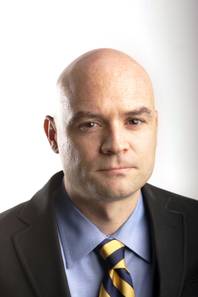
J. Patrick Coolican
Sun coverage
I suppose it’s fitting that a guy who is the chief executive of a company with nearly $20 billion in long-term debt would be lecturing us on fiscal probity.
I’m speaking of Caesars Entertainment CEO Gary Loveman, who is part of a corporate poobah group called the Business Roundtable. As chairman of the roundtable’s health and retirement committee, Loveman has been the public face of a recent proposal that purports to rein in entitlement costs so we can keep programs such as Social Security and Medicare solvent for future generations.
They might have picked a more appropriate spokesman. Last year Fitch, the ratings agency, downgraded Caesars debt from “stable” to “negative.”
Putting that aside, Loveman is an accomplished executive and an MIT-trained economist. So, about those proposals.
Some are decent, such as including state and local government workers in the Social Security system, instituting a new minimum benefit that ensures a full-career worker would be above the poverty line, and encouraging more private saving among workers and young people in particular.
Some are OK with caveats, like adjusting the way we calculate cost-of-living increases, as long we shield the poorest beneficiaries. Reducing benefits for wealthy beneficiaries is okay, as long as everyone receives some benefits. Otherwise, the programs would quickly be portrayed as “welfare” and would lose the near unanimous public support that keep them from being axed.
Some of the ideas, however, are terrible.
To begin with, the proposals for both Medicare and Social Security do not apply to people aged 55 and older. This is nothing but a political ploy to prevent senior citizens, who vote in large numbers, from burning down the capital. But I see no rational policy reason why significant benefit cuts should apply to people who are 54 years and 364 days old, but not to someone who is 55.
On the Medicare side, the proposal calls for raising the eligibility age from 65 to 70. It’s not clear what the savings would be, but an analysis of raising the age to 67 determined $5.7 billion in net federal savings in its first full year. As Maura Caslyn, a health care analyst at the liberal-leaning Center for American Progress notes, the problem is that raising the eligibility age would cost everyone else — states, employers and individuals — $11.4 billion. It would actually increase overall health spending, which the rest of us would help pay.
Why would it increase overall health spending? Because Medicare is cheaper. Despite what you’ve heard about big bloated and inefficient government, Medicare pays far less than private insurers to health care providers because of its size and buying power. So, instead of a relatively low-cost Medicare beneficiary, now you have a high-cost private insurance consumer.
Remember that the hypothetical 65-year-old is the youngest and least risky of the Medicare beneficiaries, but the oldest and most risky private insurance consumer. So once an older and riskier person is thrown into my insurance pool, my premiums go up.
Once we dump these people onto the private market, they’ll either work longer to keep their employer-based insurance, which will drive up premiums for that employer because the older worker is higher risk, or they’ll seek refuge in Medicaid, the federal-state insurance program for the poor and disabled, or one of the new government insurance exchanges, increasing the cost of those two programs. Meanwhile, Medicare’s own risk pool would skew older and therefore riskier, which means Medicare beneficiaries would have to pay higher premiums.
So, raising the Medicare age would be good for the federal government’s finances, but bad for the economy.
We certainly have a crisis when it comes to the long-term cost of Medicare. But the proposal does nothing to deal with the fundamental problem, which isn’t the cost of Medicare per se. It’s the overall cost of American health care, which is the most expensive in the world — Norway, the second biggest spender, is at just 67 percent of our per capita total.
What bothers me most, however, is the Business Roundtable’s proposal to increase the Social Security retirement age from 67 to 70.
I like to call it the “Work Grandpappy into the Grave” proposal. It’s a weird obsession of Washington and corporate boardrooms.
In a piece Loveman wrote for the op-ed page of The Wall Street Journal and when I saw him on Fox News, he said people are living longer than when the program was created, and that it wasn’t designed for a population that would spend one-third of its life in retirement.
“The good news is that Americans are living longer, healthier lives,” he wrote in the Journal piece.
The good news for Loveman is that his assertion is true for people like Loveman.
But it’s not true for everyone else, especially the poorest half of the income ladder.
“Higher income groups have gotten the life expectancy gains. Among lower income groups, life expectancy has barely budged,” noted Michael Linden, director of tax and budget policy at the Center for American Progress.
And it’s people at the bottom of the income ladder who rely the most on Social Security.
Thankfully, the Business Roundtable plan says “the unique needs of individuals in physically demanding occupations should be accommodated.”
But the devil would be in the details. Would people who clean hotel rooms still be able to retire at 67? Or people who work on their feet all day as porters or bartenders or waiters?
Perhaps Loveman should ask his employees if these constitute “physically demanding occupations.”
The real problem — and Social Security’s finances are on much surer ground than Medicare’s — isn’t life expectancy. It’s the tens of millions of Baby Boomers entering the system.
There’s also a fairly easy fix.
Currently, only your first $110,000 is subject to the Social Security payroll tax. So someone who makes $110,000 pays the same in payroll tax as, say, a wealthy casino executive. Lifting the cap would generate enough money to create actuarial balance for 75 years, Linden said.
Of course, that’s not on the Business Roundtable’s list of ideas.
Instead, they’re focused on cutting the benefits of a group of people whose median annual income, by the way, is $25,000.



Coolican laughs at Loveman, saying why should we take the advice of a man who runs a debt-ridden company?
By the same logic, why would we trust the Sun, the church newsletter of the loony left, to give us a sober, nonpartisan assessment of Loveman's recommendations? As usual, the Sun already has its mind made up.
But, of course, orthodoxy is OK with the Sun as long as it's lefty orthodoxy.
Coolican, you're not fooling anyone who isn't gladly willing to be fooled -- the Kool-aid crowd -- or merely too stupid to not be fooled.
Entitlement "reform" as envisioned by its most ardent proponents is their euphomism for "benefit reduction".
The proposals are about people. Loveland the economist has lead his gambling corporation into the ground. He tried to tell gamblers to have fun, while removing the winning. This economist used numbers, divide and conquer tactics, to justify why thousands of employees lost jobs, services were cut, the Golden Egg call gambling was crushed. People NEVER get good results when a number crunching economist creates the plan. The plan is not about people, an economist does not understand or care about people. The Bottom line is all that matters.
Great article Mr. Coolican. I read the stories and I try not to take sides - but, I would like Mr. Loveman to work for one day as a hotel maid in one of his hotels and say the women should work longer to retire.
He would find rooms that have been trashed by the guests - keep in mind that maids have a certain time period to clean each room. He would find booze, puke and men that urinate on everything and leave condoms on the floor next to the bed.
The bathroom often looks like an outhouse that has not been cleaned for one hundred years - women throw unwrapped sanitary napkins on the bathroom floor - yada, yada, yada.
Guests often bring a hot plate and cook in the rooms to save a fee bucks.
I appreciate all you do to keep the engine of Las Vegss running Mr. Loveman - but, there is more to life than the Boardroom.
Theresa A.Mataga
Las Vegas Nevada
\\\
In reply to Patrick Coolican; great article! But, it seems at some junctures you were surprised at the comments made by CEO Gary Loveman.
You should have realized from the beginning that Loveman is without a doubt a clone of Rush Limbaugh by not only personal appearance, but financial and political positions, as well.
Right at this point, the gourmand should have had no credibility whatsoever. If this wasn't enough, his executive posturing over 20 billion in long term debt that his company appears most likely to default on sooner or later should have certainly been the most highlighted clue.
@ judgesmales
Where is the logic?
The logic is that Loveman has failed at doing his job. Left or right is irrelavant.
If you raise the cap, to be fair, you have to raise the benefits for those citizens. Without that, you are advocating turning Social Security from an entitlement program into a welfare program (or admitting it already is, since there is no "lockbox" and SS is just another accounting line item).
Since we are in the midst of raising SS from 65 to 67, you will notice the raising is gradual, so under a new plan, a 54-364 person would retire at 67 years and 1 month, not 70.
I believe we will soon see a gradual system of Medicare /Supplemental coverage with a higher Part B contribution for 65 to 69, and current Medicare / Supplemental benefits for over 69. If Medicare is truly cheaper, it might even extend to 60 to 64 with a near 50/50 split for Medicare / Supplemental coverage.
Pat This is one of the best articles you have ever written. Loveman is the typical extreme right wing,lying phoney that has made it clear he can take bonuses that would pay hundreds of commoners jobs,run Harrah's/Caesars into such debt they can never pay it back and the big bankruptcy is coming where bondholders and stockholders lose everything, while then telling those who live pay check to paycheck he has there back.
He reminds everyone of the Jack Welchs of the world while going on Fox News to make his failed and out of touch speeches. Loveman has that dirty looking old man look like Limbaugh. Lets not forget he was the chief in charge of the cut all corners,forget about safety and building codes,ignore the publics right to safe and sedcure rooms when they remodeled rooms at various properties and got caught. In Las Veags they paid some fines after bought off judges reduced them when in any other state Loveman would have been the ugly old man in a prison unifrom.
Loveman will be one of the first to go come the Revolution.
I have trouble with a guy giving advice who has a Gulfstream fly him from Las Vegas to Boston (at company expense) so he doesn't have to remain in Las Vegas for the weekend. Most people with families who either take a job or a mandatory transfer to another part of the country (world) take their family with them. They don't have the luxury of a 35 million dollar Gulfstream waiting on the tarmac. This guy knows nothing about what the little guy is going thru. Theresa Mataga said it best.
This guy is going to advise people on fiscal responsibility?
Like Murren and Baldwin, Loveman is presiding over a company bleeding more cash than it will ever make back and all the while drawing a humongous paycheck.
The Greenspan Commission put Social Security into balance back in the Reagan administration. So what happened? The payroll cutoff was set to apply to roughly 90% of income, with the top 10% not paying in. But now that almost all of the income growth over the last 30 years has been in the top 10%, the bottom 10% has simply not been keeping up.
So if we just raise the payroll cap to still apply to 90% of income, voila, we have put Social Security very nearly back in balance. But as Mr. Coolican indicates, that is a higher cap than the current $110,000.
Here's the biggest problem with Loveman's proposal to raise the retirement age: what companies are going to hang onto, or hire, workers of that age? In most companies, age is a definite negative, and older workers are routinely jettisoned in favor of younger workers. So what happens to the worker who is too old for the workplace and too young for Social Security?
One of the things that is pointed out as as cost of raising the age to qualify for Medicare is that it would push people into more costly programs. The reason is that the government uses its size to force providers to take less for Medicare which pushes costs into other parts of the market and is leading to providers to not want to take Medicare patients. So, I think this is missing that hidden cost that private insurance pays to subsidize some of the government programs.
It does makes sense to pull government employees into the programs but I can see where there will be push back on that. When I was working for the Nevada System of Higher Education, I paid no social security taxes and my portion as well as the employer portion was part of what went into my retirement plan. If you did that for a typical employee and got the monthly average returns of the S&P 500, you would be better off by far than being in the Social Security system. And that was up until now with the expected returns of social security falling. So, those state and local employees will, in theory, be taking a significant hit to their retirement prospects to enter the program.
Lastly, one must be a little dubious about the comment about the life expectancy of the lower income population having 'barely budged'. The gap has widened between high and low income groups over time, but even the low income people have moved up substantially over time. In more recent years it has been pretty flat overall with increases mainly at the upper levels and some drops at low income levels. But if you are talking relative to social security, it would seem that you need to talk about the trend from the mid-1930s to now and not the last twenty or so years. The average in 1935 was 61.7 years and back then the difference between high and low income people was only a couple of years. In 2010, it was 78.7 and is expected to go up by about three years over the next several decades. The most recent number I saw for the difference was 5.8 years between high and low income groups but it is probably somewhat more than that now. That leaves life expectancy for lower income people increasing from around 60 at the start of the Social Security program to around 75 now.
Means testing, Mr. Loveman, is the only way to correct the Social Security imbalance. Mr. Loveman, your income types can afford it. Just one flight or country club membership dues or private school monthly charge less or one antique less and there you go, you're even now, with means testing.
Mr. Loveman, do you really think a man can lay brick or put up drywall or rebuild a transmission in 100 degree weather or 0 degree temperatures for 40 hours per week at age 67 let alone age seventy. I'm guessing not you but your ancestors did these types of jobs. These middle class jobs is what made America great and we are holding on by our fingernails. Not your finance, insurance, real estate,hedge fund, bond manipulating, wage cutting, benefit cutting d'bags.
Citizens will only let your types punish them before a big change will happen.
Hope you will read this but I doubt it.
According to Forbes, Mr. Loveman made $6.97 million in 2012. The hours worked for an 8-hour day total 2080 hours per year for employees.
At that compensation rate Mr. Loveman makes $335,096.15 PER HOUR
The LVRJ:
"Total Compensation for Caesars' Loveman Tops $18 Million
BY HOWARD STUTZ
LAS VEGAS REVIEW-JOURNAL
Posted: Mar. 7, 2011 | 3:34 p.m.
Caesars Entertainment Corp. Chief Executive Officer Gary Loveman earned more than $18.2 million in total compensation from the casino operator in 2010, of which almost $12.4 million was listed as option awards.
According to the company's annual report filing with the Securities and Exchange Commission on Monday, Loveman earned a salary of $1.9 million in 2010, nonequity incentive plan compensation of $2.7 million, and other compensation of more than $1.268 million.
Caesars was known as Harrah's Entertainment until changing its name in November.
Loveman earned total compensation of more than $5.9 million in 2009 and more than $39.6 million in 2008, much of which was tied to $36.4 million in option awards following the formerly public company's buyout by two private equity firms."
YOU DO THE MATH! - yep, he's in touch with the real life of a working American. I'm sure he's worried about Social Security and Medicare for his retirement years!
Excellent article. I would add some arguments about maintaining or expanding an "undocumented" disability for workers with many quarters of coverage but unable to work any more. Perhaps changing the 62-age early retirement to something floating of scaling for workers above 50 or 55 with seriously reduced benefits. I've noticed many people without options. Example: the guy across the street who has worked for 40-plus years for maintenance companies doing electrical, plumbing, home repairs. Several competing health issues but nothing that qualified him for disability. So whether we call it age discrimination or semi-disabled or something else, seniors need alternatives. Sure he'd like to work longer but at 59 he HAD TO opt out of employment. He made it to 62 eventually because the neighborhood found numerous repairs for which we overpaid to keep him in some cash for a few years. 40-plus years working should allow some form of subsistence whether or not he had a teen son at home.
floozy and others: So much of the COST of non-government health care is "administration." That includes six-figure salaries for doctors reps (the pharma staff that push drugs for doctors to prescribe) AND endless costs for employees to require pre-approval and the DISALLOWANCE of care that you paid for. In effect, we pay thousands of employees to add to the red tape to actually get the health care we are insured for. It's that old argument about needing to appeal health care decisions made by non-medical people and denial of coverage for anything they can try to call experimental--that the ROUTINE, usual treatment for your condition is aspirin or something similar.
End-of-life care is supposedly 25% of all Medicare costs--for terminally ill and comatose patients who will have NO quality of life after the expensive treatments that families demand when they are unable to deal with death and dying or the guilt expected if they don't insist on endless treatment for impossible situations.
If they raised the cap you'd have to pay more in benefits.
If not, call it what it is, a 12.4% tax on the rich, ie people making over 112k.
Comment removed by moderator. Off Topic
I am shocked that another rich person who feels entitled wants to cut benefits rather than acknowledge he has not been paying his fair share to fund those benefits. Next you'll tell me there is gambling going on in there.
Let me see if I understand this whole debate. The way Social Security and Medicare/Medicaid currently work, they will be unable to pay full benefits at some (debatable) time in the future and will have to curtail benefits. The only possible solution is to curtail benefits right now.
No, I definitely don't understand...
Social security benefits will be greatly curtailed for our children and grand children. Ask any competent actuary and they will tell you the same. All these illegal aliens will drain the system. It is really a non brainer. People with no money will not be able to afford to go to the casinos that Loveman controls.