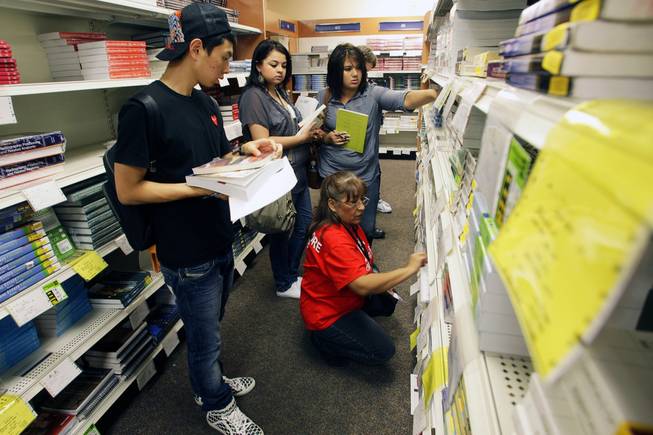
Students get help finding books at the UNLV bookstore during the first day of the fall semester at UNLV Monday, August 23, 2010.
Thursday, March 10, 2011 | 2 a.m.
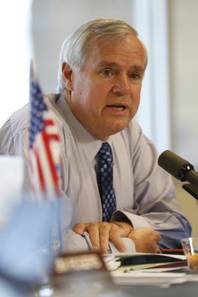
Chancellor Dan Klaich
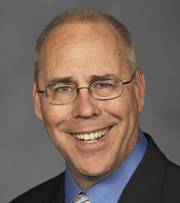
Neal Smatresk
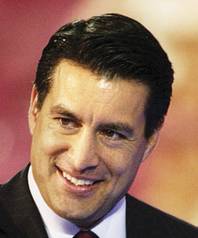
Brian Sandoval
Sun archives
- UNLV president presents cuts, says they are “a tragic loss and a giant step backward for Nevada” (3-8-2011)
- Democrats say Sandoval budget has $325 million hole (2-24-2011)
- UNLV president’s somber warning on budget cuts moves faculty to tears (2-16-2011)
- Higher education officials say Sandoval budget cuts a ‘death sentence’ (2-4-2011)
- Education in forefront of upcoming budget battle (1-30-2011)
- Chancellor: University tuition would have to go up 73 percent to cover Sandoval budget gap (1-27-2011)
- A steep climb for Nevadans (1-26-2011)
- Soft words during State of the State hide Nevada in pain (1-25-2011)
- In response, Democrats say taxes might be part of budget solution (1-24-2011)
It’s more in anger than in sorrow when Victor Katz reflects on how the university where he taught for nearly four decades essentially went bankrupt.
Yes, the University of the District of Columbia somehow carried on despite the dismissal of a third of its faculty in 1997, he said. “But I don’t think you can call it surviving,” said Katz, 68, a mathematics professor who retired five years ago.
“A university is in constant need of new blood,” he said. “But the first to go were the junior faculty who were the most energetic. After a few years, the university lost a lot of credibility and it just was not recognizable.”
Nevada’s higher education system faces similar prospects. As it contemplates declaring financial exigency — a fiscal crisis requiring extraordinary solutions — big questions loom: If the ax falls because of the state’s budget crisis, how will it fall and on whom? Will the quality of education suffer? And if it suffers, will it recover?
There are no definitive answers, in part because Nevada’s System of Higher Education has never before declared such an emergency. And because there are no boilerplate solutions in how to address financial exigency, how it will play out is something of an improvisation.
But one thing is certain: If it comes to that, the fallout will be the biggest ever experienced in the nation. Nevada higher education’s two-year budget is about $1 billion, with 114,000 students spread over nine large campuses.
Exigency would allow the quick dismissal of professors, even those with tenure, and thus the faster reduction of costs. There are about 5,500 faculty, nearly two-thirds of whom are part-time. In 2010, they were paid $299 million, about 80 percent of which comes from state taxes.
Last month, UNLV said budget cuts proposed by Gov. Brian Sandoval would force it to consider exigency. Either the higher education system or a part, UNLV for instance, could declare the financial emergency. Dan Klaich, the higher education system chancellor, began asking college presidents to war-game drastic cuts, including the closing of their campuses. For example, one scenario would merge Nevada State College in Henderson into UNLV and/or the College of Southern Nevada.
Such moves would lead to whole programs and possibly entire campuses closing, especially in the more rural northern part of Nevada. Whether such mergers and closures would lead to students dropping out and a loss of overall enrollment is unclear, but such moves would lead to longer, less convenient commutes.
Klaich told the Board of Regents he was not recommending any of the scenarios.
The regents have final say, but won’t decide until the Legislature approves a budget in June.
The alarm was sounded again Tuesday when UNLV President Neal Smatresk announced the university must shut down 33 degree programs and cut 315 jobs, including 120 faculty positions, to deal with the state budget deficit.
Yet, Nevada’s exigency may not be the trauma that Katz recounts.
Ronald Ehrenberg, a Cornell University economist who studies the economics of higher education, said he doubts exigency is “even a black eye, if the faculty is involved from the very beginning in deciding about cuts and it’s not purely an administrative decision” by college presidents.
Exigency is similar to the way the bankruptcy code allows suspension of labor contracts to allow a business to reorganize under Chapter 11.
It wouldn’t necessarily be a death sentence, Ehrenberg said. “They’ll lose some of their best professors, but there won’t be wholesale departures,” he said.
The academic job market is bad nationwide and nearly all states are facing large budget deficits that mean big cuts in education, he added.
Colleges and universities in other states may declare exigency, too, so Nevada wouldn’t suffer alone. Moreover, the proportion of tenured professors and those on track to get tenure has declined to about a third of the academic workforce, down from more than half in 1975, the earliest year for which data are available. That means nontenured professors probably will be let go first, he said. But the danger is that some of a university’s best professors may be its junior professors, he said.
Unlike corporate bankruptcy, exigency is not settled law but more of a gentleman’s agreement between professors and the administration. In Nevada’s case, the regents would coordinate any declaration of exigency with campus presidents, who would in turn consult their faculty.
Every exigency is a special case. For example, City University of New York, with 200,000 students, underwent deep cuts in 1976. But no tenured professors lost their jobs during New York City’s brush with municipal bankruptcy.
Like New York City, the District of Columbia was in financial turmoil in the 1990s.
When the University of the District of Columbia, a public university, laid off a third of its faculty, many of them tenured, enrollment plummeted to 4,800 students from 7,500. While there was no official declaration of financial exigency, it was nonetheless treated as a financial emergency.
More than 13 years later, the university survives, but in diminished form. There are 5,900 students and 230 instructors, still down more than a third.
“We’re on the uptrend now,” said Steven Graubart, who has been the university’s senior financial officer for two years. He cited the current level of students, up from the year-earlier level of 5,000.
But the university gets by with even less public money, about $63 million today, down from $77 million in 1991.
“You have to take away from this situation,” referring to financial exigency, Graubart said, “a willingness to look at things with a fresh perspective” and do new things. For example, the university started a community college to boost enrollment, he said.
More recently, in 2009, Clark Atlanta University declared an “enrollment emergency” because of falling enrollment (but not exigency) and laid off tenured faculty. But unlike Nevada higher education, Clark Atlanta is private and received no state funding. The University of Texas Medical Branch in Galveston declared exigency in 2008 because of devastation from Hurricane Ike.
In all of the cases, professors challenged the subsequent dismissals.
Last year, Tulane University, hurt by Hurricane Katrina, considered exigency but pulled back when more state funding was found.
Nevada Regent Mark Alden favors declaring exigency if budget cuts remain at or near the level proposed by Sandoval.
“It’s nothing to fear,” Alden said. “We’d still make all of our bond payments, we’d still keep all of our obligations. Like corporate bankruptcy, exigency would allow the university to cut costs, free up cash and pay senior creditors, like bondholders.
“All it’s doing is suspending all contracts,” Alden said. “Then you’d have to tell people 60 days before you say goodbye. Without it, you might not be able to say goodbye at all” to a tenured professor.
The American Association of University Professors has largely defined exigency. The group, based in Washington, D.C., also developed the prevailing view of academic freedom and protection of professors from arbitrary dismissal.
The association defines financial exigency as an “imminent financial crisis which threatens the survival of the institution as a whole and which cannot be alleviated by less drastic means.”
Today, most colleges and universities have refined the idea from heading off a clear and present danger to something that is more precise. Exigency, according to the Nevada Regents’ handbook, means “a condition that requires the bona fide discontinuance or reduction in size of an administrative unit, project, program or curriculum due to the lack of funds available and sufficient to meet current or projected expenditures.”
Institutions that reorganize citing exigency must be careful not to be influenced by short-term concerns, such as whether a major is popular, Matthew Finkin, a leading labor law professor at the University of Illinois at Urbana-Champaign, said. After all, a major with faltering enrollment this year may become essential years from now, he said.



slick greasy slimy big toothed phony smiling radical right tea bagging nut job huckster brian sandoval...
a man who went to unr...
who was the direct beneficiary of tax payer subsidies...
who now wants to gut unr...
a man born to mexican immigrants...
who now wants to harm mexicans currently trying to immigrate...
who actually said that he wasn't concerned about racial profiling because his kids don't look hispanic...
http://www.lasvegassun.com/blogs/ralston...
the question is boys and girls...
do these acts make him...
(a) a hypocrite...
(b) a sellout...
(c) a racist...
(d) a total and complete fraud...
(e) all of the above...
hmmm....
very interesting question...
perhaps the answer will tell us why brian smiles so damn much...
is that a nervous smile...
is brian afraid the people will eventually figure him out...
It is retirement packages that Mr. Katz received that effectively bankrupted the university.
Seems simple enough to me...get rid of the old ones and let the new blood take over. Wisconsin fired "the teacher of the year" because she was low in Seniority..and this make sense how? Many of my best teachers were a pillar in the building as it was built..and they survived without a lot of this crap. They were "teachers"..damned good ones and they taught us all they could. Yes, we had bad teachers, but seldom two years in a row. Got it.
Bigot Birdie is first in line with his usual ethnic slurs this morning: filled with so much hate; filled with so much fear; filled so much ignorance; and filled with so much paranoia.
After reading Regent Alden's comments I feel a lot better about the state of education financing in Nevada. His informing me that the bondholders would still be paid regardless of the finances of the NSHE is good news. Now if he could just figure out a way to do something for the students.
In this financial mess there are enormous opportunities to remake higher education in this state into something that better reflects the economic realities and challenges of the 21st Century. Narrowing the focus of the universities and targeting funding is the path forward. Whatever we do we must do it well and lead to better education.
We need to decide what we can support long-term in this state.
yeh but hey lets give the football coach who's making in excess of 500k per an-um his raise because we said we would
hey turr...
seems to me skippy...
you are the one who is nervous...
nervous as hell...
why else would you spend so much time cyber stalking me on these boards...
hee hee hee...
what are you afraid of skipster...
hmmm...
you know what i think skippy...
i think i have stumbled onto something that could kill slick greasy slimy big toothed phony smiling radical right tea bagging huckster brian sandoval's political career...
and you know what is really ironic...
i only have you to thank...
hee hee hee...
just between me and you...
i missed that "my kids don't look hispanic" comment...
but thanks to you...
i did about 5 minutes of digging...
and low and behold...
it jumped right in my lap...
too frickin funny...
thanks skipster...
by the way...
want to grab some lunch later today???
Any public service whose viability relies upon the thieving hand of government deserves an ill fate -- unfortunately there have been no death-blows to publicly funded educational services which continue to plague society -- if such panhandlers of public welfare were producing social assets instead of incubating public debt and disillusionment we'd all be better off.
: {
Birdie: I consider it necessary to point out racist comments where I find them. Mostly the fact the repeat the same garbage multiple times each day. If you want to write inane senseless babble over and over again, that is your business.
I think if you want to make racist remarks against Hispanics or another group, you should be told to shut up. So shut your racist trap.
Regent Alden is shockingly wrong in his comparisons of the NSHE system with corporate business. Higher education is not very much like a business; or if it is, it is more like a public utility: financial exigency for NSHE would be like NV Energy declaring bankruptcy so it could cut off 20% of its customers from electricity and leave them in the dark.
Ehrenberg's remarks are also in error as applied to the NSHE system. Faculty retention and recruitment would reach a crisis point. The best professors and researchers would leave, as they are already beginning to do; and with the shadow of exigency hanging over it, UNR and UNLV would be able to hire only second-rate minds or back-bench scrubs as replacements.
None of these sanguine statements take into account demographics, either: within 3-5 years, universities in the U.S. will be facing a huge outgoing tide of retirements -- those "baby boomer" faculty tenured in the late 60s and early 70s will hang up their robes and mortar boards in large numbers, creating what amounts to a national labor shortage in higher education. With the sordid stigma of financial exigency making highly suspect any contract offer to a top notch teacher or researcher, the NSHE system will go begging in the streets for qualified faculty.
And, as ever, it will be Nevada students who suffer the most, in limited choices and lost opportunities. During this crucial turning point for higher education in our state, we all should be thinking most of them, always beginning with the question: what will happen to the students?
hey turr...
you never answered exactly what is racist about my comments...
coward...
are we still on for lunch???
Ethics charges needed on Chancellor Klaich, maybe Seastrand and administrators/teachers at the NON PERFORMING SCHOOLS where they are inciting riots instead of telling students that WE'LL ALL GET THROUGH THIS." Insanity to even suggest that education is essential to life. Yes it is very nice to encourage education but do you call this K-16 education?
2 problems with Birdie
1. Nobody reads more than one line.
2. She's doing more damage than helping her cause.
UNLV will not be in as bad of a situation at the school mentioned on the east coast because the east coast has more universities and more competition. IMO, the financial exigency is a blessing for the university to cut low performing programs with faculty that are not competitive with other universities and instead focus on building the good programs.
close unlv and unr until there is better funding
As an alumna of UNLV, the lack of funding for UNLV infuriates me. Our state won't ever progress economically without a strong research institution. Every major economic strong hold in this nation has at least one major research university. Drive around these universities, and you'll see major businesses across the street because they have a symbiotic relationship with the schools. Good universities attract JOBS!
Unger, higher education is most certainly a business - it happens to be terrible at doing most of the jobs it claims it can do. That said, UNLV, including yourself, are misleading people on the budget figures. I go over some of the numbers here:
http://www.thewesternwrangler.com/2011/0...
There also will be no labor shortage for higher education. You may not realize this, but there is a wonderful thing happening with technology - its democratizing knowledge.
lol Thomas Perl--Maybe closing a few universities temporarily would be no worse than shutting down the heroin industry for a day. Higher education has become extremely corrupt and oversold. The student loan debt clock is now at $900 billion. People now owe more on student loans than they do on their credit cards. Did you see that article in the NY Times about the nasty business of law schools?
http://query.nytimes.com/gst/fullpage.ht...
Gibbons: I'll go with "The Sun" on budget figures, as reported in this article, rather than your usual gimmick to conflate gross numbers (and fixed expenses) then cast out a budget cut percentage alongside of that to minimize consequences. Your lobbying efforts paid for by an uber-rich billionaire constitute gross distortions.
As to the point of higher education being a business, that's just not so, no matter how much your right-wing ideology would like readers to believe...
Universities pre-date market capitalism by at least 200 years; and their beginnings in Theological Seminaries in the 13th and 14th Centuries is a well-established history. Most private universities in the U.S. also began as seminaries -- hardly any "business" model -- and state universities as "land grant" institutions, or "normal" schools, to provide a needy citizenry with technical and educational support for the good of the states: in other words, public utilities providing services for the general edification and welfare of the people.
Both forms of institutions gradually transformed into the great, diversified research, humanities, science and teaching institutions they are today.
No university in the country operates as a business, not even the great private schools: Stanford, Princeton, Harvard, Yale and their league; nor do state universities --not one. We can find small private colleges that get by largely on very expensive tuitions, but even those do not operate at a profit, nor were they ever intended to do so.
You're ideology would have the whole system become the like the University of Phoenix or other online degree mills. Question: can you cite any single work of significant research other than their own self-studies that such a digital university has achieved? Ever? Don't you believe in research? Or in the discovery and advancement of new ideas?
Research and scholarship are where the new ideas come from that advance the causes of a nation and its people. Also: research and scholarship feed economic growth. Without great universities, our nation -- and our state -- is doomed to mediocrity, and to the continual painful doldrums of a failed economy.
The unviersity is the single best idea of modern man. These right-wing "education is business" ideologues are just plain wrong. They measure everything by price at the expense of human values.
Unger, my numbers come from NSHE. I've got the actual revenue numbers. The Las Vegas Sun is merely taking university officials at their word on appropriations which is not the same thing as spending.
They all act like a business, they just have a unique business model that does not occur under free markets (they ALL are subsidized). Businesses, btw, can be for-profit or non-profit the distinction is for tax purposes ONLY and in no way distinguishes one has doing something for money and the other for not (clearly people in non-profits are doing it for the money as well as other things just as in for-profit companies).
Today universities run gyms, retirement homes, apartments, business development centers, venture capital, health care, amusement parks and probably more. Its called mission creep and it means universities have grown bloated and now do things far beyond their original core mission of education and research.
I don't know how many times I've had to say this to you.
PS...you're still trying to have your cake and eat it too....you try to prove higher education has measurable economic benefits on one hand and then on the other you say we can't measure the benefit. Which is it?
Unger let me break this down for you.
UNLV has several revenue sources:
1) General Fund
2) State other (includes the student fees and out of state tuition)
3) Self Supporting
4) Capital Projects and maintenance
5) Grants and Contracts
6) Special projects.
You and the university officials want to look ONLY at revenue source 1) which makes up less than 30 percent of the budget. The university then turns around and raises tuition and fees and you and UNLV officials turn around and ignore that revenue as well.
You also have grants and contracts and self-supporting budgets which you also ignore.
When you include all of that and exclude the fixed capital projects which fluctuates the cut in revenue since FY 2008 amounts to $20 million or a reduction of 3.7 percent.
I'm not conflating anything, but you are ignoring large swaths of the budget for your own political purpose.
PS, stop the stupid argument that I'm funded by rich people. It is illogical and it makes you look like an idiot. First, I've received $0 for these writings on higher education, while you earn enough money to put you in the top 10 percent of income earners nationwide and all you do is write and teach poetry http://transparentnevada.com/salaries/20...
Patrick_R_Gibbons:
I realize that there is no way to convince you but education is not a business as it deals with the welfare of the next generation of Americans - it's much more important than a simple business which has solely the selfish profit motive with no concern for the consequences. Educators seek to impart knowledge, a sense and concern for the larger humanity, and critical thinking skills to their students which apparently you somehow missed in your training. You want UNLV to be like the University of Phoenix or Devry Institute of Technology which few take seriously. Students pay their exorbitant fees and get an inflated nonaccredited and mostly useless grade. I'm sorry but it doesn't work that way in true education. Students earn their grades by hard work and demonstration of a mastery of learning.
So, given the enormous amount of time that you devote to obsessively and irrationally destroying education, what is your real "job" aside from being a pseudo-intellectual propagandist for NPRI?
Wrong again, Gibbons: that salary post is long out of date: that's what I earned when on an "A" contract as Interim Chair of the English Department. One more example of your use of conflated numbers.
For full disclosure: take 15% off that amount and it's what I earn now, which is about average nationally for my rank and 28 years of experience.
Also: I don't teach poetry (I love poetry but don't teach it except as a unit in General Education core courses or Honors courses).
My job: "The Las Vegas Sun" thanked me and three others personally in an editorial in July, 2007 for co-founding two professional writing programs at UNLV that were ranked in the "top 5" in the country by "The Atlantic"; then later in the "top 9" by "Poets & Writers" -- about as good as it gets in my field. The program took 16 years to build to that point; and it's still going strong.
I'm extremely proud of UNLV, and of the level of excellence of my colleagues who devote their lives and careers to building the best possible university with chronically underfunded resources.
Most of all, I'm extremely proud of our students: they are stellar, truly, and nationally recognized for being so. We have a track record of placing 100% of our Ph.Ds with Creative Dissertation in full-time jobs; and we are doing well at the master's level, too -- about 60% in the field within the first three years of graduation; or other graduates use what they learn in our program as a foundation from which to move into other professions.
So, Gibbons, your turn: how much do you earn? Who pays you? What have you built in this world -- or for our state -- that has any lasting value?
There are numerous people commenting on this newspaper's site, that obviously want to project the RJ's views. That view is that we all need to go back to the stoneage and it's survival of the fittest. Get your guns and stockpile food, because there will soon be no govt left to provide security at any level, if these people have their way. No one needs an education, it might mean that they vote with their heads and not their fears. We only need to protect what is ours, and screw those that don't have, because they must be lazy communist, socialistic a^#holes that don't deserve to breath the air.
And Patrick, don't bother to waste your time sending me anymore of your propoganda. I just delete it, and if you continue, I will just block you from my email list.
Professor Unger--
Isn't one of the failures of higher education nationally the inability to control costs? Even before the recession costs had been rising above the general level of inflation in the economy, pricing both the student and the taxpayer out of the game.
Today in Nevada we have a situation where income has eroded substantially over the last few years.
Education gets 55 cents, higher education 15 cents on the dollar, on the dollar of general fund. How do we make ends meet?
How do we bring costs into line? What goes is a university if no one can afford to attend?
To Turrialba:
My view is that higher education should be free of tuition -- as it is in most nations in Europe (excluding England) and in South America; or the China model keeps tuitions very low with huge government subsidies (and many full scholarships).
All these nations -- some industrialized and some striving to reach first world status -- have long ago resovled the kind of debate we're having in Nevada to understand that the more educated the citizens are, the more the state prospers.
According to the Office of Business and Economic Research (UNLV), if a university graduate chooses to live in Nevada, the net economic benefit to the state is 1.5 million dollars above the benefits of a non-college graduate (on average). So: the more college graduates we can retain in Nevada, the better off our state and its economy will be over the long term.
We should subsidize education even more during a recession than during boom times: it makes sense as a means to absorb unemployed workers and help them re-train and re-tool; and it makes sense in the long term economically.
The right-wing ideologues do not believe this -- they envision a dog-eat-dog purely "free market" state which measures everything by short term price rather than long term investments. Or as I keep putting it: right-wing ideologues who know the price of everything at the expense of real values.
Postscript: after searching my memory and my library for the appropriate literary quote to describe our state's debate about higher education, I belive I've found it:
"Leopards break into the temple and drink up the offering in the chalices; this happens again and again; finally, one can predict their action in advance and it becomes part of the ceremony."
-- Franz Kafka
Pravica and Unger, I don't think you guys get it...at all.
You see the ideal university as it once was and totally ignore what it has become.
Do you not recognize that UNLV is trying to be everything to everyone? Not only does it do education and research it is running apartments, gyms, restaurants, and business development centers. It now wants to start a venture capital firm.
If you can't see this then you're blinded by some ideological purity about academics that no longer exists.
Finally, higher education IS a business. There is no doubting this. There is also no economic reason why education is not or cannot be a business - especially higher education. (Look Unger, you're doing it again, on one hand you're citing alleged economic benefits of higher education while claiming it can't be quantified on the other hand).
Ginger, I have no idea who you are, sorry but I'm not emailing you.
PS, UNLV's four year graduation rate is about as bad as the University of Phoenix
Professor:
How do we control costs? Making it costless to students doesn't make it costless.
If higher education becomes free we'll have a whole bunch of people enter into it at the state's expense and create a class of people without much work experience and little to no skills.
As I've shown in my posts higher education doesn't seem to be correlated with economic outputs like unemployment rates or gdp growth.
If we follow Unger we'll end up like France - devoting large amounts of wealth to what amounts to an unemployment plan for the nations young.
Higher education is expensive, oversold and overrated...
for more on higher education spending on education and research per pupil and its relationship to employment and gdp growth see, http://www.thewesternwrangler.com/2011/0...
To Gibbons (repeat):
Leopards break into the temple and drink up the offering in chalices; this happens again and again; finally, one can predict their action in advance and it becomes a part of the ceremony.
-- Franz Kafka, (notes)
Repeat - NSHE spending has grown faster than income growth. Nationwide spending has grown several orders faster than inflation and yes this is even adjusting for inflation.
How can you justify this swift growth when graduation rates remain flat and more and more people question the value of the degree (as in how much are students really learning)?
If you continue to repeat Kafka quotes you've failed. You need to rationally address the points at hand. How can you justify such a rapid expansion of spending without producing an equivalent growth in results (or any growth in results for that matter)?
*adjusting for pupil enrollment growth.
Heck, UNLV and UNR have grown the number of employees faster than the student body between 1993 and 2007 - according to a report by Jay Greene a professor at the University of Arkansas.
Professor:
I withdraw my question for now.
T.
Enjoy your evening sir.
Why withdraw the question, he wasn't going to answer it anyway...
IMO, this is a great opportunity for UNLV to fix past mistakes by removing under-performing departments (for instance, do we need engineering faculty that make huge salaries and haven't brought in research funding for several years straight and don't publish much; do we need departments that have low enrollment and low graduation rates?). They should focus on strengthening the world class departments to make it a smaller but more focused university.
I agree with appleslices.
http://www.thewesternwrangler.com/2011/0...
the Nevada bar graph comes from figures presented in NSHE board of regents meeting handout.
Gibbons: the graduation rate for the NSHE system is being consistently looked at and addressed; but the real reason for that rate is that Las Vegas (and Nevada) are among the most transient in the country -- the system has no way of tracking those thousands of students who register and take classes for one or two years then leave the state (as thousands have in the past two years) then complete their degrees at other institutions. So: let's set that number aside for the moment.
Look at the raw number of graduates: the number of graduates has been increasing tremendously. This in itself is a sign of success. And again: 1.5 million dollars in long-term economic benefit for each one of those graduates who lives and works in Nevada (Office of Business and Economic Research); and 70% higher earnings (Cooley, "The Economist" 11.26.08); and a direct impact short-term by a multiplier of 1.8 on each dollar spent in local economic activity (OBER). About the only state-government funded entity that produces more bang for the buck to create jobs in a hurry is a military base.
And please do go to France at least once in your life: happy people, cultured lifestyle, fully covered healthcare, 35 hour work week, 6 weeks vacation per year, tuition-free higher education, great food, and more -- a commitment to social and cultural values cherished by the average citizen more than anything that can be measured in dollars and cents.
And really, it is possible to argue based on two justifications, to keep two ideas in mind at one time: the economic, and the cultural-social. The two do not exclude each other. Both can be equally true. Economic benefits of higher education are obvious and well-researched, and for decades. And the social-cultural benefits, ah... they are the best justifications: education is not about how to punch a ticket to get a job or a price paid for an immediate return so as to buy more cheap junk made in China" Education is about improving the quality and richness of life, stimulating complexity and depth of thought in a society, and about personal discovery.
As they say: priceless.
And last post from me here (must go back to reviewing a grant). So redux, as before:
"Leopards break into the temple and drink up the offering in the chalices; this happens again and again; finally, one can predict their action in advance and it becomes part of the ceremony."
-- Franz Kafka (notes)
Unger, those impact figures are basically nonsense.
UNLV is assuming that the dollar will be spent on higher education or nothing at all. Obviously this is nonsense. Some studies that do these impacts also assume that the the impact is the value added of each dollar spent. That is each dollar spent in Nevada is used to buy goods and services that were manufactured from start to finish in Nevada (of course, this too is nonsense).
Nevada does have a transient population and that may explain the graduation rates. Problem is, no one has seriously looked at how much an impact this has on Nevada. Note: the number of graduates matters not when the number of students and the population in the state is also dramatically increasing.
The $1.5 million figure is highly questionable. I haven't seen that paper but when you can't even get a statistically significant result between college attainment rates and GDP growth rates it really makes me question that analysis.
Your arguments are actually contradictory because you attack "right wingers" for wanting to quantify the benefits of higher education. People like me are arguing that higher education has become too costly - that the inputs outweigh the outputs. When this is brought up you swing away from economic impact arguments to social impact almost spiritual faith-based arguments in higher education to avoid quantitative points that demolish your other ideas.
In other words you're jumping through your own logical hoops to avoid a logically sound position on higher education.
PS, Frances economic policy makes for an 18-25 unemployment rate among racial minorities of around 50 percent... that is the outcome of idiotic 35 hour work week, generous unemployment benefits, and outrageous ideas that you're entitled to your job at someone else expense.
Finally, you need to recognize that creating jobs is not necessarily a positive economic impact. For example paying people to dig ditches and fill them in again provides no economic utility to society.
You can't pay people to essentially do nothing and expect the rest of society to work to provide food, clothing, shelter etc for the nonproductive society. But that is exactly the outcome of the policies you support.
Read these: http://chronicle.com/blogs/innovations/r...
http://chronicle.com/blogs/innovations/r...
UNLV cannot recover from the suggested cuts. It is not like a business that can recover when the economy recovers. No academic will consider coming here if tenured professors are let go, and no student will apply if there's a chance that their major will be cut before they get their degree. These cuts will be the kiss of death to higher education in Nevada. The only answer is taxes. All of Nevada's financial woes would be solved with a state income tax. Taxation is not a problem; it's a solution.
Patrick says he's not paid for his research, but his research is uncontestible. Patrick doesn't like the economic impact of higher education as calculated by others that are well documented, frequently relied upon and quoted as experts claiming they are "basically nonsense". Who should we believe???
Patrick--here is a clue--when the only place your 'research' is published is on your own blog, it is not better evidence than research done by actual trained economists.
Could the "brain trust" at NSHE contemplate something else? How about contemplating how to get the hundreds of thousands of ILLEGALS OUT OF NEVADA? How about a legal maneuver to FORCE CCSD TO DEAL WITH THE REAL ISSUES? How about getting the math department to explain simple addition? Hundreds of thousands of illegals draining our K-16 and social welfare systems means ECONOMIC SUICIDE UNLESS WE ACT DECISIVELY.
Father, the only place those NSHE figures are published are in a brochure...
I've explained why their numbers are nonsense.
1) They assume the dollar is spent on higher education or nothing at all. That is clearly nonsense.
2) I don't have their actual math, I can't find it published anywhere only the final output on some brochure (I actually put up the methods and numbers on my blog)
3) Even though I don't have their methods there is a good chance they're also assuming Nevada value added. That is each dollar spent in higher education and down through the the economy is the result of computers, software, clothing, food all being designed, built, marketed and sold here in Nevada. Obviously it is unlikely that everything bought in Nevada was also manufactured in Nevada(I have seen several other governmental impact studies that have done this and yes, they're written by trained economists. Also, they're torn apart for their stupid assumptions by trained economists).
4) Would you bother yourself to actually address my points or are you going to be like all the others?
revtomperl :
Why don't we just close down Nevada and wait for better funding? And, while we're at it, why don't we just shut down the US as well and hope for better times.
Gibbons:
Graduation rate or not, you just can't compare students who "graduate" from the University of Phoenix to UNLV graduates. If you were being treated for a life-threatening illness and you had the choice between these two graduates, which would you honestly prefer?
The difference between University and Phoenix and UNLV may not be so much a difference in teaching quality as it is in student capability. Private for-profit colleges are more likely to educate lower performing high school students (many of them who are not prepared for actual college work).
University of Phoenix also offers no doctors of medicine degrees or registered nurse degrees only degrees for lower level nurses so I think I would be fine with either one.
Gibbons:
I want the doctor to treat me that has the analytical thinking skills to diagnose my malady, research a cure (if he/she were not aware of one) and then help implement a plan for the cure. Universities teach our students these skills. Those that are unable to do so flunk out. However, due to the efforts to consider a university a profit-making business, there are pressures to pass the under-performing students (to boost graduation rates and in the "I paid for my grade" spirit) and blame solely the university for the ones who don't pass. This is a horribly wrong direction for higher education to go which will guarantee mediocrity in our society and that getting the best doctors will be largely dependent on the elite universities (which are becoming so expensive that few outside of the wealthy "elite" can afford) which are more immune to the social promotion pressures.