Judge who? The debate over appointment versus election
Monday, Aug. 23, 2010 | 2 a.m.
Reader poll
Sun Archives
- Lawmakers pave way for vote on appointing judges (6-6-2009)
- Judicial selection bill advances (6-5-2009)
- Bills on judges, child sex crimes among several to advance (5-21-2009)
- Nevada lawmakers advance bills (5-20-2009)
- Appointed judges proposed (2-23-2009)
- Halverson loses bid to stay on bench (8-12-08)
Sun Coverage
Beyond the Sun
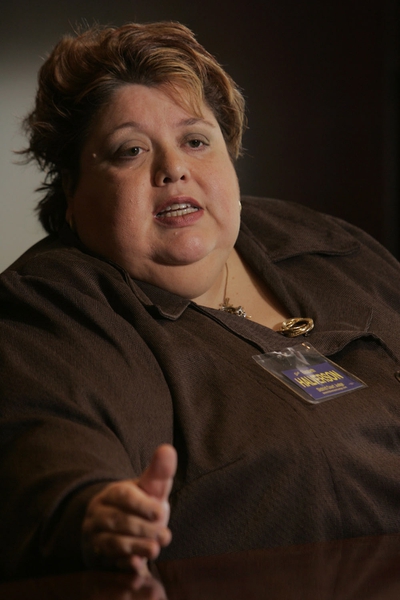
The argument for reforming how Nevadans choose judges begins with Elizabeth Halverson. Elected District Court judge in 2006, she was removed from office in 2008 amid accusations she had fallen asleep on the bench, had improper contact with jurors and ordered staff to rub her feet.
Yet as unsettling as the Halverson episode was, longtime attorneys say a deeper look at the system that landed her on the bench yields an even more disturbing portrait: Voters choosing judges in a near informational vacuum; attorneys writing checks to the campaigns of the judges who rule on their cases; and the specter that these donations influence judicial decisions.
“If you wanted to design a system that would tempt everyone to be corrupt, you would design the system we have right now,” said Al Marquis, a Las Vegas real estate and commercial lawyer for 35 years. When asked if he thought the outcomes of cases have been influenced by campaign donations to judges, he said, “I have no doubt about that.”
Marquis’ frank talk comes as a bipartisan group of politicians, attorneys and former judges is seeking to change the system. Nevadans for Qualified Judges is headed by state Sen. Bill Raggio, R-Reno; former Nevada Supreme Court Justice Bill Maupin; and developer Irwin Molasky. It’s supported by Democrats such as Assembly Speaker Barbara Buckley, who is head of the Legal Aid Center of Southern Nevada.
The vehicle for their proposed changes is Question 1 on November’s ballot, which would amend the constitution to change how Nevada selects judges.
An appointed board would review applications from judicial candidates and select three finalists. The governor would then appoint a judge from the list. Twelve to 25 months after being appointed, the judge would stand for a “retention election” — an up-or-down vote on whether he or she should remain on the bench. Candidates for retention would be evaluated by a Judicial Performance Commission. Its findings would be made public.
Failure to get 55 percent of the pro-retention vote would result in the judge being removed.
Proponents of the ballot measure say Halverson had no business becoming a judge in the first place. She won election because voters didn’t know who she was or what her qualifications were, they argue.
Research by David Damore, a UNLV professor of political science, shows at least some voters are in the dark on judicial candidates. He found that 16 percent of votes in Nevada Supreme Court races went to “none of these candidates” compared with less than 10 percent in other statewide races. Additionally, a higher than average number of voters skipped voting on Supreme Court races altogether.
Damore thinks it is an indication that people don’t know who is running for the state’s highest court.
So when voters in Clark County are faced with choosing candidates for more than 30 District and Family Court judges (there are 72 statewide), as well as justices of the peace and municipal judges, things can get really fuzzy.
Raggio, a partner at the law firm Jones Vargas, said people will ask him who he likes in judicial races. But even someone as enmeshed as he is in the legal and political community is in the dark about those seeking judgeships.
“I rarely know these judges,” Raggio said. He also said many judges run unopposed.
Yet even if the public doesn’t know judicial candidates, they still want a voice in electing them.
A poll last month by the Las Vegas Review-Journal found voters opposed Question 1 by 54 percent to 27 percent, with 19 percent undecided.
So why does the public want to cling onto this right to elect judges?
“My hunch is people just don’t trust government,” Damore said. “They’re not necessarily making informed choices. But the idea of somehow losing that option, they don’t like.”
And the argument against the measure is just that. Critics say that a committee selection process would lead to cronyism and only candidates with political juice being appointed to the bench.
The ballot measure would create a Judicial Selection Commission. Supreme Court nominees would be chosen by the chief justice; four attorneys appointed by the State Bar’s Board of Governors; and four nonattorneys appointed by the governor.
District Court judges would be appointed by the same panel, plus two attorneys who are residents of the judicial district appointed by the State Bar and two lay residents of the district appointed by the governor.
This unquestionably concentrates a lot of the power in the hands of the governor and the State Bar.
But critics of the current process say it’s a better alternative to what is a broken system.
“We have a good ol’ boys network now. We have cronyism now,” Marquis said. “People giving the most money are buying the most influence.”
Privately, lawyers and legal observers have acknowledged that campaign contributions have influenced some cases. But they have avoided saying more than that there is a “perception” problem for fear of angering judges.
As Raggio, who has fought for changes to the judicial system for decades, said: “The perception is, ‘Hey, if you want to get a little leg up the tree so your views are considered more favorably, you give a campaign contribution.’ ”
Thirty-five Nevada Supreme Court candidates raised more than $9.8 million for high court races from 2000 to 2009. Nevada placed eighth out of 26 states analyzed in a study of states’ high court races released last week. And those are just the Supreme Court races.
Lawyers and companies that appear in court are pressured by judges to donate to campaigns, Marquis said. A donation to the judge is “almost required,” he said. “What are you going to do, tell them no and jeopardize a future client’s case?”
He declined to provide specific examples of cases influenced by campaign donations, acknowledging, “you can never know for sure.”
Marquis added that many Nevada judges have integrity and try to separate contributions from decisions. “But human nature is human nature,” he said.
Some political observers have privately noted that when the Nevada Supreme Court ruled in 2008 that casinos don’t have to pay sales tax on meals that are comped, the court reversed decades of casinos paying the taxes. It also happened to benefit some of the state’s most powerful interests and largest campaign contributors in judicial races.
Former U.S. Supreme Court Justice Sandra Day O’Connor has been speaking nationally about judicial reform and the corrupting influence of money on the courts. She has agreed to be an honorary chairwoman of Nevadans for Qualified Judges.
“When you enter one of these courtrooms, the last thing you want to worry about is whether the judge is more accountable to a campaign contributor or an ideological group than to the law,” she said in a statement.
Buckley said, “There’s a perception that you get the best results if you’ve given the most money.”
This initiative won’t totally take money out of judicial races. Candidates could still campaign to ask voters to retain them. But Buckley said, “What we’ve certainly seen in other states is a reduction in the amount of money in the system. And it becomes more about quality decision-making than running political campaigns.”

Discussion: comments so far…
Comments are moderated by Las Vegas Sun editors. Our goal is not to limit the discussion, but rather to elevate it. Comments should be relevant and contain no abusive language. Comments that are off-topic, vulgar, profane or include personal attacks will be removed. Full comments policy. Additionally, we now display comments from trusted commenters by default. Those wishing to become a trusted commenter need to verify their identity or sign in with Facebook Connect to tie their Facebook account to their Las Vegas Sun account. For more on this change, read our story about how it works and why we did it.
Only trusted comments are displayed on this page. Untrusted comments have expired from this story.
No trusted comments have been posted.
Post a comment
Most Popular
- Viewed
- Discussed
- E-mailed
- Chinese company agrees to finance proposed Henderson arena
- South Point owner Michael Gaughan’s take on ‘Vegas Stripped’: ‘I’ll give it an 8’
- Romney says he prevented Massachusetts from becoming ‘the Las Vegas of gay marriage’
- Coolican: Henderson officials out of loop on police brutality case, raising red flags
- See mug shots of 16 arrested in stolen-property police sting
- UNLV eager to get on the court for big game against San Diego State
- Criss Angel denies allegations of fight with fired employee
- Lumberjacks — ‘Where the Big Boys Eat’ — hiring for North Las Vegas location
- Conceptual design unveiled for Henderson Space and Science Center
- Berkley draws stark contrasts with Heller over immigration
Blogs
The Kats Report
South Point owner Michael Gaughan's take on 'Vegas Stripped': 'I'll give it an 8' (3 Comments)
Author relishes writing the life story of ‘larger-than-life’ Oscar Goodman (3 Comments)
Elsewhere
Landowner: All roads could lead to Uxbridge casino
Revel reveals smoke-free casino opening
Cirque du Soleil show in Sands China casino to close this month
Meet the woman behind Sheldon Adelson
The Kats Report
A sophisticated look at line-moving and dog-show handicapping from Wynn's Johnny Avello
The Sun
Locally owned and independent for more than 50 years.


Ugly portrait of the practice of law in Las Vegas. All the players admit it's a corrupt system. Poor reflection on the media. The answer is not an elitist maze.
"If you wanted to design a system that would tempt everyone to be corrupt, you would design the system we have right now,"
Al Marquis, TAKE A BOW.
We have a WINNER!!!
Lawyers have been admonished IN OPEN COURT for not having contributed to a judges' campaign...
the INFLUENCE one can purchase, or conversely, the INJUSTICE a CLIENT MAY SUFFER due to a lawyers LACK OF CONTRIBUTING is not just a MOCKERY of justice itself...how is it ALLOWED TO HAPPEN???
And, of course, we have people VOTING for judges who they DO NOT HAVE A CLUE ABOUT...good or bad...HALVERSON, for crying out loud;
Next thing ya know we'll be fer electin' us a sheriff..wait, we DO that TOO!!!
Those with the most money and corruptible judge win, whether it be a person, business or government entity. If you hire Harry Reid's sons firm, you have a good chance of prevailing as i am sure they are one of the biggest judicial donors/supporters.
I remember many years ago when a judge was having a fundraiser in one of the casinos and all the attendees were attorneys and the judge made a comment to an attorney that the attorney did not contribute to the judges campaign and should hope not to try a case in his court. The papers and press ALMOST went wild with it. It was quickly forgotten.
The answer isn't to punish the voters who go to the trouble to research the candidates by replacing their right to vote with an appointment system. The answer is to devise a system that makes it easier for voters to perform research on the candidates.
Why aren't court opinions et al available on the internet?
Tangentially related: why aren't Metro's policies available on the net? Esp. use of force, discipline procedures, etc.
When judges take cash to run for office you get corruption. And people wonder why Nevada judges are corrupt? lol
While the "juice for justice" issues raised in the article are disturbing, the bigger issue for me is that a judicial candidate==thanks to the canons of judicial ethics==can't "promise" to do X, Y or Z during a campaign in exchange for votes. Accordingly, judicial elections usually degenerate into: "Vote Mary Schmoe! The choice of law enforcement! Garbage Collectors! Left-handed professional tiddlywink players!" while Mary recites anodyne promises about "following the law". Since it's impossible to have an election in the conventional sense for judges anyway, the appointment/retention model seems to make the most sense.
When judicial candidates tour all the law firms in town asking for campaign donations, and then do not recuse themselves from cases in which those law firms appear, they are violating the Judicial Cannon that judges avoid the "appearance of impropriety." So even if they are not being influenced, they are being unethical by definition. And it happens every day in almost every case. Perhaps worse, the system we have now guarantees that about 1/3 of the judges serving in Nevada are incompetent. Block voting by certain groups sweep their insiders onto the bench, and then they proceed to ignore the law and the facts. Many couldn't make it as lawyers so they run for judge. It is time for a change, Nevada. Bring justice and competence to the bench. Question 1 will help end this mess of a system.
Halverson (aka "Jabba the Judge" -- I've seen her in public) is just the one who got caught. This kind of corruption is inherent in this system, as others have posted here.
Let's start with the fact that, right under the People's noses, a private group -- the Bar -- has completely taken over an entire branch of government and is progressively infesting the other two branches.
Although it appears the "bipartisan group of politicians, attorneys and former judges is seeking to change the system" seem to have noble intent, the Bar influence is there and the same problems inherent now will continue to infect the process. The solution is to remove all Bar members from any position of decision-making and build in accountability -- like enhancing the impeachment process and penalties for perjury of oath. As it is now judges are completely free to continue wiping out Constitutions, all executive and legislative acts, even lives with a stroke of their pens.
"All the players admit it's a corrupt system."
leftiebob -- yet it's THEIR "corrupt system" and by default OUR "corrupt system." Experience has taught me only the body politick -- We the People -- are capable of reform, but just can't seem to be bothered to do more than grumble.
"The first thing we do, let's kill all the lawyers." -- Dick the Butcher in Shakespeare's "Henry The Sixth," Part 2 Act 4, scene 2
Is their really a difference? Candidates who run for the bench must raise a tremendous amount of money to have a legitimate chance. More often than not, the golden rule prevails""He who has the most gold, rules!" Exceptions such as Elizabeth Halverson can occur but it was remedied. Why do people or corporations contribute to campaigns? Could it be because of self interest? Ulterior motives that benefit their own cause? The gaming industry, a notorious large contributor makes the eventual winner beholden. What is truly interesting is this issue is on the ballot? Numerous attempts have been made to change the percent the gaming industry pays in taxes but attempts to get it into the hands of the voters is crushed every time. So it is proposed we have our judges appointed. Hmmmm"by who? Well I guess it would be by the people who are elected. And those people elected undoubtedly ran expensive campaigns funded by contributors. Hmmm".do you think those contributors might be the very same who would contribute to candidates for the bench? This issue is little more than double talk. If we were serious about getting the best, most qualified people on the bench why not make appointments as a result of a carefully constructed test? Legitimate criteria based on specific requirements in knowledge of law and experience being the determinating factor. The average voter who pulls the lever on this issue has no idea of what they are voting for. The big money folks will get the vote out by bombarding the voters with TV and radio commercials and expensive flyers and mailers. Twiddle dee-Twiddle dum
"...the system we have now guarantees that about 1/3 of the judges serving in Nevada are incompetent. Block voting by certain groups sweep their insiders onto the bench, and then they proceed to ignore the law and the facts."
nvpatentlawyer -- good post, and from one actually qualified to post an opinion.
Maybe because of your practice, which doesn't seem to lend itself to the usual litigants' frenzy of deal-making behind closed doors, you have such a clear view of judicial politics.
As a long-time observer and occasional participant in judicial politics, I've long held if the average citizen had a clue how low the quality is of the average sitting judge, there would be that revolution that's been stewing for so long.
Example -- why do judges wear robes and sit on those big podiums? It ain't in any law. Same as their immunities -- self-awarded.
"The legal system has also been wounded by lawyers who themselves no longer respect the rule of law ..... When lawyers cannot be trusted to observe the fair processes essential to maintaining the rule of law, how can we expect the public to respect the process?" -- the Honorable Edith Jones to Harvard's Federalist Club "American Legal System Is Corrupt Beyond Recognition, Judge Tells Harvard Law School" 2/28/03
Corruption in NevaDUH politics? Shocking!!!
If appointment is better than selection, why do I have compelling and irrefutable evidence against an appointed Federal judge of tape tampering of a hearing? The evidence along with 3 people's affidavits were submitted to the 9th Circuit Court, which later sent me a letter saying that they received a second copy of a tape (which wasn't altered) and that the matter was closed?
Doesn't this in itself prove the system is crooked and lacks accountability when an appointed judge can commit a felony and those above him can cover it up by failure to take action (isn't that misprision of felony)?
Phooey. The system is nearly completely unaccountable as is and judicial selection makes it worse -- even though the Legislature (containing many attorneys) knows they passed an unlawful law by creating a criminal penalty for citizens who talk about filed attorney and judicial complaints --they won't pull the law back out!
Phooey again. How about how the Legislature gave judges exclusion to the Nevada Open Meeting law, and then the attorneys took it on for themselves as if they had the right. I got a letter from a rep from the Attorney General's office on this (who is an attorney) and was told in writing that attorneys are part of the judicial branch of government and therefore entitled to the same OML exclusion as judges -- so I wrote back to them and asked how lawyer-judges can lawfully serve in Legislature (lack of separation of powers). I was told in writing that I should get a lawyer and sue the State. So lawyers want it both ways -- unlawful exclusion under the Nevada Open Meeting Law for misconduct information AND to write new laws, often about their own job duties, in Legislature!
Then there is the issue of the "one true church" church in the judiciary, finally written about by a LV Review Journal columnist. That group is working stealthily behind the scenes to infect the rest of us with their extreme right-wing fundamentalist viewpoints. But you can't stop them, according to the Judicial Selection Commission because that commission can't discriminate based on religion.
Please, people, listen up. We have nearly zero accountability in our systems as it is. Don't give away the rest.
What is the problem here? The real one.
Should we just accept the failure of democracy? Why stop at appointing judges? Why not all officeholders? Everyone running for office must raise money. Then they rule on zoning, vote on municipal ordinances, state laws, and federal laws. The higher the office, the more influence, the more influence the more "campaign contributions." We can eliminate all that "corruption" if we just appoint everyone instead of wasting time on elections. Think of all that money we will save -- and we won't have to spend our precious time trying to find out about candidates.
Except for a couple of issues: (1) Who is going to do the appointing? "Impartial people" is an oxymoron. Just in case someone hasn't noticed during this election cycle, people are partial. We could appoint a king -- just forget about that king we cast aside in a Revolution for constitutional government and all the other kings ancient and modern. We should not let facts disrupt a political agenda. (2) Are the appointees of kings less corrupt than elected officials, or more corrupt? The Founding Fathers who had more direct experience in the matter than we, thought the appointees of kings were more corrupt. If we wanted like Esau to give up our birthright, we could fill offices by appointment.
Would giving up our birthright fix the problem or make it more intractable? Ms. Halverson got elected judge. Two years later, she was voted out. This was self-correcting in a manner far more timely than that for some appointed Federal Judges whose impeachments have famously dragged on for decades.
Would appointed judges be more responsive to the needs of the public or to the needs of the appointing power?
Some people say the problem is money. It takes too much money to campaign, and because campaigns cost so much, candidates become beholden to contributors and the result is corruption. One solution is to cut down the size of electoral districts to a population of 30,000 -- that is a size where door-to-door campaigning and neighborhood meetings are very do-able. For Judges, just break the Muni, Justice, and District Court into judicial districts and elect from each district. Judges won't have to raise money. They can campaign in a manner which is appropriate to their offices. They can be beholden to no one but the public that elects them. But, I forget myself in proposing something workable that preserves democracy and judicial integrity and is in keeping with our Constitution.
An independent judiciary is one of the metrics used by two indexes that measure economic freedom. It is a measure that has been found to be statistically significant in a country's ability to attract investment and promote economic growth. It basically tells investors that their business or property rights will not be affected by political whims. This is definitely a refort that will help Nevada to attract business.