Wednesday, April 28, 2010 | 2 a.m.
Sun coverage
By now the causes of the financial crash that led to the Great Recession are well known.
Americans, including homebuyers and regulators, community banks and Wall Street titans, were like skiers blithely ignoring the risk of avalanche, while a few destructive firms lit explosives that got the cascade started.
In short: easy money, lax lending standards and government incentives puffed up the housing market, especially in states such as Nevada, California, Arizona and Florida. Lenders didn’t care if borrowers would repay, because they were just going to resell the loans to someone else. Rating agencies, paid by the people whose products they were rating, said those packaged loans were safe and tiptop.
But they weren’t. Once the loans failed and the foreclosures started, some big Wall Street firms stood to lose billions because of bets they had made that those bad mortgages wouldn’t fail. The bets, called “derivatives,” were largely unregulated and opaque — few people knew who owed what to whom. So the losses started, and huge Wall Street firms, including Lehman Brothers, failed, while others stood on the brink of collapse.
The country’s entire financial system was on the verge of freezing up, which would have crippled American capitalism.
If all that sounds complicated, bipartisan critics of the current system have a straightforward analogy for it: A casino in which taxpayers have to bail out the house because of its incompetence and greed.
So now Washington, which played a hand in creating the mess, aims to fix it. Although the two parties are engaged in some partisan gamesmanship, what’s remarkable about the current debate, especially in light of a new Senate Republican plan, is how similar the proposals for financial reform are. But at least two Nevada Republican contenders, including front-runner Sue Lowden, are rejecting that consensus.
Here, the Sun summarizes the plans and positions of Senate Majority Leader Harry Reid and his four major Republican challengers.
Sen. Harry Reid
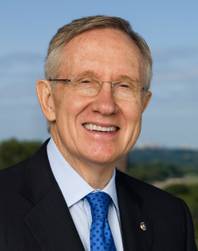
Harry Reid
Reid has tried to open debate on a bill principally authored by Sen. Chris Dodd, D-Conn., but so far failed to gain the 60 votes needed to overcome Republican opposition. At its core, the legislation would create a new agency to protect consumers from “unfair, deceptive and abusive financial products and practices,” including in mortgage lending, credit cards and consumer loans.
The bill would also impose new restrictions on banks and require that bigger institutions contribute to a $50 billion fund that Democrats say would be used to ensure an orderly liquidation of troubled firms so taxpayers would not be on the hook for bailouts as they were in 2008.
The bill also would establish new oversight of the derivatives market that went unchecked leading to the 2008 crisis. A derivative is a complex financial instrument — until now largely unregulated — that is a sort of bet between players on whether some asset is going to rise or fall in price.
Treasury Secretary Timothy Geithner told Congress that the Obama administration is working up its own plan for restructuring Fannie Mae and Freddie Mac, the government-backed mortgage giants that hold a majority of the nation’s home loans, but is waiting for more stability in the housing market.
In a written statement Tuesday, Reid said, “There will be more votes to proceed to debate this week, and Republicans will have more opportunities to show whose side they are truly on. Senate Democrats will continue to hold Wall Street accountable and fight to protect consumers in Nevada and across America.”
Sharron Angle

Sharron Angle
Before you ask Angle how Wall Street should be reformed, you need to ask her if it needs to be reformed.
“No,” she said in a written response. “Getting back to tried and true supply-side economics affectionately known as Reaganomics will give small business and international confidence in our economy.”
On this, Angle is quite literally alone, not just among Republicans running for Senate, but also among economists and finance experts — left, right and center. Although there’s disagreement about how to do it, policymakers in both parties agree Wall Street must be governed by rules that will enhance transparency and safety.
Angle, a former assemblywoman with an endorsement from a national Tea Party group, said she opposes regulating the derivative markets, creating a fund for winding down failed banks and establishing a consumer finance protection agency. Angle instead ticked off a list of talking points from her stump speech — calling for an audit of the Federal Reserve, abolishing the IRS code and eliminating Freddie Mac and Fannie Mae.
Asked what she would do to reform the financial system, Angle said she would want to use unspent stimulus money to pay down the federal deficit.
Pressed further on how, specifically, she would change how Wall Street operated, she said she was cautious to get too involved.
“I’m very careful that government does not belong in private business. If businesses are not doing best practice, they should be allowed to fail. They shouldn’t have been bailed out,” she said. “Those types of failures do correct problems. There are certainly bankers on Wall Street that benefited on both sides of this crisis. It was precisely because there was a thought process in Washington that they were too big to fail.”
It hardly needs to be said, but Angle would not vote to allow floor debate of the bill.
John Chachas
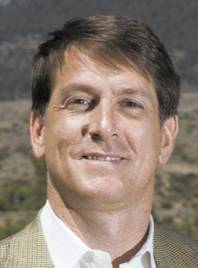
John Chachas
Chachas is well-suited among the candidates to offer insights on Wall Street — he made millions there as an investment banker before deciding to return to Ely, his childhood home, and run for Senate as a Republican.
In a detailed white paper, Chachas argues that our system for “monitoring and managing risk across highly interconnected financial markets” failed. In general, he argues for more transparency and market-based incentives for a more prudent financial services sector.
Chachas advocates for creating a new apolitical position — Risk Monitor — to keep watch on all systemic financial risk, ensuring that institutions haven’t made the kinds of risky bets that could imperil us all.
Derivatives should be traded on exchanges — not unlike stocks and bonds — so everyone in the market is aware of their prices. He believes if a bank packages mortgages together to sell them, it should retain some ownership as an incentive to make good loans.
Chachas would reform and eventually privatize Fannie Mae and Freddie Mac; force more transparency at the ratings agencies that gave good marks to bad investment vehicles; compel banks with their own trading operations to keep substantial reserves on hand in case a trade goes bad; and get banks on government support to pay employees in stock so their interests are aligned with that of shareholders.
Chachas says no firm should ever be “too big to fail,” and if the Risk Monitor believes the downside risk of an institution is too great, the regulator can “decompose” it.
Chachas acknowledged the problem of consumers taking on too much debt through high-interest credit cards and subprime mortgages. But his mistrust of government regulators has him questioning the efficacy of the proposed financial products regulator. “I don’t know what the right answer is. But I’m inherently mistrustful of the federal government overseeing all this,” he said in an interview Tuesday.
Chachas said he would have voted with Republicans to block debate from starting on the proposed bill. “You’ve got to vote ‘no’ to bring people back to the table to negotiate for something that’s better for the country,” he said.
Sue Lowden
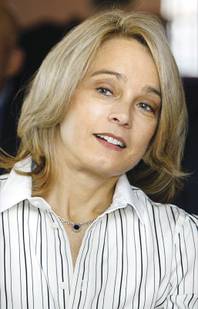
Sue Lowden
Lowden, who said she would have voted with Republicans to block debate on the bill, said in a previous Sun interview that the meltdown was caused by too much, not too little regulation.
She stood by that laissez faire philosophy in written answers to Sun questions. Asked whether she favored reform, she replied, “Yes, but not the major reform being proposed by the Democrats. The No. 1 priority should be to protect the taxpayer,” though she didn’t elaborate.
Lowden opposes creation of a fund to help failed financial firms meet their commitments while the government uses an orderly process for liquidating it. Financial reformers have turned to this mechanism because the standard way failed firms are unwound, through the bankruptcy courts, is considered too slow, leading to panics while the onerous process gets bogged down in court.
Lowden says even though the banks would pay for the fund, it’s actually a hidden tax that will be passed on to consumers.
Lowden doesn’t favor a new consumer protection agency for financial products such as credit cards and mortgages because the government plays a role here, she said.
“It is not necessary to create another arm of government when many of these services are already provided by the Federal Reserve. We just need to provide the necessary assets and enforcement for consumer protection.”
Lowden did allow for more stringent regulation of derivatives but also praised them as the democratization of finance.
She also laid out general principles of any reform legislation: Not putting smaller, community banks at a disadvantage relative to bigger banks and minimum underwriting standards for home mortgages to prevent another major bubble.
Lowden concluded by quoting the Republican favorite, President Ronald Reagan: “Government is not a solution to our problem, government is the problem.”
Danny Tarkanian
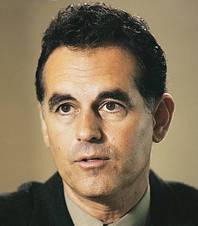
Danny Tarkanian
Tarkanian, a lawyer and Las Vegas businessman, said he would have joined Senate Republicans and voted to block the Democrats’ bill from reaching the floor for debate.
Still, he said financial regulatory reform is “absolutely necessary” and he supports at least one key provision of the Democrats’ legislation: tougher rules on the trading of derivatives.
While he opposes another key provision, the creation of a federal consumer protection agency, Tarkanian said he supports the dissemination of more detailed financial information to consumers on mortgages and credit cards through existing government agencies.
He also called for the reinstatement of the Glass-Steagall Act to separate commercial and investment banks.
Like most Republicans, Tarkanian opposes a $50 billion bank-financed fund to help failed companies meet financial commitments while the government winds the institutions down. “This provision institutionalizes bailouts, creating what truly is a bottomless bailout,” he said. “We must get away from the bailout mentality that has taken over Congress since the first Wall Street bailout.”
Critics of this Republican opposition to bailouts say that although Republicans might in theory be against bailouts, if the financial system was again on the verge of collapse, they would change tune. Democrats say their plan makes a provision for an orderly process — paid for by banks — to unwind an insolvent institution in case it happens again.
Sun reporters Michael J. Mishak, David McGrath Schwartz and Lisa Mascaro contributed to this story.



Why did Goldman Sachs CEO Lloyd Blankfein visit the Obama White House four times?
WALL STREET continues to be one of the biggest players in our government -- through putting WALL STREET people in government jobs, money for elections, and paid lobbyist to write new laws.
The current reform law crafted by Lobbyists, Obama, and Reid; and the "Civil" suit by Obama is a clear indication that WALL STREET is going to win with Obama's help. Sure there are good thing in the bill and sure Wall Street will have to deal with a few more intrusive regulations and a consumer agency.
But it does NOT truly address full transaction transparency, capital formation, liquidity and reserves, breaking up too big institutions, and credit rating services. And Freddie and Fannie are NOT covered by the bill.
Why after 18 months is the Administration unable to come up with a "CRIMINAL" case against Goldman Sachs. Why are several KEY Treasury Department officials from Goldman Sachs. Why are Obama, Reid, Dodds, Franks, and other Democrats receiving MILLIONS of DOLLARS in campaign contributions, and why did Goldman Sachs CEO Lloyd Blankfein visit the White House four times?
Why are the Big Bank allowed to borrow from the Federal Reserve at 0.25% and loan it out at 5.0% making Billions. Big Bank loan volume is down yet their profits are up.
The big question is why did Multi-Billionaires Democrats Goldman Sach's Lloyd Blankfein, John Paulson, and George Sores time their "SHORTING" of America and cause the collapse of AIG in September 2008, just when John McCain was ahead in the Election? Why is multi-Billionaire Democrat Mogul Warren Buffett fighting the bill's rule on Derivatives?
CEO Lloyd Blankfein wrote in an e-mail, "We " made more than we lost because of shorts."
Paulson in an email: "It is true that the market is not pricing the subprime " wipeout scenario." "In my opinion this situation is due to the fact that rating agencies, CDO managers and underwriters have all the incentives to keep the game going, while 'real money' investors have neither the analytical tools nor the institutional framework to take action before the losses that one could 'anticipate based [on] the 'news' available everywhere are actually realized."
Paulson is a true GIFTER and he is NOT under investigation.
------------------------------------
Sure Reid and Obama will campaign on this bill in November --- but they have not gotten anything done that helps small business and the little guy in the market.
"Sure Reid and Obama will campaign on this bill in November --- but they have not gotten anything done that helps small business and the little guy in the market."
-----------------------------------
The bill does nothing to stop people like Blankfein, Paulson, and Soros.
The bill does nothing to stop the lopsided paychecks that have driven greed and irresponsibility in firms like Goldman Sachs.
The bill does nothing to breakup bank and force banks to have sufficient reserves to cover risk. Hence too big to fail BAILOUTS will continue.
There is no true transparency. The bill does nothing to help the small investor from unsuspectingly getting wiped out again and again.
Obama and Reid are not doing anything about Fannie and Freddie who started this mess.
Obama and Reid are not doing anything about the credit rating agencies.
The regulators were all watching porn, do you think the SEC were the only ones?
So obviously the solution is more regulators. Jeez.
How about Congress taking the blame. Gov't was more than complicit, they--created the mess through the tear-down of Glass-Stegal and the push for housing for everyone.
don't these stupid pathetic ugly lying always making a threat or fear mongering republicans ever get tired of defending the bad guys...
first they defend the health care insurance companies and their very real death panels...
now they defend the thieves that caused the economy to collapse...
what a bunch of maggots...
who the hell would join the stupid pathetic ugly lying always making a threat or fear mongering republican party these days...
only l-o-s-e-r-s!!!
republican will not fix they think it not broke. they just have there hands out. can i have some more please. if they don't fix it next time it will be a depression not a recession. finally we have some1 helping main street not wall street
What needs to be straightened out is the corrupt DC Bunch. In other words other than a photo opt for the Dumocrats this trip around, let's get the incompetent and the crooks out of DC starting with Reid and Pelosi. From there we can further clean the snake pit out in 2012 by taking out Obamination and his bunch. Then and only then can we begin to straighten this country out. Goldman Sachs and the government leaders are in bed together remember on Fannie and Freddie, Reid, Dodd, Franks, and Schumer when investigation was asked they called it a witch hunt. Hopefully this country will do their homework and clean these unethical slugs out in the near future. Looks like Dodd is already taking the money and running.
Birdie-
"don't these stupid pathetic ugly lying always making a threat or fear mongering republicans ever get tired of defending the bad guys..."
Obviously not. It's the campaign contributions. And the Citizens United ruling that allows corporations to spend however much they want on their independent expenditure campaigns. They bought and paid for Bush, and the same holds true for the current crop of GOoPers today. That's why they won't allow any type of strong oversight of Wall Street.
"No," she said in a written response. "Getting back to tried and true supply-side economics affectionately known as Reaganomics will give small business and international confidence in our economy."
^^^^^^^^^^^^^^^^^^^^^^
BULLoney. Republicans are quite simply STUPID and every single one of them need to be voted OUT of office--they are insane. We are living in the disasterous results of reaganomics--an ideologically driven and miserably FAILED theory of sheer right-wing ignorance. The GOP are unable to progress and learn from THEIR mistakes and if we support even one of them, we will be doomed to repeat their mistakes.
two words: chicken futures
The reason Wall Street melted down is because they were allowed to sell insurance without collateral.
It's as simple as that. Not Fannie Mae or Freddy Mac, not excessive regulation forcing banks to make unqualified loans, not even Too Big to Fail. Those are all just talking points to distract from the real problem.
Credit Default Swaps (CDS) are simply investment price insurance---if the price of the investment drops below a certain point, the seller of the CDS makes up the difference. Naming it a "Swap" is just a way to avoid that nasty "I" word: insurance.
And, like any normal type of insurance, the seller should be made to keep collateral on hand just in case they need to pay out. If my house is destroyed by a hurricane, I don't want my homeowner's insurance company saying (after years of paying premiums) that they simply don't have the money on hand to cover my loss.
But the repugnant Graham Leach Bliley act, passed in 1999, specifically exempted Credit Default Swaps from being regulated as insurance. Goldman Sachs bought several hundred billion dollars worth of CDS from AIG to insure their junky bundled mortgage investments. And when the value collapsed, AIG had no collateral to cover the losses.
Incidentally the Graham Leach Bliley act that caused this whole problem was sponsored by Texas Senator Phil Graham. He was John McCain's financial adviser during his presidential campaign, so he probably would have been Secretary of Treasury had McCain won. We sure dodged a bullet there.
Between 2008-2010, Reid steered an additional $1.5B in federal spending to Nevada. Do y'all (that's the collective Nevada & Las Vegas) seriously think you're going to be so much better off if he actually loses? People seem all set to toss the dude that's sitting 20th on the seniority depth chart in favor of someone that will have less clout than Ensign (56th) or Scott Brown (currently dead last).
Of all the candidates interviewed by The Sun in this article, I would say that Sharron Angle and Sue Lowden have the most outrageously ridiculous positions regarding Wall Street Reform.
Sharron Angle thinks that Wall Street is fine as it is? All we need to do is apply those wonderful free market principles, and things will be fine? What planet is she living on? There is no such thing as totally free markets. Real life has imperfections, frictions, and also just plain cheats and liars. How many people will be destroyed on the path to this completely unregulated free market utopia?
And for Sue Lowden to prattle on about needing less regulation, not more, is equally ridiculous. She no doubt is a devotee of the talking point that excessive regulation forced banks into making loans to unqualified people, and that's the whole problem.
For anyone that believes that there is an ounce of truth to the idea that banks were being forced to make loans by excessive regulation, please remember back to 2005. Could you open up a website without having a pop-up ad urging you to refinance? Could you open your mailbox without having dozens of junk mail flyers falling out all over the floor urging you to refinance? Could you listen to AM radio for more than 5 minutes without hearing an annoying Countrywide commercial urging you to refinance?
Do you think these companies were being forced to do this because of an evil government regulation? Of course not---they were doing it because they could bundle the junky loans, use uncollateralized insurance to make them smell good, get rating agencies (which were either themselves or ones that they themselves were paying) to give them a thumbs up, and sell them to suckers.
I think the current financial regulation being pushed by Harry Reid is far too weak (Democrats are certainly in the pocket of Goldman Sachs almost as much as Republicans, as many have pointed out). But at least it's something.
To hear know-nothings like Sharron Angle and Sue Lowden spout their nonsense about needing LESS regulation is the height of ignorance. I certainly hope that Nevadans will realize that these two clueless individuals have no place as serious Senate candidates.
O.K. as to financial reform, absolutely necessary and the Republicans in the Senate are the nay sayers of the world. Sharon Angle is out to lunch, totally in the dark about financial issues. John Chachas has already made his fortune on Wall Street so he could be a wolf in sheeps' clothing. Sue Lowden has benefitted from the bail out so she is a no no. As for Tarkanian, he just plain does not get it. There is no question in my mind but that the Republican candidates are against everything that would help Nevada. No question but that we MUST reelect Reid. For Nevada he is our only hope.
Reaganomics gave us a federal deficit, a big, red line in the sand for the Tea Party and their annointed candidates. So they say.
Way to confuse the Tea Party platform, Sharon.
It seems strange that we cannot see that there is plenty of blame to go around in this mess. It is unbelievable that the government could have missed this massive multi-trillion dollar derivatives market springing up under their feet. There were a lot of stupid buyers out there taking on mortgages that they could not afford and/or did not understand. (I have friends in that group and at least some of them admit their part of the fault in their mortgage problems.) But it isn't like people didn't see this coming. The problem is that too many people didn't want to see it coming and so they chose not to believe it would happen. Some of those people are the same ones that now say that this was entirely the fault of Wall Street which is not true either. In 2005 I was talking to a friend who was a director at a large financial firm and expressed concern about the housing market. She told me that her company was in the process of getting out of mortgage backed securities because they saw that there was trouble on the horizon. So, I never believed it when people on Wall Street or in Congress said that "nobody" saw this coming because there were people who did. But since our economy has become largely about consumption and because we seem to produce less and want to consume more, there is a need for the government and Wall Street to help us find ways to do that. One of them was the easy refinancing of your home to suck the equity out so you could spend it or pay off what you had already spent.
I remember one of the tragedy stories of the meltdown being a woman on the east coast who had purchased a house for around $70,000 in the 90's and was losing her home because she could not afford the mortgage. What they did not dwell upon was that she had refinanced several times and now had something like a $400,000 mortgage with a variable interest rate that she could not pay. It appears to be another person caught up in the need to spend and not pay attention to the costs. It all makes me wonder why we don't have people up on charges from somewhere if there were the kinds of things done that people have claimed. It boggles the mind.
In the end we do need regulations on Wall Street but they need to make sense and they need to be enforced. We need to not have special treatment of companies. If you provide backstops for a company, then you are encouraging them to be more recklessly. If you ever gamble with play money online or elsewhere, you gamble differently than if it was your real money. If you run a company and know that you crash and burn that the government will cover you, you will take greater risks. Hopefully we will get something that will make things work better in the long run rather than just add hundreds of pages of law to make people feel that progress has been made.
OMG, did the Sun actually "report" the news instead of "plugging" Democrats. This must be a first! Of course it can't last. In the end a biased paper will show it true colors.
Reaganomics?? like the S&L Bail out including Neil Bush???
Democrats have now lost 3 votes to bring Wall St Reform to the floor of the Senate for debate. Why are the Republicans so afraid to have this debate in public?
If anybody saw yesterday's congressional hearings with current and former Goldman Sachs execs, you wonder how long the GOP can vote no and keep a straight face.
So glad we have Sen Reid there on our side!
"Lowden, who said she would have voted with Republicans to block debate on the bill, said in a previous Sun interview that the meltdown was caused by too much, not too little regulation."
So she's against even debating harsher regulations on Wall Street, AND she has a fundamental misunderstanding of the basics of the crisis?
The republicans have picked a real winner with this one.