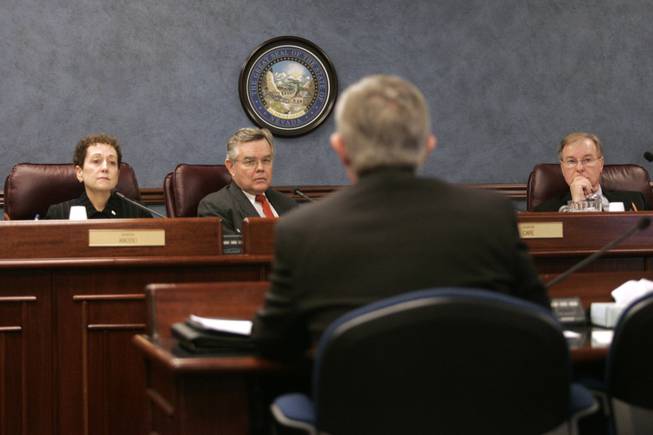
Terry Care: The Democratic state senator from Las Vegas, center, wrote construction defect legislation that would have nearly wiped out Chapter 40, the provision in state law that provides for homeowners to collect reasonable attorney fees in construction defect settlements.
Sunday, June 21, 2009 | 2 a.m.
Document
Beyond the Sun
Sun Archives - Legislature
Sun Archives - Defect Issues
- Del Webb, Coventry settle plumbing lawsuit (4-3-2009)
- Foes under defects law unite to push for its change (3-24-2009)
- Four homebuilders settle in plumbing lawsuit (3-18-2009)
- Judge orders settlement talks in plumbing defect case (3-4-2009)
- Plumbing problems may continue to grow (2-23-2009)
- Judge approves $90 million faulty plumbing settlement (2-2-2009)
- Pipe work begins in homes involved in Kitec lawsuit (1-22-2009)
- Judge releases 322 homeowners from class-action plumbing lawsuit (12-15-2008)
- Couple hopes company will take action against faulty pipes (12-4-2008)
- Del Webb to pay $27.2 million in faulty plumbing lawsuit (12-3-2008)
- Tentative settlement reached in defective plumbing lawsuit (10-24-2008)
Sun coverage
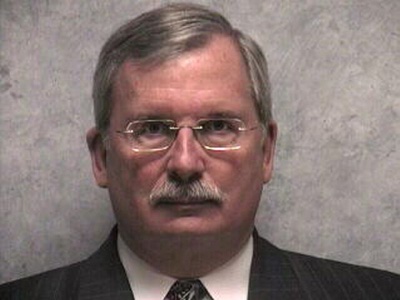
James Wadhams: Lobbyist for Southern Nevada Homebuilders vows to continue Chapter 40 fight at the 2011 legislative session.
The construction industry had just captured a huge victory, pushing legislation through the state Senate that would limit the ability of homeowners to win settlements against developers for construction defects.
Builders needed only a victory in the Assembly to save themselves millions in settlements and legal fees.
Their lobbyists, gathered in the hallway of the state’s 1970s-era concrete slab of a Legislative Building on April 16, were ecstatic over the 19-1 Senate vote.
James Wadhams, a lobbyist for the Southern Nevada Homebuilders, turned to his cohorts, according to two people present, and readied them for the not-always-pleasant task of dealing with Assembly Democrats, who he knew would drive a hard bargain.
“I’m gonna savor this victory awhile, but now we put our hand in the garbage disposal.”
•••
Sitting 450 miles from Las Vegas, cut off from average Nevadans, Carson City is special interest heaven.
While the public watches from afar the every-other-year 120-day legislative session, special interest lobbyists — for gaming, energy and development companies, trial lawyers and labor unions — make the rules and fight among themselves over the booty. They fly the Southwest shuttle Monday mornings and return to Las Vegas on Fridays. They spend their days shuffling between legislative offices and committee hearings, and their evenings in Carson City’s restaurants and bars, swapping gossip and toasting or ridiculing the legislators they are paid well to lobby.
No issue this session better exemplified how they do their work in the state capital than construction defect legislation, which pitted two powerful interest groups — construction companies and trial lawyers — in a battle they knew would determine the economic fate of both groups for years to come.
On one side was the Coalition for Fairness in Construction, big homebuilder and contracting companies and small subcontractors, who knew they had a sympathetic ear among conservative Democrats in the Senate.
On the other was the Nevada Justice Association, a fancy name for trial lawyers. Many Assembly Democrats, particularly in leadership, are their close allies.
Construction defect settlements are governed by Chapter 40 in Nevada statutes, and builders have grown to hate it.
They seethe as each new defect notice, or “Chapter 40 notice,” arrives by mail or courier: The suits are frivolous! And the lawyers! The damned lawyers! The statute guarantees “reasonable” attorneys fees in the case of a settlement, and all the damned things get settled!
As one lobbyist put it, referring to the old Dire Straits tune, “It’s money for nothing and the chicks are free.”
For more than a decade, plaintiffs’ attorneys have successfully defended Chapter 40. This was in part because the public and the legislators who represent them were all too aware of the shoddy homes that were all but pasted together during the boom.
Who doesn’t have a misaligned cabinet or amateurish looking tiled floor?
This session, though, the builders were dealt two good cards: The construction industry’s pleas for relief came amid massive layoffs in the industry.
And then there were the feds. In an ongoing investigation, the FBI appears to be looking into whether homeowner associations and their elections have been corrupted by businesses — including possibly construction defect law firms — so they could bring suits against builders and win those guaranteed legal fees.
In these alleged schemes, people would buy 1 percent stakes in homes and then win seats on homeowner boards, after which they would bring construction defect lawsuits and steer the legal work to favored firms.
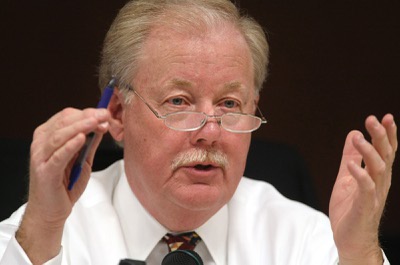
Mike Schneider: A builder and a Senate Democrat, he has been trying to have Chapter 40 changed for years.
State Sen. Mike Schneider, a mustachioed Midwesterner with a soft twang, seemed almost giddy about the FBI investigation. Schneider is a “business Democrat,” as he calls himself, whose legislative interests often align with his entrepreneurial interests. One lobbyist called his dimly lit office — with its little stereo set — a “tiki hut.”
As a small-time builder, Schneider had faced the perils of construction defects and had fought for years to change the law. He said the law was a scam that yielded “hundreds of millions of dollars” for lawyers, who held “tent revival” meetings to sell homeowners on going after their builders.
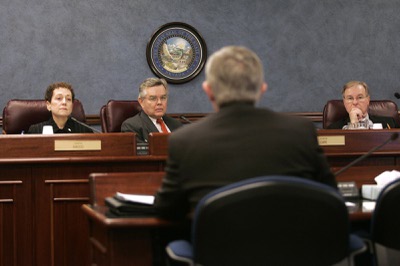
Terry Care: The Democratic state senator from Las Vegas, center, wrote construction defect legislation that would have nearly wiped out Chapter 40, the provision in state law that provides for homeowners to collect reasonable attorney fees in construction defect settlements.
His colleague, state Sen. Terry Care, is a disabled Vietnam War veteran, Phi Beta Kappa, a lawyer known as a thoughtful, deliberate and very conservative Democrat.
The Wednesday before the legislative session commenced, Schneider and Care went to the FBI field office in Las Vegas to learn about the investigation.
“They pointed out some flaws they saw with our laws,” Schneider said.
Schneider would spearhead changes in homeowner association law, including making board election fraud a felony and increasing transparency of association contracts with lawyers.
Care, it was decided, would be the lead legislator on the construction defect side of the issue. Schneider, one observer noted, was passionate about the issue, but due to poor relationships with fellow Democrats, “can’t get anything out of the Assembly.”
As the session began, the halls buzzed with talk of eliminating Chapter 40.
The law was the result of a compromise reached during the mid-1990s building boom to resolve disputes before litigation. As part of the compromise, if homeowners wound up suing, they couldn’t sue for noneconomic damages, such as emotional distress.
In return for the barring of emotional distress suits, the trial lawyers won a key concession: more or less automatic attorney fees in the case of a settlement. Otherwise, they argued with some justification, homeowners would be left short: The most they could receive would be the cost of the repairs, and out of that, and thus their own pocket, they would have to pay attorney fees.
To scrap Chapter 40 would be to end the arbitration process of the statute, and instead send homeowners to the courts for jury trials. Except, they still would not be able to sue for emotional distress and would have to pay their attorneys out of what they recovered for the repairs.
“We want to give homeowners quicker access to the courts,” Wadhams would crow.
But that was laughable sophistry. The net result of eliminating Chapter 40, and Wadhams’ real goal, was to all but eliminate construction defect costs for builders.
He was representing his client and, as usual, he was doing it well.
•••
On the morning of the second day of the session, Feb. 3, Care held an open hearing on construction defects.
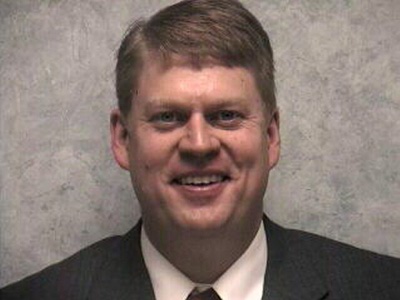
Josh Griffin: Lobbyist for the Nevada Subcontractors Association brought companies to testify on current law.
The state’s subcontractors, many of them reeling from the building bust, came with clenched teeth.
They were led and organized by Josh Griffin. Son of a former mayor of Reno, Griffin had been a political consultant and then a Republican state assemblyman for one term before becoming a lobbyist in 2005. He represents Fortune 500 companies — MGM Mirage, the Nevada Mining Association — but he seems to have a special place in his heart for the Nevada Subcontractors Association, a chance to represent the little, or little-ish, guy.
Griffin is known for his joviality and self-deprecating and dark wit. He would say throughout the session — conveying both truth and his penchant for self-promotion — the subcontractors, or “subs,” dominated the issue, starting with Care’s hearing.
The subs had two advantages.
First, despite the recession, there are still tens of thousands of them sweating it out every day, earning, for the most part, an honest living.
Developers and attorneys seem, well, less sympathetic.
Second, the subs had a legitimate gripe. Once a developer, or often a developer’s insurance company, receives a Chapter 40 notice from a homeowner’s lawyer, the company informs all the subcontractors, making them party to the lawsuit.
Once they are named in a lawsuit, the subcontractors can’t get released from the litigation because the general contractor, or his insurance company, wants to spread the cost around and the trial lawyers want to jack up the guaranteed legal fees.
Griffin knew that even though the Legislature is dominated by special interests, politics is politics, and there’s nothing like a good sob story.
He found the perfect sub. Katherine Doty of Classic Door and Trim epitomized the biggest problem with Chapter 40 — a subcontractor getting dragged into a lawsuit she had nothing to do with.
At the Care hearing, Doty talked about paying legal bills to settle a case in which the home’s defect was a leaky basement.
Leaky basement?
Care: “You are door and trim? Is that what you said?”
He formed a special subcommittee to tackle the issue.
The builders were on offense and making it look easy.
•••
Care and Schneider became even more determined a few weeks later. A Sun article had noted that Care’s law partner at the corporate firm McDonald Carano Wilson was also general counsel for the Nevada chapter of Associated General Contractors, a big player in the push for changes to construction defect law. He had even acknowledged lobbying Care on the issue.
One evening, Schneider stuck his finger in a reporter’s chest: “How did you know about Sen. Care’s law partner being at AGC?” he said.
“It was on the firm’s Web site,” the reporter responded.
Griffin swooped in and led the annoyed Schneider away. Schneider and Care were convinced the trial lawyer lobby had planted the story.
•••
Care’s special subcommittee had a hearing that was largely a repeat of the first and he thought the issue might be dead.
In March, not long before a leadership-imposed deadline for bills to clear committee, the builder coalition pleaded with him to send something out. “They realized they wouldn’t get the law repealed, but they wanted to try something,” he said.
Wadhams lobbied Care intensely. “As anybody involved in the legislative process would, I certainly made suggestions,” he recalled, adding that Care reached his own conclusion that the Chapter 40 process was out of control.
Still, in light of Care’s passive language, it is hard not to conclude that lobbyists representing special interests sometimes do the heavy legislative lifting.
•••
The bill Care crafted did not eliminate Chapter 40, but it came awfully close.
Senate Bill 349 defined a construction defect narrowly. To qualify as defective, a home would have to: present “unreasonable risk of injury to a person or property,” or meet all of the following criteria: violate building codes, cause damage to the property and be built in a manner not “good and workmanlike” according to industry standards.
Under current law, just one of those criteria must be met for a home to be deemed defective and qualify it for the Chapter 40 process.
The bill also eliminated those automatic “reasonable attorney’s fees.”
A separate bill to reduce the “statute of repose,” the statute of limitations for filing a defect claim, was pure gravy.
The plaintiff attorneys appeared blindsided by the radical changes called for in the bills and surprised that they had come from Democrats, who are typically the trial attorneys’ allies. Weren’t the Democrats supposed to help the little guy, the homeowner? they said in disbelief.
The builders’ lobbyists had a counterargument they offered to second-tier Democrats, including Sen. Shirley Breeden. “We told them, ‘Look, don’t let trial lawyers say they represent the homeowners,’ one lobbyist recalled. ‘You represent the homeowners, and you have to decide what’s best for them.’ ”
The key to the overwhelming victory in the Senate was convincing Democrats that the trial lawyers were simply another special interest, like homebuilders, subcontractors and developers.
On April 16, the bill passed 19-1. The margin surprised even its proponents, including Care himself.
As the builders’ proposals rolled through the Senate, Victoria Riley, executive director of the Nevada Justice Association, seemed incredulous. Riley is quiet but effective, and though she seemed unprepared for the assault from builders, in retrospect she knew the endgame.
Her client has friends in the Assembly.
•••
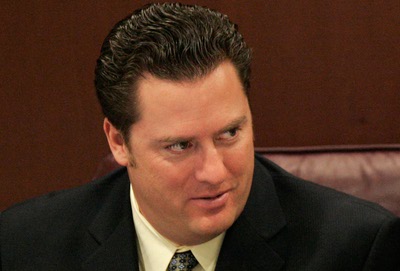
John Oceguera: Assemblyman proposed amendment that would have required subcontractors to carry liability insurance.
The trial lawyers’ response came on another deadline day, in the course of a few minutes, with no testimony — Assembly Majority Leader John Oceguera proposed an amendment to Assembly Bill 215, requiring subcontractors to carry liability insurance.
It seemed like sensible policy, a way to make sure subcontractors were insured in the case of a construction defect.
But builders believed it was little more than a way to fatten the pot of legal fees for construction defect cases. They also saw it for what it was, at least in part, retaliation for the gutting of Chapter 40 in the Senate.
AB 215 passed unanimously.
Each side in the battle over construction defect law had a legislative weapon.
•••

Scott Canepa: Construction defect lawyer argued vehemently against scrapping guaranteed attorney fees.
Scott Canepa, who has a shock of salt-and-pepper hair and an intense demeanor, has for years been one of the state’s most effective construction defect lawyers, repeatedly busting bad developers.
Like the state’s most prolific builders and subcontractors, he has grown wealthy. And like builders and subcontractors, for Canepa the issued seems personal.
He believed the Care bills were outrageous, an assault on the rights of homeowners. Without some guarantee of attorney fees, Canepa argued, homeowners would have to pay a $5,000 retainer to get an attorney, which would prevent many from getting their defects fixed.
Without Chapter 40, Nevada case law denies homeowners the right to sue for negligence or for any noneconomic damages. Instead, they could sue only for breach of contract, he said.
Builders would then force homebuyers to sign contracts that protect them from liability.
“Why make it harder for people who bought bad houses?” he said.
•••
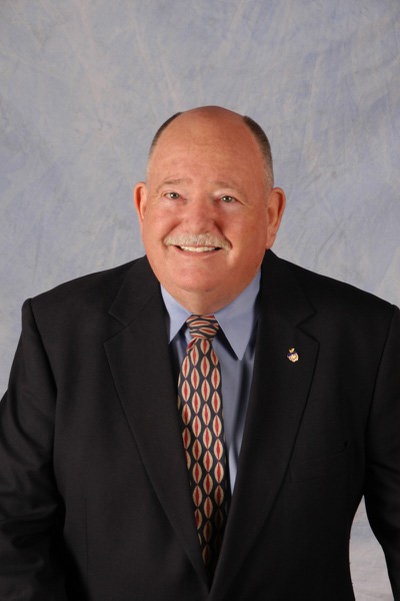
Bernie Anderson: Washoe County lawmaker led Assembly committee that reviewed construction defect legislation.
Longtime Assembly Judiciary Chairman Bernie Anderson is a stout retired teacher of the year, a close lieutenant of Assembly Speaker Barbara Buckley. Infamous among reporters for talking through the nuances of an issue for 20 minutes without producing a decent sound-bite, he was also infamous among lobbyists for his resistance to their pleas.
It was no different in the case of construction defect legislation, which Anderson’s committee was tapped to review.
Anderson believed the legislation was being jammed down his throat, without a hint of compromise.
He was sympathetic to subcontractors but wanted to protect homeowners. He was growing impatient with the builder lobby.
“ ‘You have to hear our bill. Give us a hearing. When’s the hearing?’ That’s all I heard,” said Anderson. “But where’s the negotiation?”
And so the bill sat in a metaphorical desk drawer in the mind of Bernie Anderson.
Still, builders kept trying.
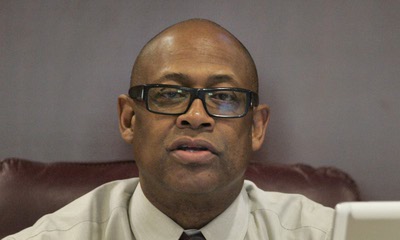
Morse Arberry: Assemblyman sought by builders lobby to help along its legislation until the Sun revealed he was suing his lender.
One night, they split up, with half taking Oceguera to dinner, the other half dining with Democratic Assemblyman Morse Arberry. They were looking for influential veteran members of the Assembly to champion their legislation.
Unfortunately for the builders, a Sun story the next day would reveal that Arberry, a mortgage lender, was suing his own lender to prevent foreclosure on his property. He had also sponsored legislation that would help property owners like himself on the verge of foreclosure.
Arberry would not be much help carrying controversial legislation.
Care’s bill appeared to be dying in the Assembly.
By mid-May he grew impatient. Care held up a bill sought by Assembly Democrats that would lift caps on medical malpractice lawsuits in some cases. The strategy gave him little leverage though, because Democratic advocates of lifting the cap knew they didn’t have the votes to override an expected veto by Gov. Jim Gibbons.
Care denied the delay was related to the construction defect legislation.
Care responded by grabbing Oceguera’s Assembly Bill 215, the insurance mandate for subcontractors, and amending it to include all his construction defect legislation.
Now, there was nothing left for both sides to do but negotiate.
•••
The dynamics, however, left little incentive for a compromise.
It’s a classic zero-sum game: Less money to lawyers for homeowners means more money to builders, and vice versa.
Given the dynamic, a win-win compromise was impossible. So it’s not surprising that the sides give mirror-image accounts of the attempts at a compromise, with each saying the other was negotiating in bad faith.
The builders’ lobby says the trial lawyers were never serious.
“Why would the trial lawyers ever give up anything?” Wadhams said.
A lobbyist on the other side said the builders went “thermonuclear” and never attempted any negotiation.
“It was raw power,” the lobbyist said.
The builders’ plan was to repeal Chapter 40.
“I said, ‘OK, what’s plan B?’ ” the lobbyist related. “And Wadhams said, ‘There is no plan B.’ ”
A lobbyist for the builders offered a reasonable retort: “Clearly the idea was to send a strong bill out of the Senate so we could negotiate from a position of strength.”
One legislator sympathetic to the trial lawyers offered another, perhaps jaded, explanation for the lack of compromise.
“This was like the ‘Full Employment for Lobbyist Act,’ ” the legislator quipped. “If there had been a compromise, there would have been a stand-down for a couple sessions, and that’s money out of their pockets.”
Still, there were talks through the final weekend of the legislative session.
Assembly Democrats and Canepa, who said he was instructed by Assembly leaders to negotiate a deal, were open to shielding subcontractors from lawsuits. The subs had even sought a provision like this in 2007, until the builders killed it.
The builder coalition was wary of any attempt by Canepa to divide and conquer, but there was and is some lingering mistrust between the builders and subcontractors. Any move to take the subs out of the lawsuits would push up legal costs for the developers who hired them, so for developers the status quo was better than legislation shielding the subs.
This led to speculation that Wadhams had moved radical legislation that he knew would die because he preferred the status quo to any compromise that shielded the subs.
“The implication is that I created this ‘Go big’ idea to avoid having the subs go small?” Wadhams replied dryly. Nonsense, he said.
The coalition was hanging together, he said, because the subcontractors realized that even with some indemnity agreement to shield them from suits, they would still be named because they set foot on the project.
The real issue, Wadhams said, is the attorney fees, and the coalition — builders and subs — would hang together for it.
•••
It was sometimes impossible to negotiate, Canepa said, because subcontractors were contacting him directly, with deals he considered laughable.
Moreover, “The level of personal animus was off the charts. That backfired on them, ultimately.”
Subcontractors such as Darren Wilson of Sierra Air Conditioning, who calls current law “theft,” say Canepa never had any intention of striking a deal.
The closest they came was a negotiation on the final weekend to reduce the statute of repose — the number of years a homeowner has to file a Chapter 40 notice — in exchange for subcontractors accepting the insurance mandate.
Griffin and the subcontractors board said they couldn’t determine whether their members would even be able to buy the insurance, or afford it, so they said no.
Here was Canepa’s interpretation: “When Assembly leadership was prepared to make a substantial concession in exchange for very little, they walked away.”
Canepa and Oceguera offered an interim committee to study the matter and make a recommendation to the 2011 Legislature.
No thanks, the builders said.
In the end, just about everyone was left with bile in their mouths, a bitterness that even veterans of the process found surprising.
“This is the ugly stick,” Anderson said of the issue.
Builders were so angry with Oceguera, who they believe is in the pocket of the trial lawyer lobby, that Wilson and other subcontractors have threatened to find a candidate to unseat Oceguera, who is in line to become the next Assembly speaker.
Oceguera “wanted to compromise. There’s not a compromise. There’s a choice, and he needs to make a choice,” Wilson said.
Oceguera, who said he worked to find a compromise, was baffled by the threats. “No good deed goes unpunished,” he said.
The reaction to his final compromise offer was, he said, “Go pound sand.”
A builder lobbyist was open about why they walked away with nothing: “We say ‘yes’ to this, pick up a little something we want. Now construction defects are not discussed for four or six years,” he said. “Legislators could say, ‘Well, we did this in 2009, we don’t need to do something until 2015. Let’s see how it works out.’ ”
•••
One thing is clear, the builders will be back in 2011 to make another run at it.
“Oh, I’ll be back. You bet I will,” Wadhams said.
One construction industry lobbyist says there is a potential compromise: Take away the guaranteed attorney fees, but allow homeowners to sue for “noneconomic” damages, such as emotional distress. This would expose builders to massive jury awards, which would please an ace like Canepa, but would eliminate the steady flow of money to the lawyers.
The lawyers might be forced to compromise because in 2011, the dynamics appear to be moving against them.
Here’s why:
Banks, which own thousands of foreclosed homes, have become, in a sense, developers that hire contractors to fix up the homes and sell them. Once they start getting hit with defect suits, they will suddenly be very interested in the issue.
Then there’s this: Single-family homes in Nevada have traditionally been built with nonunion labor. The labor unions have viewed construction defect lawsuits as a recruiting tool — you build something paying a guy 10 cents a shingle, you’re going to get shoddy work, AFL-CIO head Danny Thompson can be heard to say.
But who is now the single largest developer of residential construction units in Nevada? MGM Mirage, which entered the residential sector with its CityCenter project condos. Union labor was used for the project.
Once the condo owners start suing CityCenter for construction defects — the Harmon tower has had well-documented structural problems — the litigation will call into question the quality of union labor. That means the building trades might get on board with an effort to repeal Chapter 40.
MGM Mirage will also be exposed to construction defect lawsuits as the developer of the condos.
If you want to get something done in Carson City, it helps to have Big Gaming — the 800-pound gorilla of the Legislature.
Just another special interest interested in making policy.
J. Patrick Coolican can be reached at 259-8814 or at [email protected]. David McGrath Schwartz can be reached at (775) 687-4597 or at [email protected].

Join the Discussion:
Check this out for a full explanation of our conversion to the LiveFyre commenting system and instructions on how to sign up for an account.
Full comments policy