Friday, July 17, 2009 | 2 a.m.
Sun Archives
- Mail operator remains upbeat (5-29-2009)
- General Growth Properties reports quarterly loss (5-7-2009)
- General Growth files for Chapter 11 protection (4-24-2009)
- General Growth files for bankruptcy; malls likely to stay open (4-15-2009)
- General Growth stock up on news report (3-31-2009)
- General Growth extends forbearance request (3-16-2009)
Sun Coverage
Beyond the Sun
The battle over the undeveloped Summerlin acreage is just one of several Las Vegas Valley aspects of the General Growth Inc. bankruptcy case.
• Another Summerlin-related issue involves a fight over a natural gas pipeline that runs under parts of the master-planned community. Kern River Gas Transmission Co. is asking permission from the Bankruptcy Court to litigate its dispute with the Howard Hughes Corp. over Kern River’s plan to increase the pressure in that distribution line, which carries gas from Wyoming to California.
The Federal Energy Regulatory Commission last month approved Kern River’s request for a systemwide increase in pressure.
Hughes Corp. sued Kern River in April, saying the plan would hurt Summerlin by raising safety concerns. On Wednesday, the bankruptcy court gave Kern River permission to litigate its counterclaim against Hughes. Kern River seeks a court judgment that says boosting the pressure in the pipeline does not violate an easement agreement Kern River reached with Hughes Corp. in 1993.
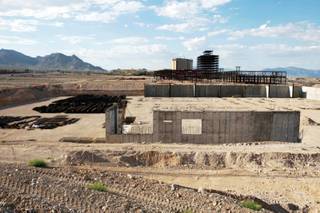
• General Growth owns local malls — Boulevard, Meadows, Fashion Show, Grand Canal Shoppes at the Venetian, Shoppes at the Palazzo and the unfinished Summerlin Centre — so the case has the potential to affect those properties. The court has ordered General Growth to pay higher interest on a $900 million loan for the Fashion Show and Palazzo malls.
• Metropolitan Life Insurance Co. is asking the court to dismiss several Chapter 11 reorganization cases filed by General Growth subsidiaries that operate Summerlin commercial properties, including the Hughes headquarters office building. MetLife, the lender on the projects, says the properties are profitable and before the bankruptcy filing were current on their debt payments.
MetLife says it lent Hughes $24 million in 2001 and that loan is secured by the properties at West Charleston Boulevard, Covington Cross and Town Center Drive.
“The Chapter 11 cases of the Hughes-Summerlin debtors should be dismissed because they were not filed in good faith. At the time the Hughes-Summerlin debtors’ cases were filed, the Hughes-Summerlin debtors were current on all of their obligations and were not experiencing any immediate or imminent financial problems,” MetLife said in a court filing. “The actual net operating income for the Hughes-Summerlin properties in 2008 was $3.956 million with total debt service of $2.089 million.”
“It is clear that the petitions of the Hughes-Summerlin debtors were not filed with any reorganizational purpose; they were filed solely to obtain leverage and a tactical advantage in any future efforts to extend the (March 2011) maturity of the loan,” MetLife said.
But attorneys for General Growth defended the decision to include in the bankruptcy the Summerlin properties and other projects across the country secured by MetLife loans, saying in court papers: “The evidence establishes that the decision-makers made prudent business judgments. (They) determined that given the crash of the commercial real estate financing market, the subsidiary debtors’ mortgage loans — each with a maturity date in the next two years — had little or no chance of being successfully refinanced.”

Join the Discussion:
Check this out for a full explanation of our conversion to the LiveFyre commenting system and instructions on how to sign up for an account.
Full comments policy